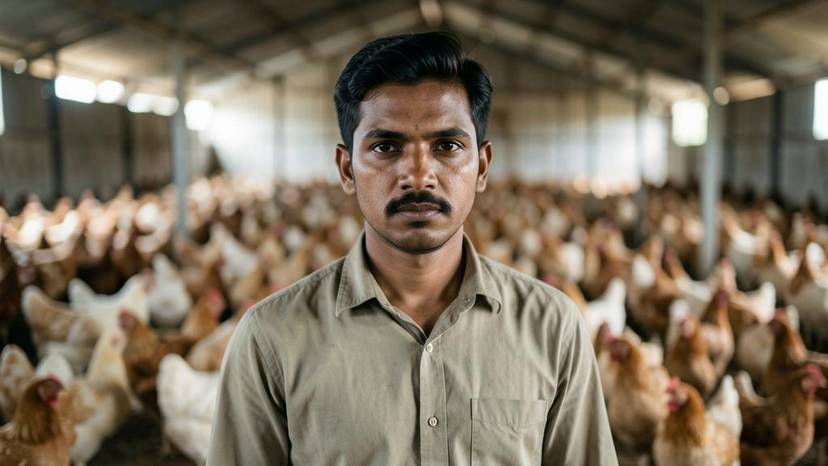
What Happens to Male Chicks in the Egg Industry? The Hidden Truth
Every year, billions of male chicks are killed within hours of hatching because they cannot lay eggs — here is exactly how, where, and what is changing.
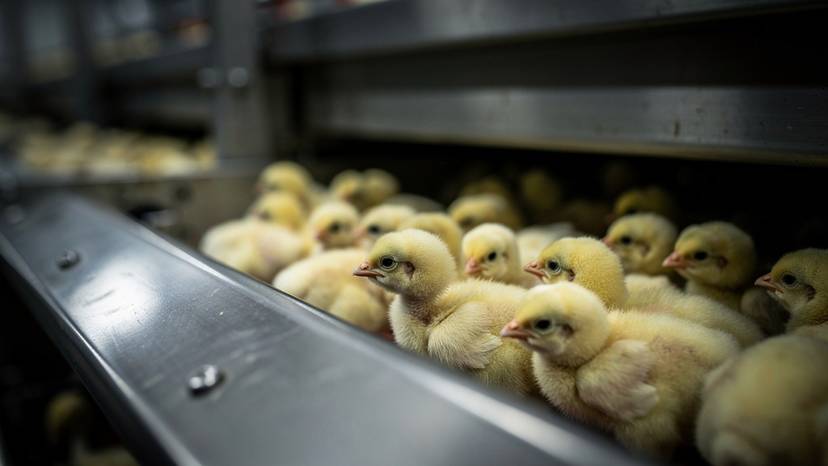
Quick answer: In the egg industry, male chicks are killed within hours of hatching because they cannot lay eggs and are not bred to produce meat. The two standard methods are maceration — being ground alive in a high-speed machine — and asphyxiation in gas chambers. An estimated 6 to 7 billion male chicks are culled globally each year, including roughly 300 million in the United States alone.
Why are male chicks killed in the egg industry?
The egg industry is built on a biological bottleneck. Only female chickens lay eggs, so hatcheries that supply laying hens have no commercial use for the males. These chicks belong to layer breeds, not broiler breeds — they grow slowly and have thin breast muscle, so raising them for meat is not profitable. Rather than feed them for months, the industry kills them on day one. This practice is called chick culling, and it is the direct consequence of separating egg production from meat production.
The scale is staggering. According to the Humane League and USDA hatchery data, the United States produces around 300 million layer chicks annually, and a similar number of male chicks are destroyed. Globally, the FAO and animal welfare organisations estimate that between 6 and 7 billion male chicks are killed each year. In the United Kingdom, the figure is roughly 30 million; in Canada, about 20 million; in Australia, around 12 million.
How are male chicks killed? Maceration and gas explained
There is no gentle method. Two practices dominate. The first is maceration: live chicks are dropped into a high-speed grinder, sometimes called a macerator, that kills them instantly by shredding. The second is gas asphyxiation: chicks are placed in chambers filled with carbon dioxide or other gases, where they suffocate. Both methods are legal in most countries, including the United States, Canada, Australia, and — until recently — much of Europe.
In the US, the American Veterinary Medical Association (AVMA) guidelines list both maceration and gas as acceptable methods for euthanising poultry. The USDA does not track chick culling numbers, so the public has no official count. In the UK, the British Egg Industry Council's Lion Code permits both methods, though some retailers have started demanding alternatives. Australia's state-based animal welfare laws allow maceration for chicks up to 72 hours old.
| Country | Maceration | Gas | Ban in force? |
|---|---|---|---|
| United States | Permitted | Permitted | No |
| United Kingdom | Permitted | Permitted | No |
| Canada | Permitted | Permitted | No |
| Australia | Permitted (under 72h) | Permitted | No |
| Germany | Banned since 2022 | Banned since 2022 | Yes |
| France | Banned since 2023 | Banned since 2023 | Yes |
| Italy | Banned since 2023 | Banned since 2023 | Yes |
What is in-ovo sexing and does it end culling?
In-ovo sexing is a technology that determines a chick's sex before it hatches, so male eggs can be destroyed early or diverted to other uses. Several methods exist, including analysing hormones in the egg fluid and using spectroscopy to detect differences in egg composition. Germany became the first country to ban chick culling in 2022, and its egg industry now relies on in-ovo sexing. France and Italy followed in 2023. In the US, companies like egg producer Vital Farms and technology firm In Ovo are piloting the approach, but no federal ban exists.
However, in-ovo sexing is not a welfare solution — it simply shifts the killing earlier. Male embryos are still destroyed, just at an earlier stage of development. And the technology is expensive, slowing adoption. For readers in the US, UK, Canada, and Australia, the eggs on supermarket shelves still overwhelmingly come from hatcheries that cull male chicks.
Which brands and retailers are implicated in the US, UK, Canada, and Australia?
In the United States, the largest egg producers — Cal-Maine Foods, Rose Acre Farms, and Versova — all source from hatcheries that cull male chicks. Major retailers like Walmart, Kroger, and Costco sell these eggs. In the UK, the Lion Code covers around 90% of eggs, and its standards permit culling. Major supermarkets Tesco, Sainsbury's, and Asda have all been urged by animal welfare groups to adopt in-ovo sexing but have not made firm commitments. In Canada, Burnbrae Farms and Gray Ridge Egg Farms dominate supply. In Australia, Sunny Queen and Pace Farm are the leading brands.
Some progress is visible. In 2024, UK retailer Waitrose announced it would switch to in-ovo sexing for its own-brand eggs by 2026, working with technology provider In Ovo. In the US, Vital Farms has committed to in-ovo sexing for its entire supply by 2025. But these are exceptions. For most readers, the standard egg carton still represents a hatchery where male chicks were killed on day one.
“The killing of male chicks is one of the most routine and least visible forms of animal suffering in the food system. Because it happens in hatcheries behind closed doors, most consumers never see it — but it is standard practice in every major egg-producing country.”
What do the numbers look like in the US, UK, Canada, and Australia?
The table below shows estimated annual male chick culling figures for the four main English-speaking markets, based on 2024 data from industry reports and animal welfare organisations. The numbers are approximate because most governments do not require hatcheries to report culling.
| Country | Layer chicks hatched (millions) | Male chicks culled (millions) | Share of global total |
|---|---|---|---|
| United States | 300 | 150–160 | 2.3% |
| United Kingdom | 60 | 30 | 0.4% |
| Canada | 40 | 20 | 0.3% |
| Australia | 24 | 12 | 0.2% |
| Global total | 13,000 | 6,000–7,000 | 100% |
Estimated male chicks culled per year in English-speaking countries (millions)
Is chick culling legal? What laws are changing
In the United States, there is no federal law against chick culling. The Animal Welfare Act does not cover birds used for food, and the USDA has no jurisdiction over hatchery practices. Some states have general anti-cruelty laws, but they typically exempt standard agricultural practices. Ag-gag laws in several states also make it difficult to document conditions inside hatcheries. In the UK, the Animal Welfare Act 2006 does not specifically ban maceration; the practice is permitted under Defra guidelines. Canada's Health of Animals Regulations allow it. Australia's state laws vary but all permit it.
Change is happening in Europe. Germany banned chick culling in 2022, and France and Italy followed in 2023. The European Union is considering a bloc-wide ban. In the US, no federal bill has passed, but animal welfare organisations like the Humane Society of the United States and Mercy For Animals are pushing for state-level bans and corporate commitments. In 2024, the UK's Labour government signalled it would review welfare standards but has not committed to a ban.
Key policy facts on chick culling
- Germany banned chick culling in 2022 — the first country to do so.
- France and Italy banned it in 2023.
- The US, UK, Canada, and Australia have no bans.
- In-ovo sexing is the main alternative, but it still destroys male embryos.
- Cage-free and organic labels do not prevent male chick culling.
What can consumers do about male chick culling?
The most direct action is to stop eating eggs. Every egg purchased supports a hatchery that kills male chicks. Plant-based alternatives — tofu scramble, chickpea flour omelettes, and commercial products like Just Egg — avoid the issue entirely. Just Egg, made from mung bean protein, is available in major US retailers including Walmart, Kroger, and Whole Foods, and in the UK at Tesco and Sainsbury's. In Canada, it is sold at Loblaws and Sobeys. In Australia, it is available at Woolworths and Coles.
For those not ready to give up eggs entirely, supporting brands that have committed to in-ovo sexing is a partial step. But be aware: in-ovo sexing still kills male embryos, just earlier. The only way to avoid complicity in chick culling is to avoid eggs. Vegan egg alternatives are widely available and often cheaper per serving than free-range eggs.
Your checklist for avoiding chick culling
- ✓Swap eggs for tofu scramble or chickpea flour omelettes.
- ✓Try Just Egg or similar plant-based egg products.
- ✓Check labels: 'cage-free' and 'free-range' do not stop culling.
- ✓Support brands with in-ovo sexing commitments (e.g., Vital Farms, Waitrose).
- ✓Ask your supermarket to stock plant-based egg alternatives.
- ✓Donate to organisations campaigning to end chick culling.
Frequently Asked Questions
How are male chicks killed in the egg industry?
Male chicks are killed by maceration or gas asphyxiation. Maceration involves dropping live chicks into a high-speed grinder that shreds them instantly. Gas asphyxiation uses carbon dioxide chambers where chicks suffocate. Both methods are permitted in the US, UK, Canada, and Australia under industry guidelines and animal welfare regulations.
Why are male chicks killed instead of raised for meat?
Male chicks from layer breeds are not raised for meat because they grow too slowly and have too little breast muscle to be profitable. The industry uses fast-growing broiler breeds for meat, which are separate from egg-laying breeds. Raising layer males for meat would cost more than the meat could be sold for, so hatcheries kill them on day one.
Is chick culling legal in the United States?
Yes. Chick culling is legal in the United States. The Animal Welfare Act does not cover birds used for food, and no federal law bans maceration or gas asphyxiation of chicks. Some states have anti-cruelty laws, but they typically exempt standard agricultural practices. The USDA does not track or regulate chick culling.
Does buying cage-free or free-range eggs stop male chicks from being killed?
No. Cage-free, free-range, and organic eggs all come from hens that were hatched in hatcheries where male chicks were culled. The housing system for hens does not affect what happens to male chicks. Only in-ovo sexing or avoiding eggs altogether prevents complicity in chick culling.
What is in-ovo sexing and does it solve the problem?
In-ovo sexing determines a chick's sex before hatching, allowing male eggs to be destroyed earlier. It is used in Germany, France, and Italy, which have banned chick culling. However, in-ovo sexing still destroys male embryos — it does not save them. It reduces suffering by ending the practice of macerating live chicks, but it does not eliminate the killing of male chicks.
How many male chicks are killed each year globally?
Between 6 and 7 billion male chicks are killed globally each year, according to estimates from the FAO and Humane Society International (2024). The United States accounts for roughly 150–160 million, the UK around 30 million, Canada about 20 million, and Australia around 12 million.
Key Takeaways
Key Takeaways
- Male chicks are killed on day one because they cannot lay eggs.
- Maceration and gas asphyxiation are the standard methods.
- 6–7 billion male chicks are culled globally each year.
- Cage-free and free-range labels do not stop chick culling.
- Plant-based egg alternatives avoid the practice entirely.
Related topics
Related Reading
Veal Crates vs Pasture-Raised Calves: Which Beef System Is More Ethical?
Veal crates confine calves for months, while pasture-raised systems offer better welfare—but both end in slaughter. Compare costs, ethics, and sustainability.
6 min read
The State of UK Factory Farming: Antibiotic Use, Welfare, and Policy Data
A data-driven report on UK factory farming in 2026, covering antibiotic use, welfare breaches, slaughter statistics, and policy shifts toward plant-based alternatives.
7 min read
The Complete Guide to Factory Farming Pollution: How Industrial Agriculture Degrades UK Air, Water, and Soil
Explore the hidden environmental costs of industrial animal agriculture in the UK, from ammonia emissions to antibiotic resistance, and discover actionable solutions for a sustainable food system.
8 min read