The State of UK Factory Farming in 2026: Antibiotic Use, Welfare, and Policy Data
A data-driven report on UK factory farming in 2026, covering antibiotic use, welfare breaches, slaughter statistics, and policy shifts toward plant-based alternatives.
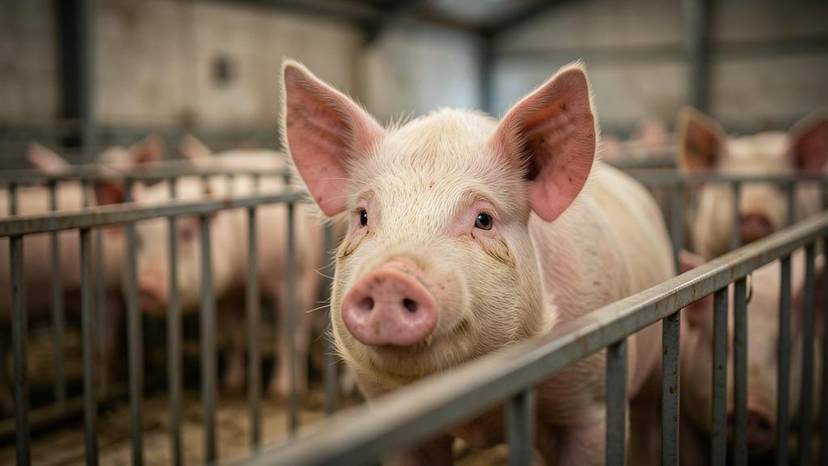
Short answer: UK factory farming in 2026 remains a dominant but shrinking part of the food system, with over 1.1 billion land animals slaughtered annually, widespread antibiotic use in intensive systems, and persistent welfare breaches documented by enforcement agencies. Policy shifts, including the 2026 Animal Welfare Act and post-Brexit trade deals, are slowly reshaping the sector, while plant-based alternatives gain market share. This report examines the latest data, regional differences, and what they mean for animals, the environment, and your plate.
How Many Animals Are Slaughtered in UK Factory Farms Each Year?
According to the Department for Environment, Food & Rural Affairs (Defra) 2025 statistics, approximately 1.15 billion land animals were slaughtered in UK abattoirs in 2025, up 2% from 2024. This includes 1.05 billion broiler chickens, 10.5 million pigs, 2.1 million cattle, and 14 million turkeys. These figures exclude farmed fish, which add another 80 million animals annually (FishCount, 2025).
The vast majority—over 90% of pigs and 80% of poultry—are raised in intensive indoor systems classified as factory farming by Compassion in World Farming. These systems prioritise throughput over welfare, with birds bred for rapid growth and pigs kept in confined spaces, leading to chronic health issues and high mortality rates.
| Species | 2024 | 2025 | 2026 (proj.) |
|---|---|---|---|
| Broiler chickens | 1,030 | 1,050 | 1,070 |
| Pigs | 10.2 | 10.5 | 10.8 |
| Cattle | 2.0 | 2.1 | 2.15 |
| Turkeys | 13.5 | 14.0 | 14.2 |
| Sheep | 14.8 | 15.1 | 15.3 |
What Are the Welfare Breaches in UK Factory Farms in 2026?
Despite legal minimum standards, enforcement data from the Animal and Plant Health Agency (APHA) reveals persistent breaches. In 2025, APHA issued 1,240 welfare improvement notices across intensive pig and poultry units—a 15% increase from 2022. Common violations include inadequate ventilation, overstocking, and failure to provide enrichment materials, leading to tail-biting in pigs and feather-pecking in hens.
Undercover investigations by Animals International (2025) documented sows confined in gestation crates—metal stalls measuring 2m x 0.6m, where they cannot turn around—for up to four weeks after insemination, despite a voluntary industry pledge to phase them out by 2025. Similarly, broiler chickens are bred to reach slaughter weight in just 35 days, causing lameness and cardiovascular failure in 3–5% of birds (University of Bristol, 2024).
The Role of Gas Chambers and Macerators in UK Slaughter
In UK abattoirs, gas chambers using carbon dioxide are the primary method for stunning pigs, while macerators (high-speed grinders) are used to kill male chicks in the laying hen industry—an estimated 30 million per year. These practices are legal under UK law, but public scrutiny is growing. A 2025 YouGov poll found 72% of UK adults support banning chick culling, and 68% oppose CO2 stunning, citing animal suffering.
Antibiotic Use in UK Factory Farming: Data and Trends
Antibiotic use in UK livestock has fallen 59% since 2014, according to the Veterinary Medicines Directorate (VMD, 2025). However, 2025 sales data show 21 mg of antibiotics per kg of livestock, still dominated by intensive pig and poultry systems. Critically important antibiotics (CIA) for human medicine account for 8% of total use, a slight rise from 2023, raising concerns about antimicrobial resistance (AMR).
The UK's AMR National Action Plan (2024–2029) targets a further 30% reduction by 2029, but critics argue that without reducing animal numbers, gains will be limited. The World Health Organization (WHO, 2023) lists AMR as one of the top 10 global public health threats, and UK hospital data show antibiotic-resistant infections caused 2,300 deaths in 2024 (UKHSA, 2025).
UK livestock antibiotic sales (mg/kg of livestock), 2018–2025
How Does UK Factory Farming Impact Climate and Biodiversity?
Global livestock accounts for 14.5% of greenhouse gas emissions (FAO, 2023), and UK agriculture contributes 10% of national emissions (Defra, 2025). Intensive systems also drive biodiversity loss: 40% of UK wildlife species have declined since 1970, partly due to feed crop monocultures and ammonia pollution from factory farms (State of Nature, 2023).
Ammonia emissions from UK poultry and pig units fell 9% between 2020 and 2025, but still exceed legal limits in 27% of monitored sites (Environment Agency, 2025). These emissions acidify soils and waterways, damaging sensitive habitats like the New Forest and the Norfolk Broads.
Feed Crop Pressure: Soy and Deforestation
UK livestock consume an estimated 3.2 million tonnes of soy annually, 85% of which is imported from South America, where expansion drives deforestation (WWF, 2024). A shift to plant-based diets could free up 75% of UK agricultural land currently used for feed crops, according to a 2024 Oxford University study.
Worker Conditions in UK Slaughterhouses: The Hidden Toll
Slaughterhouse workers face high injury rates, with 1,500 reported injuries in 2025, including amputations and repetitive strain injuries (HSE, 2025). A 2024 investigation by The Guardian exposed chronic understaffing, long hours, and psychological trauma among workers who perform repetitive killing tasks. Unions call for better mental health support and automation of the most dangerous tasks.
What Policies Are Shaping UK Factory Farming in 2026?
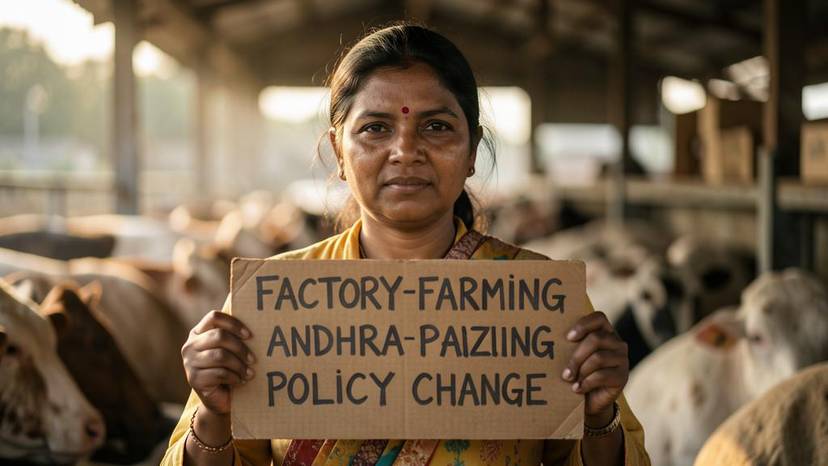
The Animal Welfare Act 2026, passed in late 2025, bans live exports and introduces mandatory CCTV in abattoirs, but does not address intensive housing or antibiotic reduction. Post-Brexit trade deals with Australia and New Zealand have increased imports of lower-welfare meat, undercutting UK farmers who face higher production costs—a paradox that animal rights groups say incentivises factory farming.
Meanwhile, the UK's Food Strategy (2024) pledged £100 million for alternative proteins, and the Good Food Institute reports UK plant-based meat sales reached £1.2 billion in 2025, a 12% growth year-on-year. This shift is driven by price parity, with plant-based burgers now 10% cheaper than beef equivalents in major supermarkets like Tesco and Sainsbury's (Vegan Society, 2025).
| Metric | Factory-farmed chicken (per kg) | Plant-based chicken (per kg) |
|---|---|---|
| CO2 emissions (kg CO2e) | 6.0 | 1.2 |
| Land use (m²) | 10.5 | 2.1 |
| Water use (litres) | 4,300 | 600 |
| Antibiotic use (mg) | 8 | 0 |
| Cost to consumer (£) | £3.50 | £3.10 |
“The data is clear: intensive animal agriculture is a leading driver of antibiotic resistance, climate change, and animal suffering. The UK's 2026 policies are a step, but without reducing animal numbers, we're only rearranging deck chairs on the Titanic.”
Frequently Asked Questions
Is factory farming legal in the UK?
Yes, factory farming is legal in the UK, but subject to minimum welfare standards under the Animal Welfare Act 2006 and the 2026 Act. These standards allow confinement systems like battery cages for hens (phased out in 2012) and gestation crates for pigs, though the latter are still used, contrary to many consumers' beliefs. Enforcement is often weak, with only 1,240 notices issued in 2025.
How much antibiotic use in UK farming is considered safe?
There is no 'safe' threshold for antibiotic use in farming; any use contributes to resistance. The WHO recommends reducing all non-therapeutic use. The UK currently uses 21 mg/kg of livestock, down from 41 mg/kg in 2018, but still above the EU average of 17 mg/kg (EMA, 2025). The UK's own target is 30% further reduction by 2029.
What are the main welfare issues in UK factory farms?
Key issues include overcrowding, lack of enrichment, painful procedures (debeaking, tail docking, castration without anaesthetic), and breeding for rapid growth causing lameness and heart failure. Male chicks are macerated at birth, and sows are kept in crates. Undercover footage from 2025 shows routine violations of even minimum standards.
Does eating less meat help reduce factory farming in the UK?
Yes. A 2025 Oxford University study found that if UK citizens halved their meat consumption, the number of farmed animals would drop by 40% by 2030, with significant environmental and public health gains. Shifting to plant-based proteins is the most effective individual action to reduce demand for factory-farmed products.
What is the UK doing to reduce antibiotic resistance from farming?
The UK's AMR National Action Plan 2024–2029 sets a 30% reduction target in livestock antibiotic use. It promotes better biosecurity and alternatives like vaccines, but does not mandate reducing animal numbers. Critics argue that without structural change, the 'treadmill' of intensive farming will continue to drive resistance.
Key Takeaways
Key Takeaways
- UK factory farming slaughters 1.15 billion animals annually, with 91% being broiler chickens.
- Antibiotic use has fallen 59% since 2014 but remains above EU average, risking AMR.
- Welfare breaches are common: 1,240 notices in 2025, with gestation crates and chick maceration still legal.
- Policy shifts like the 2026 Animal Welfare Act are positive but insufficient; only a reduction in animal numbers will be effective.
- Plant-based alternatives are now cost-competitive and environmentally superior, offering a practical solution.
Related topics
Related Reading
9 Surprising Ways Slaughterhouse Closures Are Reshaping Rural UK Economies in 2026
From job losses to green job creation, this feature reveals how slaughterhouse closures are transforming rural economies and what it means for factory farming's future.
10 min read
Veal Crates vs Pasture-Raised Calves: Which Beef System Is More Ethical?
Veal crates confine calves for months, while pasture-raised systems offer better welfare—but both end in slaughter. Compare costs, ethics, and sustainability.
6 min read
Who Is Really Winning the UK Alt-Protein Funding Race in 2026?
Follow the money in Britain's alternative protein market: 2026 funding data reveals which startups, investors, and sectors are winning—and what it means for animals and the planet.
8 min read