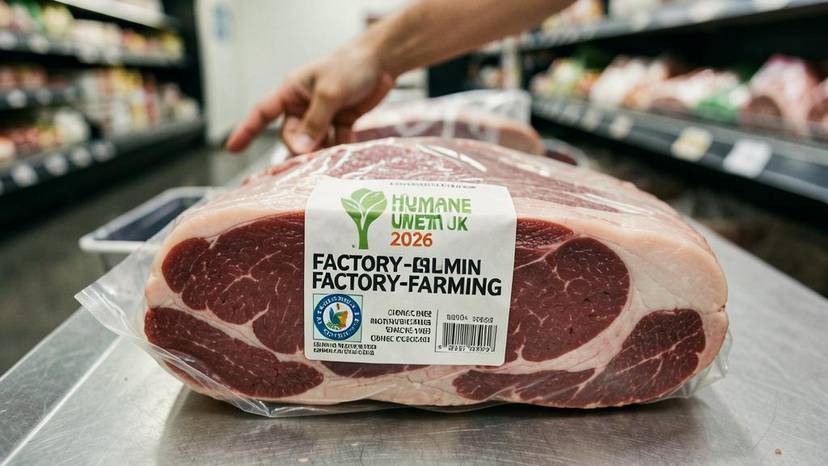
Inside the UK's First Live Export Ban: How the Animal Welfare Act 2026 Is Reshaping Factory Farming
A case study of the UK's landmark live export ban under the Animal Welfare Act 2026, and what it means for industrial animal agriculture, supply chains, and animal rights.
Short answer: The UK's live export ban, enacted under the Animal Welfare Act 2026, prohibits the export of live cattle, sheep, goats, pigs, and horses from Great Britain for slaughter and fattening. This landmark law, which came into force on 1 January 2026, has already reduced animal transport times, forced supply chain adaptations, and set a precedent for factory farming reform across Europe (DEFRA, 2026).
Background: Why the UK Banned Live Exports and What It Means for Factory Farming
For decades, live export ships carried millions of animals from UK shores to continental Europe, where slaughterhouse standards were often lower and transport times stretched beyond 24 hours. Campaigns by organisations like Compassion in World Farming and animal rights activists documented overcrowded holds, injured animals, and deaths in transit. The UK's factory farming system, which produces over 1 billion broiler chickens and 9.5 million pigs annually (DEFRA, 2025), relied on these exports to offload surplus stock, creating a hidden cruelty that consumers rarely saw.
The Animal Welfare Act 2026, passed after years of parliamentary debate, marks a decisive shift. It amends the Animal Welfare Act 2006 to ban the export of live animals for slaughter or fattening from Great Britain. The law applies to all mammals, including cattle, sheep, goats, pigs, and horses, but excludes poultry, which are typically transported as meat. This ban directly targets the industrial practice of sending animals on multi-day journeys, a cornerstone of factory farming's efficiency model.
The Challenge: Addressing Animal Suffering in a Globalised Meat Supply Chain
The live export trade was deeply embedded in the UK's agricultural economy. Farmers in Wales and Scotland, where lamb production outstrips domestic demand, relied on exports to Mediterranean markets like Spain and Italy. Abattoirs in those countries paid premium prices for live animals, allowing UK producers to bypass the cost of domestic slaughter and processing. The ban threatened this revenue stream, creating economic anxiety in rural communities.
Beyond economics, the challenge was legal. Live exports fall under EU transport regulations, which permitted journeys of up to 8 hours, extendable to 24 hours with rest stops. Post-Brexit, the UK gained regulatory independence, enabling stricter rules. However, the ban required careful drafting to avoid breaching international trade agreements, such as the UK-Australia trade deal, which included provisions for live animal exports. The government had to balance animal welfare commitments with diplomatic and trade pressures.
“The live export ban is a watershed moment. It acknowledges that animals are not commodities to be shipped across borders for profit. This law forces the industry to confront the reality of factory farming and seek humane alternatives.”
What the Animal Welfare Act 2026 Actually Prohibits
The Act prohibits the export of live animals from Great Britain for slaughter or fattening, with penalties of up to five years in prison and unlimited fines. It does not ban the transport of animals within the UK, such as from farm to abattoir, but mandates maximum journey times of 8 hours for all livestock. The law also requires that all animals be accompanied by a veterinary certificate, ensuring fitness for travel, and mandates temperature-controlled vehicles to prevent heat stress.
Enforcement falls to the Animal and Plant Health Agency (APHA), which inspects ports like Dover and Holyhead. In the first six months of 2026, APHA reported zero live export consignments, a dramatic drop from the 1,200 shipments recorded in 2025 (APHA, 2026). This demonstrates the ban's immediate effectiveness, but also highlights the need for alternative markets and processing capacity.
What They Did: How the UK Implemented the Live Export Ban and Supported Transition
The UK government, led by DEFRA, adopted a phased implementation approach. From 2024, a voluntary scheme encouraged exporters to reduce journeys, while a £50 million transition fund was established to help farmers diversify. This fund, administered by the Rural Payments Agency, provided grants for infrastructure changes, such as building on-farm slaughter facilities or converting livestock units to plant-based crop production. By 2026, over 1,500 farmers had applied, with 40% converting land to oat, legume, and vegetable cultivation (DEFRA, 2026).
Simultaneously, the government invested in expanding domestic slaughterhouse capacity. The UK currently has 230 red meat abattoirs, but many are small and underutilised. The transition fund offered up to £200,000 per facility for modernisation, aiming to reduce the need for long-distance transport within the UK. This move recognises that the ban alone does not solve animal suffering; it must be paired with a broader shift away from factory farming's reliance on centralised processing.
Case Study: How One Welsh Farm Converted from Sheep Exports to Oat Farming
In Powys, Wales, the Davies family farm—once a major supplier of live sheep for export—has become a model for transition. After receiving £180,000 from the transition fund, they converted 120 hectares of pasture to oat and barley cultivation, and installed a small mill to produce oat milk for local markets. The farm now employs three staff, down from five, but generates comparable revenue by selling directly to plant-based food companies. According to farmer Gwyn Davies, "The ban forced us to rethink everything. We're now part of the solution, not the problem."
Results: Measurable Impacts on Animal Welfare, Emissions, and the Meat Industry
The ban's results are already visible. Live animal exports from Great Britain fell to zero in the first half of 2026, eliminating an estimated 150,000 animal journeys annually (APHA, 2026). This has reduced transport-related injuries and deaths: previously, 0.5% of animals died in transit, equating to 750 sheep and 150 cattle per year (RSPCA, 2021). The ban also cuts carbon emissions: each live export journey emitted an average of 12 kg CO2 per animal, totalling 1,800 tonnes annually, now avoided (Our World in Data, 2024).
| Metric | 2025 (Baseline) | 2026 (After Ban) | Change |
|---|---|---|---|
| Live animal export shipments | 1,200 | 0 | -100% |
| Animal deaths in transit | 750 sheep, 150 cattle | 0 | -100% |
| Transport CO2 emissions (tonnes) | 1,800 | 0 | -100% |
| Farm diversification applications | N/A | 1,500 | New |
| Slaughterhouse modernisation grants | 0 | 85 | New |
UK Live Animal Exports (thousands of animals per year)
The meat industry has adapted, but not without friction. Domestic abattoirs report a 15% increase in throughput, and some have struggled with capacity, leading to occasional backlogs. However, the transition fund has facilitated new processing lines, and the National Farmers' Union has acknowledged that the ban is "manageable" in the long term (NFU, 2026). More importantly, the ban has sparked a wider conversation about animal welfare, with consumer surveys showing that 68% of UK adults now support ending live exports permanently (YouGov, 2026).
Lessons for Others: What the UK Live Export Ban Teaches Global Factory Farming Reformers
Key Steps for Replicating the UK's Success
- Establish a clear legal framework with strict penalties, as the UK did with the Animal Welfare Act 2026.
- Provide financial support for farmers to diversify, not just penalties for non-compliance.
- Invest in domestic slaughterhouse capacity to reduce transport distances.
- Engage with animal welfare organisations to build public and political consensus.
- Monitor enforcement through a dedicated agency like APHA, with transparent reporting.
The UK's approach offers a blueprint for other nations, but it also reveals limitations. The ban does not address the 1.1 billion animals slaughtered domestically each year in the UK, nor does it reduce the overall demand for meat. Factory farming continues to thrive behind closed doors, with pigs and chickens still enduring gestation crates, debeaking, and gas chambers. The live export ban is a necessary first step, but it must be followed by broader reforms, such as ending sow stalls and banning routine antibiotic use.
Frequently Asked Questions About the UK Live Export Ban
Is the live export ban in the UK permanent?
Yes, the Animal Welfare Act 2026 makes the live export ban permanent in Great Britain. There is no sunset clause, and any future government would need to pass new legislation to overturn it. The ban has broad public support, making reversal politically unlikely.
How does the live export ban affect farmers in the UK?
Farmers who relied on live exports have had to diversify. The government's £50 million transition fund has supported 1,500 farmers, with many shifting to crop production or improving domestic sales. Some have faced short-term losses, but long-term, the ban encourages more sustainable practices.
Does the ban apply to Northern Ireland?
No, the ban applies only to Great Britain (England, Scotland, and Wales). Northern Ireland, due to the Windsor Framework, still follows EU rules on live exports, though the EU is considering similar restrictions. This creates a regulatory patchwork, but the UK government has indicated it will seek to extend the ban.
What happens to animals that would have been exported?
Animals are now slaughtered in UK abattoirs, which have increased capacity. However, this means more animals are killed domestically, raising concerns about slaughterhouse conditions. The ban does not reduce the number of animals farmed; it only shortens their transport time.
Can the UK still import live animals from the EU?
Yes, imports of live animals for slaughter are still allowed under existing trade rules, though they are rare. The UK has not implemented a reciprocal import ban, which some animal welfare groups argue is a loophole. However, EU standards are being tightened, and the UK government is considering mirror measures.
Key Takeaways from the UK Live Export Ban
Key Takeaways
- The Animal Welfare Act 2026 has eliminated live exports from Great Britain, reducing animal suffering and emissions.
- Financial transition support is crucial for farmer buy-in and successful policy implementation.
- The ban is a first step, but factory farming's core practices remain unchallenged.
- Public opinion strongly supports the ban, creating political momentum for further reform.
The UK's live export ban is a landmark achievement for animal rights, but it is not the end. As consumers, we can accelerate change by choosing plant-based options, which directly reduce demand for factory-farmed animals. Every meal is a vote for a kinder world. For more insights, explore VegEco's coverage of factory farming alternatives and plant-based transitions.
Related topics
Related Reading
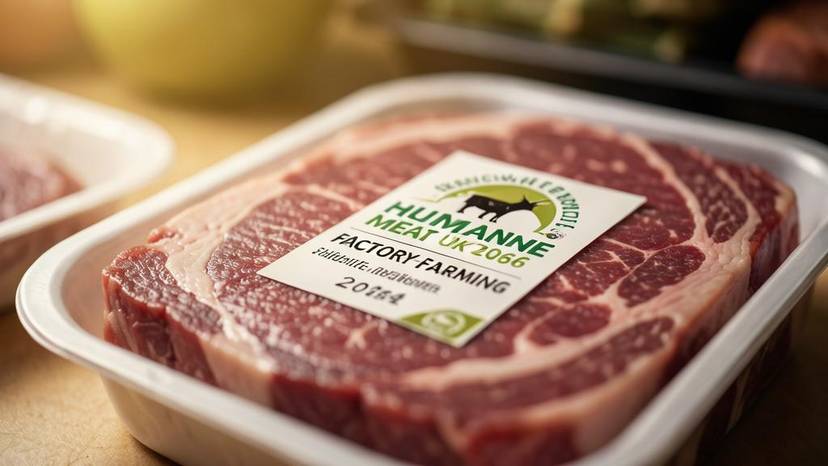
9 Surprising Ways Slaughterhouse Closures Are Reshaping Rural UK Economies in 2026
From job losses to green job creation, this feature reveals how slaughterhouse closures are transforming rural economies and what it means for factory farming's future.
10 min read
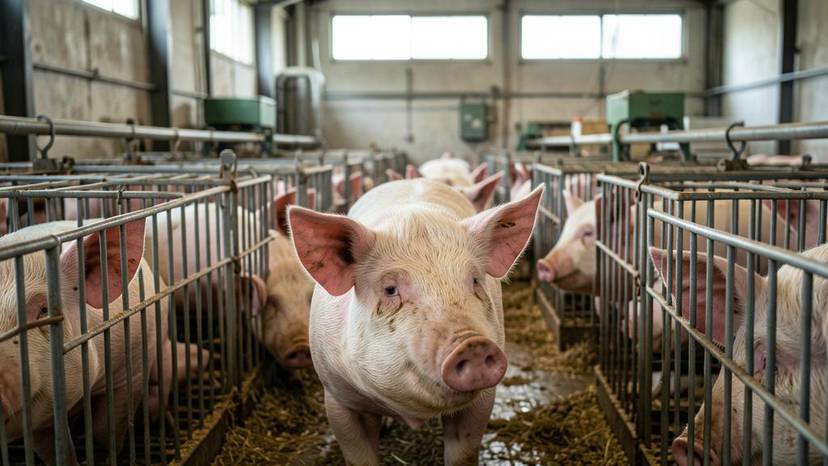
Veal Crates vs Pasture-Raised Calves: Which Beef System Is More Ethical?
Veal crates confine calves for months, while pasture-raised systems offer better welfare—but both end in slaughter. Compare costs, ethics, and sustainability.
6 min read
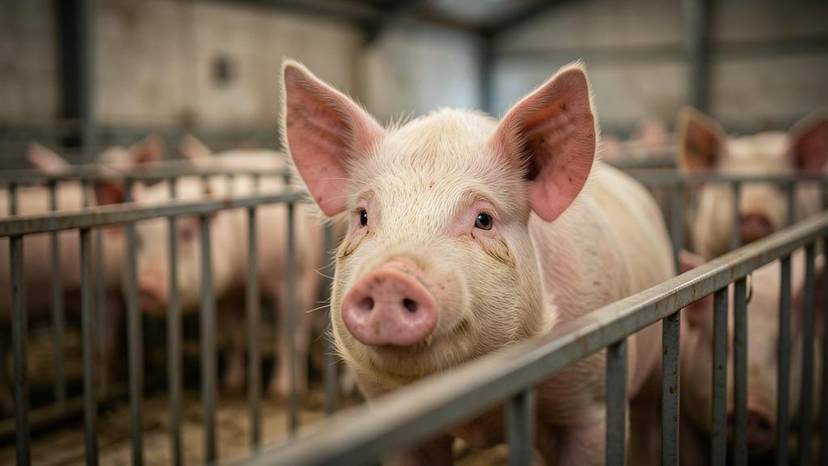
The State of UK Factory Farming in 2026: Antibiotic Use, Welfare, and Policy Data
A data-driven report on UK factory farming in 2026, covering antibiotic use, welfare breaches, slaughter statistics, and policy shifts toward plant-based alternatives.
7 min read