The Vegan Kingdom's New Clothes: When Plant-Based Pioneers Embrace Cattle Ranching
The shocking pivot by the founders of a vegan empire from oat milk to animal agriculture reveals a deep philosophical rift in the future of ethical eating.
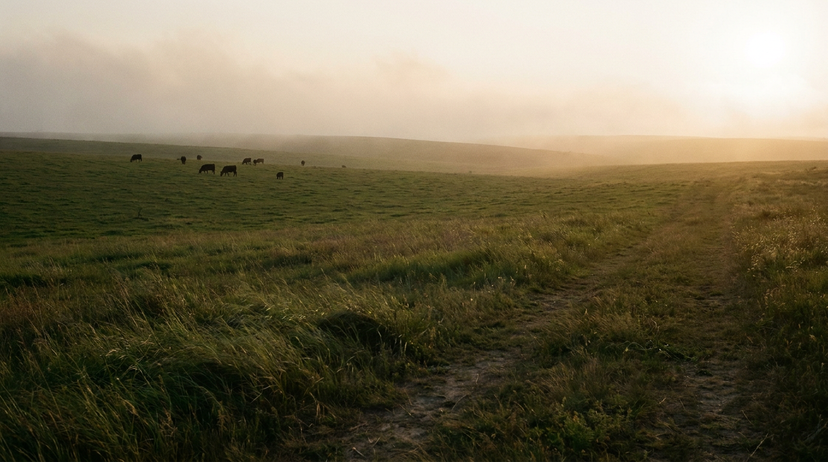
For over two decades, Matthew and Terces Engelhart were not just participants in the plant-based movement; they were its high priests. Through their celebrated restaurant chain, Cafe Gratitude, and its offshoots like Gracias Madre, they built an empire on a foundation of organic, animal-free ingredients, served with a side of positive affirmations. To eat at Cafe Gratitude was to partake in a lifestyle, one where you were 'Flourishing' (eating a crisp salad) or 'Fulfilled' (enjoying a warm bowl). Now, in a move that has sent shockwaves through the community they helped build, the Engelharts have announced a new chapter: they are no longer vegan. They are raising and eating cattle.
The announcement, which trickled out via social media and a subsequent article in Alta Journal, is that they have traded their plant-based purism for a new creed: regenerative agriculture. On their Be Love Farm in Northern California, the couple that once popularised cashew cheese and quinoa bowls are now managing a herd of cattle, consuming their meat, and advocating for a food system that reintegrates animals into the land. For countless vegans who saw the Engelharts as unimpeachable leaders, the news felt like a profound betrayal, a confusing heresy from the very people who wrote the scripture.
I. The Heresy of the High Priests
It is difficult to overstate the Engelharts' influence on modern wellness culture. When the first Cafe Gratitude opened in San Francisco in 2004, it tapped into a burgeoning desire for food that was not only healthy but also felt ethically and spiritually clean. They franchised this feeling with remarkable success, expanding across California and attracting a devoted celebrity following. They were pioneers in making vegan cuisine aspirational, delicious, and mainstream. Their restaurants became community hubs, their cookbooks became kitchen staples, and their personal story became a parable of conscious capitalism.
This legacy is precisely why their pivot has been met with such visceral anger and disbelief. The internet forums and social media threads that once celebrated their recipes are now filled with accusations of hypocrisy and grift. The charge is simple: after building a multimillion-dollar brand on the moral and environmental superiority of a plant-based diet, how could they now endorse the very industry veganism defines itself against? For many, it feels like a repudiation not just of a diet, but of an entire ethical framework they were instrumental in selling to the public.
The backlash is rooted in the core tenets of veganism, which extend beyond diet to a philosophy of non-harm and non-exploitation of animals. From this perspective, there is no such thing as 'humane' slaughter or 'ethical' meat. An animal's life is its own, and using it as a resource—whether for food, milk, or soil management—is a fundamental violation. The Engelharts' transition is therefore seen not as an evolution in thinking, but as a moral failure and a public betrayal of the animals they once claimed to protect.
II. The Gospel of Regeneration
The Engelharts, for their part, do not see their actions as a betrayal but as a progression towards a more sophisticated and effective form of environmentalism. Their new gospel is regenerative agriculture, a philosophy they have evangelised in recent years, notably through their connection to the popular Netflix documentary 'Kiss the Ground'. In their view, the ultimate goal is not simply to abstain from animal products, but to actively heal a planet ravaged by industrial farming, both animal and plant.
Their argument, echoed by a growing chorus in the sustainable food space, is that well-managed livestock are not the enemy but a crucial tool for ecological restoration. They contend that grazing animals, through their manure, urination, and hoof action, can build topsoil, increase biodiversity, improve water retention, and sequester atmospheric carbon back into the earth. It is a vision of a farm as a complete, self-sustaining ecosystem, a stark contrast to the vast, soil-depleting monocultures that often grow the soy, corn, and wheat central to the industrial plant-based food system.
On their farm, they claim to be practicing a 'holistic' model where the cattle are not just future beef but living, breathing 'ecosystem engineers.' This narrative reframes the ethical equation. The question is no longer just 'Is it wrong to kill an animal?' but also 'Is it wrong to participate in an agricultural system, even a vegan one, that degrades soil and destroys ecosystems?' For the Engelharts, the answer to the latter question led them, seemingly paradoxically, to the butcher.
“This isn't about one couple's dietary choices; it's a referendum on whether the ethical food movement can tolerate complexity. It pits a clear, rights-based ethic against a messy, systems-based one.”
III. Veganism’s Uncomfortable Questions
The Engelhart affair forces an uncomfortable but necessary confrontation between two powerful visions for a better food future. On one side, veganism offers a moral clarity that is both its greatest strength and, some now argue, its potential weakness. Its bright-line rule against animal exploitation is simple to understand and provides a clear ethical compass.
On the other side, the regenerative movement, particularly the branch that includes animals, presents a systems-based ecological argument. It suggests that veganism's focus on the individual animal misses the bigger picture: the health of the entire ecosystem. Proponents of this view point out that much of the world's land is non-arable pasture that cannot grow crops but can support grazing animals, which could, under the right management, restore those grasslands. They also argue that 'vegan agriculture' is not a monolith and is often just as destructive as any other form of industrial farming, relying on heavy machinery, fossil fuels, and chemical inputs that devastate soil life, from microbes to insects and small mammals.
This critique does have its limits. An alternative model known as veganic agriculture—growing crops without any animal inputs like manure or bone meal—has existed for decades. It relies on green manures, crop rotation, and composting to build soil fertility. However, its proponents are often the first to admit that it is more demanding and less understood than other systems, and its viability at a global scale remains a significant question. The reality is that the food on most vegans' plates comes from the same extractive industrial system that produces everything else.
| Philosophy | Core Principle | Typical Practices | Stance on Livestock |
|---|---|---|---|
| Conventional Agriculture | Maximise yield and efficiency | Monocropping, chemical fertilizers, pesticides, CAFOs | Instrumental; raised in confinement for meat/dairy |
| Industrial Organic | Avoid synthetic inputs | Large-scale monocrops, approved 'natural' pesticides, reliance on external inputs | Permitted, with organic feed and some access to outdoors |
| Veganic Agriculture | No animal exploitation or inputs | Green manures, cover crops, vegetable compost, crop rotation | Explicitly excluded C an ethical and practical level |
| Holistic Regenerative | Heal the ecosystem | No-till, cover crops, multispecies planting, managed grazing | Integral; seen as tool for building soil health and biodiversity |
IV. The Future of the Fork
Where does this leave the conscious consumer? The binary choice between a 'plant' burger and a 'beef' burger is dissolving into a bewildering matrix of production methods. The term 'regenerative' itself is now at risk, a trendy buzzword ripe for greenwashing by large corporations who may adopt one or two practices without committing to the holistic philosophy. A 'regenerative' label on a package of beef might mean it came from a farm that is genuinely sequestering carbon, or it might just mean the cows were rotated between two pastures instead of one.
This shift also highlights a class dimension in ethical eating. While the global plant-based market has worked hard to make accessible products like oat milk and veggie burgers, regeneratively-raised meat is, for now, a premium product. It is expensive and available only to a self-selecting few who have the time, money, and education to seek it out. It risks creating a two-tiered ethical system: a boutique, soil-focused solution for the wealthy, and a mass-market, just-don’t-eat-animals solution for everyone else.
Year-Over-Year Growth in Consumer Search Interest (%)
As the data suggests, consumer curiosity is rapidly expanding beyond the simple 'plant-based' label. The meteoric rise in interest for terms like 'regenerative' signals a powerful new narrative is taking hold. This presents both a challenge and an opportunity for the plant-based movement. The challenge is that its central, simple message is being complicated. The opportunity is for the movement to mature, to move beyond a singular focus on what is absent from the plate (animals) and to develop a more robust, compelling story about the agricultural systems it actively supports.
The Engelharts may have abandoned their old faith, but the questions their journey raises are vital for the one they left behind. Can veganism integrate the principles of soil health and biodiversity as core tenets? Can it scale up systems like veganic farming to prove that a world without animal agriculture can also be a world with living soil? Perhaps the most enduring legacy of the couple who convinced us to be 'grateful' will be forcing the movement they championed to become more grounded.
Related Reading
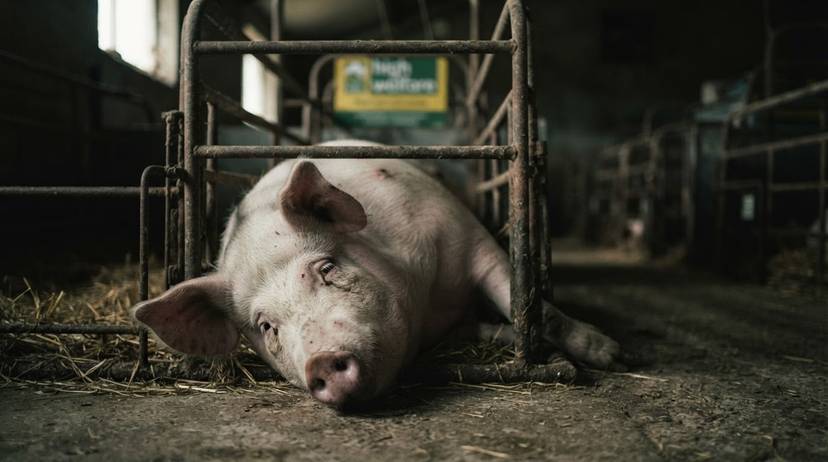
What Footage From UK Pig Farms Reveals: The Truth Behind 'High Welfare' Labels
Undercover investigations inside supposedly 'high welfare' UK pig farms expose a disturbing reality, revealing systemic animal cruelty hidden behind misleading labels and greenwashing tactics.
7 min read

Navigating Kidney Disease: Which Plant Protein Sources for Optimal Health?
For individuals managing kidney disease, understanding which plant protein sources are optimal is crucial for maintaining health and minimising renal impact.
6 min read

The State of Plant-Based Dairy in 2026: Innovations, Market Shifts, and Sustainability
Explore the surging plant-based dairy market in 2026, uncovering key innovations, shifting consumer preferences, and its environmental advantages over traditional dairy.
6 min read