10 Myths About Zero Waste Living, Debunked: A 2026 Guide
Separating fact from fiction on zero waste living, from composting home waste to package-free shopping near me, with evidence-based answers and practical tips.
9 min read
Living
Recycling gets the household attention; food waste gets the landfill methane. For most kitchens, diverting organics is the higher-impact change, and it is the one entirely within your control rather than dependent on distant sorting infrastructure.
Composting
Food scraps, garden waste and, in industrial systems, compostable packaging.
Recycling
Paper, glass, metals and a narrow subset of plastics.
Composting
Prevents anaerobic methane from landfilled organics — a direct, immediate gain.
Recycling
Real for aluminium, steel, glass and paper; weak and inconsistent for most plastics.
Composting
Odour and pests from too much nitrogen and not enough carbon or airflow.
Recycling
Contaminated loads get rejected wholesale; wish-cycling makes this worse.
Composting
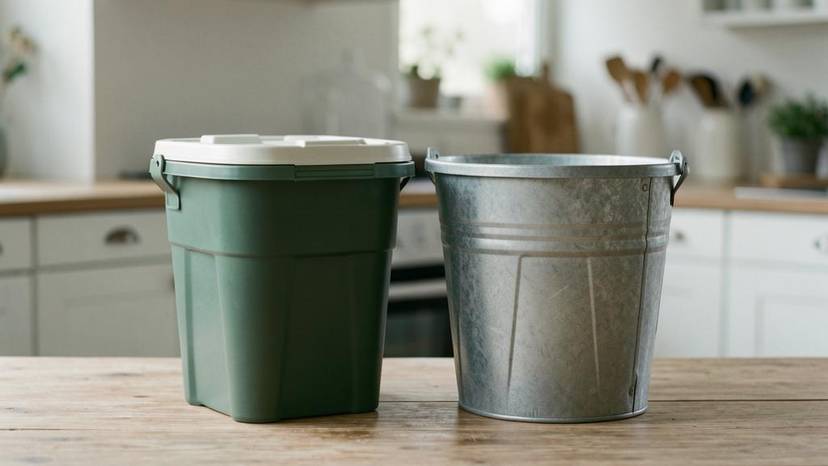
You can do it at home, in a bin or a bokashi bucket, with no municipal system.
Recycling
Entirely dependent on local infrastructure and end markets.
| Criterion | Composting | Recycling |
|---|---|---|
| What it handles | Food scraps, garden waste and, in industrial systems, compostable packaging. | Paper, glass, metals and a narrow subset of plastics. |
| Climate benefit | Prevents anaerobic methane from landfilled organics — a direct, immediate gain. | Real for aluminium, steel, glass and paper; weak and inconsistent for most plastics. |
| Failure mode | Odour and pests from too much nitrogen and not enough carbon or airflow. | Contaminated loads get rejected wholesale; wish-cycling makes this worse. |
| Control | You can do it at home, in a bin or a bokashi bucket, with no municipal system. | Entirely dependent on local infrastructure and end markets. |
Separating fact from fiction on zero waste living, from composting home waste to package-free shopping near me, with evidence-based answers and practical tips.
9 min read

Australia's shark culling programs kill thousands of marine animals each year while doing little for public safety or climate resilience—here's the evidence and what to do instead.
9 min read

UK insurers are quietly repricing livestock farm premiums as climate shocks mount — here's what it means for animal agriculture and plant-based transition.
10 min read

Undercover footage from UK egg farms exposes caged hen cruelty, battery cage conditions, and welfare law loopholes—here's what investigators saw and how to shop ethically.
10 min read

Tyre wear microplastics are the UK's largest source of ocean plastic; these seven filtration systems and alternatives cut pollution at the source.
10 min read
The recent parliamentary debate on banning rabbit meat farming in the UK signifies a pivotal moment for animal welfare, challenging existing food systems and setting a precedent for future animal protection legislation.
7 min read
This comparison weighs two options against the same criteria so the trade-off is visible instead of implied. We do not crown a universal winner: the better choice depends on what you are optimising for — emissions, animal welfare, nutrition, cost, availability or time — and those priorities differ legitimately between readers.
Everything below is drawn from our own reporting in this edition. Where the evidence is genuinely contested, the comparison says so rather than resolving it artificially, and the linked articles show the datasets behind each claim.
Both sides are measured against identical criteria and, wherever possible, against figures from the same study or dataset — mixing sources with different system boundaries is the most common way comparisons mislead. Emissions are given per useful unit rather than per kilogram where that changes the ranking, welfare is assessed against the certification scheme actually in force, and nutrition is compared at realistic serving sizes.
Local context decides several criteria. Water footprint depends on where a crop grows, not only on what it is. Availability, price and labelling rules vary by country. Personal nutrition needs vary by age, pregnancy, medication and medical history. Treat the comparison as a structured way to think, and check the criteria that are local to you.
Pick the two or three criteria that actually matter to you and ignore the rest — a comparison optimised for everything at once is optimised for nothing. If the two options are close on your priorities, the tiebreaker is usually whichever you will realistically keep doing, because sustained changes outperform theoretically optimal ones that get abandoned.