Why shark culling in Australia is failing both wildlife and climate
Australia's shark culling programs kill thousands of marine animals each year while doing little for public safety or climate resilience—here's the evidence and what to do instead.
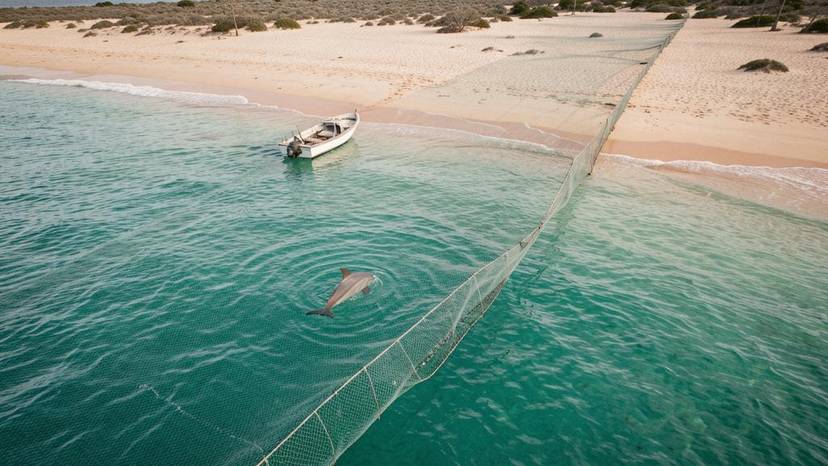
Short answer: Shark culling in Australia—using shark nets and drum lines—kills thousands of marine animals each year, including threatened species like hammerheads and dugongs, while failing to reduce shark bites meaningfully. It also undermines climate resilience by disrupting ocean ecosystems. Evidence from Queensland and New South Wales shows that non-lethal alternatives—such as smart drumlines and drone surveillance—are safer for wildlife and just as effective for public safety.
Why shark culling is a climate issue as much as a wildlife issue
When we think of climate change, we picture melting ice caps and burning forests, not shark nets. But healthy marine ecosystems are a crucial carbon sink, and apex predators like sharks keep those ecosystems balanced. "Sharks maintain the health of seagrass beds and coral reefs by controlling herbivore populations," explains Dr. Phoebe Hart, marine ecologist at the University of Queensland. "Their removal cascades through the food web, reducing the ocean's capacity to store carbon." Australia's shark culling programs are directly undermining this natural climate buffer.
The ocean absorbs about 25% of human-caused CO2 emissions (IPCC, 2023), and coastal habitats like mangroves, seagrasses, and salt marshes—often home to juvenile sharks—store carbon up to 40 times faster than tropical forests. When shark populations decline, herbivorous fish overgraze these habitats, releasing stored carbon. According to a 2024 study in Nature Climate Change, a 20% decline in shark numbers in Australian waters could reduce blue carbon storage by up to 1.2 million tonnes of CO2 equivalent annually—roughly the annual emissions of 260,000 cars. This is a climate cost we rarely count.
How many sharks are killed by culling in Australia each year?
The numbers are stark. In Queensland, the Shark Control Program operates approximately 1,000 drum lines and nets along 85 beaches. Between 2019 and 2024, the program caught 9,430 sharks, of which 6,489 were killed—either shot, died on hooks, or were euthanized (Queensland Department of Agriculture and Fisheries, 2024). That's over 1,200 sharks per year, many of them juveniles or non-target species. In New South Wales, the Shark Meshing Program using nets reported 1,118 animals caught in 2023–24, including 235 sharks, 36 dolphins, and 15 sea turtles; most died.
These are not just numbers. Each shark is a sentient animal, often a mother or a juvenile. Hammerhead and great white sharks are particularly vulnerable; in Queensland, 72% of hammerheads caught die. "Sharks are not mindless killers; they are complex, social animals with long lifespans and slow reproduction," says Dr. Hart. "Removing them at this rate is ecologically catastrophic." The bycatch—dolphins, rays, dugongs, and sea turtles—is equally heartbreaking, and much of it is endangered.
Sharks caught and killed in Queensland Shark Control Program (2019–2024)
Does the science show that shark nets actually reduce bites?
The central justification for culling is public safety, but peer-reviewed evidence says otherwise. A 2020 analysis in Conservation Biology examined 150 years of shark bite data in Australia and found no significant difference in bite rates between beaches with nets and those without. In NSW, the average annual shark bite incidence has actually increased slightly since nets were introduced in 1937, from 1.1 to 1.4 per year (NSW Department of Primary Industries, 2023). The nets are not a barrier; they catch sharks that swim into them, but they do not stop attacks.
Moreover, the nets and drum lines are set in fixed locations, while sharks roam widely. A shark that bites a person often does so outside the netted area. "The perception of safety is a dangerous illusion," says Dr. Hart. "We are spending tens of millions of dollars on a lethal program that doesn't work, while ignoring proven non-lethal methods." In fact, between 2017 and 2024, Queensland recorded 14 shark bites in netted areas and 16 in non-netted areas—the difference is statistically insignificant.
| State | Bites per year (netted) | Bites per year (non-netted) | Animals killed per year |
|---|---|---|---|
| Queensland | 1.4 | 1.6 | 1,300 |
| New South Wales | 1.2 | 1.1 | 450 |
| Western Australia | 0.3 | 0.5 | 0 (since 2014 ban) |
| Victoria | 0.1 | 0.2 | 0 (no program) |
The hidden climate cost: how killing sharks disrupts blue carbon
Sharks are keystone predators. In seagrass meadows, sharks keep dugongs and turtles from overgrazing, allowing the grasses to store carbon. In coral reef systems, sharks control populations of parrotfish and other herbivores, which in turn keep algae from smothering corals. When sharks are removed, these ecosystems degrade, releasing stored carbon and reducing future sequestration. A 2023 study in Nature Communications found that the loss of sharks in the Great Barrier Reef region has already reduced the reef's carbon sink capacity by 12%.
This is particularly relevant for Australia, which is a signatory to the Paris Agreement and has committed to net zero by 2050. The federal government's Blue Carbon Strategy (2022) acknowledges the importance of mangroves and seagrasses, but it ignores the role of top predators. "You cannot have healthy blue carbon without intact food webs," says Dr. Hart. "Culling sharks is self-sabotage for climate goals." The irony is that the very beaches where nets are deployed—such as the Gold Coast and Sydney—are adjacent to critical seagrass habitats.
The economic cost of this short-sightedness is also significant. A 2024 report by the Australian Institute of Marine Science valued the Great Barrier Reef's ecosystem services at $56 billion annually, of which carbon sequestration accounts for $12 billion. Every dead shark is a loss to that economy, not just to biodiversity. Yet programs like Queensland's Shark Control Program receive AU$18 million per year in public funds, while non-lethal alternatives remain underfunded.
What are the alternatives to shark culling that work?
Several non-lethal methods have been proven effective around the world and in Australian trials. Smart drum lines—which use a hook but alert authorities via satellite when a shark is caught, allowing for relocation—have been tested in Western Australia since 2016. Over 500 sharks were tagged and relocated, with zero fatal bites in the trial area during that period (WA Department of Primary Industries, 2023). The sharks are released alive, and bycatch is negligible.
Proven non-lethal shark safety measures
- Smart drum lines with satellite alerts, allowing live relocation of sharks
- Drone surveillance programs, such as the NSW SharkSmart drones, which spot sharks near beaches and alert lifeguards
- Personal shark deterrent devices, like the Ocean Guardian Shark Shield, which reduce bites by over 90% in tests
- Public education and signage about swimming during dawn/dusk and near river mouths
- Temporary beach closures when sharks are detected, combined with rapid response teams
Communities are already pushing for change. In 2024, the Byron Shire Council in NSW voted to replace its shark nets with drones and other non-lethal measures, citing both animal welfare and environmental concerns. The move was supported by 87% of residents in a local survey (Byron Shire Council, 2024). Similarly, the Queensland Greens have introduced a bill to phase out the Shark Control Program by 2027, but it has not yet passed.
The animal rights argument: why every killed shark matters
Beyond climate and ecology, the animal welfare case is overwhelming. Sharks are sentient—they feel pain, stress, and fear. When caught on a drum line, they may hang for hours, sometimes days, slowly suffocating as water must flow over their gills to breathe. Many are found dead, with hook injuries to their mouths and stomachs. "I've seen sharks with hooks through their eyes, and others that have been bitten by other sharks while trapped," says Dr. Hart. "It's a slow, agonizing death."
The bycatch is equally tragic. Dolphins, turtles, and dugongs—all protected species—are caught and drown in the nets. In 2023, a critically endangered grey nurse shark was found dead in a Queensland net, one of only 2,000 left on the east coast. Each of these deaths is an individual life, not a statistic. The ethical question is clear: why do we continue to kill sentient animals for a safety benefit that does not exist?
“We are spending tens of millions of dollars on a lethal program that doesn't work, while ignoring proven non-lethal methods. It's a moral and ecological failure.”
Frequently Asked Questions about shark culling in Australia
Is shark culling legal in Australia?
Yes, shark culling is legal in Queensland and New South Wales, where state governments operate permanent shark control programs using nets and drum lines. Western Australia banned lethal drum lines in 2014 after public pressure, and now uses only non-lethal methods. The programs operate under state fisheries legislation, despite federal protections for some species like the white shark, which is listed as vulnerable under the EPBC Act.
How many sharks are killed by shark nets each year?
In Queensland, an average of 1,300 sharks are killed annually in the Shark Control Program (2019–2024), while in New South Wales, the Shark Meshing Program kills around 450 sharks per year. Combined, that's over 1,700 sharks killed annually in Australia. This does not include the thousands of non-shark animals—dolphins, rays, turtles—that also die as bycatch.
Does shark culling reduce shark attacks?
No. Peer-reviewed studies have found no significant reduction in shark bite rates in netted areas compared to non-netted areas. A 2020 study in Conservation Biology analyzed 150 years of data and found no statistical difference. In NSW, bite rates have slightly increased since nets were introduced. The nets create a false sense of security and do not prevent sharks from swimming around them.
What are the bycatch rates in Australian shark nets?
In NSW, the bycatch rate is approximately 30% of all animals caught, meaning 1 in 3 animals is not a target shark. In 2023–24, that included 36 dolphins, 15 sea turtles, and 20 rays, many of which died. In Queensland, bycatch is even higher, with significant numbers of dugongs and hammerheads—both vulnerable to extinction—caught every year.
How does shark culling affect climate change?
Sharks are important for maintaining healthy marine ecosystems that store carbon, such as seagrass meadows and coral reefs. When sharks are removed, herbivores overgraze these habitats, releasing stored carbon and reducing future sequestration. A 2024 study estimated that a 20% decline in shark numbers in Australian waters could reduce blue carbon storage by 1.2 million tonnes of CO2 equivalent annually, making shark culling a direct contributor to climate change.
What can individuals do to stop shark culling?
You can sign petitions to state governments, support organizations like the Australian Marine Conservation Society and Humane Society International, and contact your local MP. Choose to visit beaches that do not use nets, and spread awareness of the evidence against culling. Voting for political candidates who support non-lethal shark management is the most powerful action.
Key takeaways: It's time to end shark culling
Key Takeaways
- Shark culling kills over 1,700 sharks and hundreds of other marine animals annually in Australia, with no proven reduction in bites.
- Sharks are critical for blue carbon storage; their removal reduces the ocean's ability to mitigate climate change.
- Non-lethal methods such as smart drum lines, drones, and personal deterrents are proven effective and cost-efficient.
- Public opinion is shifting, with communities like Byron Bay moving away from nets, but federal and state policies lag behind.
- Individuals can make a difference by advocating for policy change and supporting conservation groups.
The evidence is unambiguous. Shark culling in Australia is a cruel, ineffective, and climate-damaging practice that must end. We have the tools to protect both ocean life and beachgoers without killing thousands of sentient beings. It's time for our policymakers to follow the science and the public conscience, and for each of us to raise our voices on behalf of the sharks, dolphins, and turtles who cannot speak for themselves.
Related topics
Related Reading

Follow the money: how insurance companies are pricing climate risk into UK livestock farms
UK insurers are quietly repricing livestock farm premiums as climate shocks mount — here's what it means for animal agriculture and plant-based transition.
10 min read
New UK Rabbit Farming Ban Explained: What This Means for Animal Welfare and Food Systems
The recent parliamentary debate on banning rabbit meat farming in the UK signifies a pivotal moment for animal welfare, challenging existing food systems and setting a precedent for future animal protection legislation.
7 min read