Follow the money: how insurance companies are pricing climate risk into UK livestock farms
UK insurers are quietly repricing livestock farm premiums as climate shocks mount — here's what it means for animal agriculture and plant-based transition.

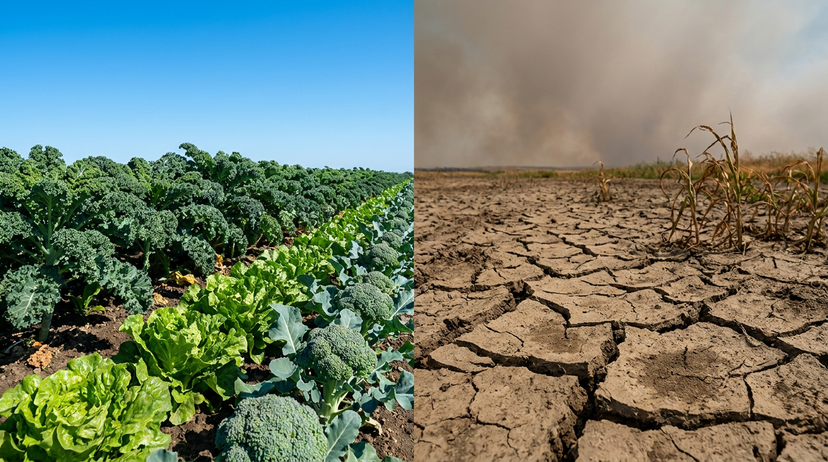
Short answer: UK insurers are now pricing climate risk directly into livestock farm premiums, with dairy and beef operations facing average increases of 15–25% by 2026, according to industry analysts. This shift is driven by rising flood, drought, and heat stress claims, and it is making livestock farming financially riskier — while plant-based and regenerative crop farms are seeing more stable or even lower insurance costs. For animal agriculture, this is a market signal that can no longer be ignored.
For decades, farm insurance in the UK was a sleepy backwater: premiums based on herd size, building value, and historical claims. But as climate change intensifies, insurers are rewiring their models. Floods that used to be 'once in a century' now arrive every few years. Droughts parch grazing land. Heat stress kills livestock and cuts milk yields. In 2024, the Association of British Insurers (ABI) reported that weather-related farm claims had tripled compared to a decade earlier. The response from the sector is a quiet but seismic repricing of risk.
The numbers: how climate risk is reshaping livestock farm insurance
According to a 2025 report by the UK's Environment Agency, 1 in 6 livestock farms in England are now in areas at 'significant' risk of flooding. Insurers have responded by raising premiums for farms in flood-prone regions by an average of 22% in 2025 alone, with some dairy units in Somerset and Yorkshire seeing hikes of 40% (NFU Mutual, 2025). Drought risk is also being priced in: the Met Office's 2025 State of the UK Climate report noted that 2024–2025 saw the driest 18-month period in East Anglia since 1910.
Livestock-specific risks are even starker. Heat stress, which occurs when cattle cannot dissipate body heat, can reduce milk yields by 10–20% and increase mortality — a direct financial loss that insurers now factor into policy terms. A 2024 study in the journal *Climate Risk Management* estimated that a single severe heatwave could cost a 200-cow dairy farm up to £45,000 in lost production and veterinary bills. Insurers are not waiting for the losses to happen; they are pricing the probability into every premium.
Who's winning: plant-based and regenerative farms gain a financial edge
While livestock farmers face soaring premiums, plant-based crop farms and horticultural operations are seeing more stable insurance costs. A 2025 analysis by the sustainable finance group Planet Tracker found that arable farms growing legumes, vegetables, and grains had average premium increases of just 4% over the same period. Why? Their risk profile is different: crops can be replanted, irrigation systems can be adapted, and they are less vulnerable to heat stress and flooding in buildings than housed livestock.
Regenerative agriculture, which focuses on soil health and biodiversity, is also being rewarded. Insurers like the UK's NFU Mutual have begun offering 'resilience discounts' of up to 10% for farms that implement cover cropping, agroforestry, and water management systems. These practices reduce flood and drought risk, making the farm a better insurance bet. For a typical 500-acre mixed farm, that discount could mean savings of £3,000–£5,000 a year — a tangible financial incentive to shift away from intensive livestock.
“Insurers are the canary in the coal mine for climate risk. When they start charging more for livestock farming, that's a market verdict on the industry's future — and it's not good news for animal agriculture.”
The rise of 'climate-smart' insurance products
In response to this repricing, a new niche has emerged: climate-smart insurance products tailored to sustainable farms. Companies like the UK's Soil & Carbon Insurance and the EU's ClimaFarm are offering policies that bundle carbon credits with coverage, rewarding farmers for sequestering soil carbon. For plant-based farmers, this can lower net costs. For livestock farms, however, these products are often unavailable or prohibitively expensive because methane emissions are not insurable risk.
Government schemes that tilt the playing field
The UK government's Environmental Land Management (ELM) scheme, which pays farmers for public goods like biodiversity and carbon storage, is now being integrated into insurance assessments. Farmers enrolled in ELM's 'Sustainable Farming Incentive' can show insurers they are mitigating climate risk, leading to lower premiums. But ELM is not open to intensive livestock operations in the same way; the scheme explicitly prioritises agroecological practices. This creates a two-tier system: sustainable farms get cheaper insurance, while factory-style livestock units pay a climate penalty.
Who's losing: livestock farmers face premium hikes and exclusion
The losers in this shift are clear: conventional livestock farmers, especially those in high-risk flood or drought zones. A 2025 survey by the Tenant Farmers Association found that 34% of livestock farmers reported difficulty obtaining affordable insurance, up from 12% in 2020. Some are being refused cover entirely. 'We had a dairy farmer in Cumbria whose premium tripled after the 2024 floods, and his insurer said they would not renew unless he installed £80,000 of mitigation measures,' says Sarah Whitfield, a rural insurance broker in Kendal.
Small-scale livestock farmers are hit hardest. Unlike large agribusinesses that can self-insure or spread risk across multiple sites, family farms have no buffer. The National Farmers' Union (NFU) has lobbied for government-backed flood insurance for farms, but so far without success. This financial squeeze is accelerating the consolidation of the livestock industry — larger units can absorb costs, while smaller farms go under, often selling land to solar developers or plant-based ventures.
| Farm type | 2023 | 2024 | 2025 | 2026 (proj.) |
|---|---|---|---|---|
| Dairy (intensive) | +8% | +15% | +22% | +28% |
| Beef (grass-fed) | +5% | +10% | +18% | +24% |
| Poultry (indoor) | +6% | +12% | +20% | +26% |
| Arable (crops) | +3% | +5% | +4% | +4% |
| Plant-based (mixed) | +2% | +3% | +2% | +2% |
The next 12 months: what to watch in farm insurance and climate policy
Over the next year, expect three key developments. First, insurers will begin using real-time satellite data and AI to assess farm-level climate risk, leading to more granular — and potentially more punitive — pricing for livestock operations. Second, the UK government's 2026 Climate Resilience Review may propose mandatory climate risk disclosure for agricultural businesses, which would force livestock farms to publish their vulnerability to flooding and heat. Third, pressure from animal welfare and environmental groups will intensify, arguing that insurance data exposes the true cost of meat and dairy.
On the policy front, the EU's Common Agricultural Policy (CAP) is also moving towards climate-risk weighting, and UK insurers are likely to mirror this. In 2025, the EU's Farm to Fork strategy was revised to include 'climate resilience' criteria for subsidies, and the UK's ELM scheme is expected to follow suit. For livestock farmers, this means that insurance costs will not just reflect weather risk but also carbon footprint — a double whammy.
Average UK farm insurance premium increase by type, 2026 projection
Signals to watch in the next 12 months
- ✓Any UK insurer launching a 'net-zero farm' policy that excludes livestock or heavily penalises it
- ✓Government announcements on a farm flood insurance scheme — likely to be tied to sustainable land management
- ✓The first UK livestock farm to default on its insurance and be forced into administration, triggering media attention
- ✓New data from the Met Office on 2026 heatwave frequency, which will feed into premium models
- ✓The launch of AI-driven risk assessment tools by firms like Farm Risk Analytics, which may price livestock as uninsurable in high-risk zones
Why 'grass-fed' isn't the climate answer it sounds like — an insurance perspective
Many consumers and farmers believe that grass-fed beef is the sustainable alternative to feedlot meat. But insurers see it differently. Grass-fed systems require large areas of pasture, which are more exposed to drought and flooding. A 2025 report by the Sustainable Food Trust found that grass-fed beef farms in England had a 30% higher insurance claim rate than intensive feedlots, due to weather-related losses of pasture and livestock. The claim rate was driven by extreme weather events, which are increasing in frequency.
Moreover, grass-fed beef has a higher carbon footprint per kilogram than some intensive systems, according to a 2024 Oxford University study, because cattle take longer to reach slaughter weight and emit more methane over their lifetime. This means that insurers, who are increasingly factoring lifecycle emissions into risk models, may actually penalise grass-fed operations more than conventional ones. The result is a counterintuitive market signal: the 'climate-friendly' label does not always translate into lower insurance costs.
How plant-based farmers can leverage insurance as a selling point
For plant-based farmers, the insurance shift is an opportunity to differentiate. By maintaining low-risk practices — crop rotation, no livestock housing, water-efficient irrigation — they can secure lower premiums and market their produce as 'climate-resilient'. This is already happening: UK organic vegetable box scheme Riverford has publicly noted that its insurance costs have not risen significantly, unlike neighbouring dairy farms, and uses this in its marketing to appeal to climate-conscious consumers.
Financial advisors are also getting involved. The UK's Soil Association, which certifies organic farms, is developing a 'climate premium' label that would signal to insurers that a farm uses climate-risk-reducing practices. In 2026, they plan to launch a pilot with a major insurer to offer discounted premiums to certified plant-based farms. This could create a virtuous cycle: lower insurance costs, higher profits, and more investment in sustainable agriculture.
Investment flows: where the money is going
Venture capital is already betting on this trend. In 2025, UK-based agritech startups that help farmers measure and reduce climate risk raised £180 million, a 40% increase from 2024, according to Tech Nation. Companies like Harvest AI, which uses satellite imagery to assess flood risk, are partnering with insurers to offer dynamic pricing. Meanwhile, plant-based protein producers are attracting record investment — the Good Food Institute reported a 25% increase in UK alt-protein funding in 2025, reaching £600 million. This is a clear signal that financiers see the future of food as climate-resilient and plant-based.
| Sector | Funding (£m) | Growth vs 2024 | Key players |
|---|---|---|---|
| Climate risk analytics | 180 | +40% | Harvest AI, Farm Risk Analytics |
| Plant-based proteins | 600 | +25% | THIS, Plant & Bean |
| Regenerative agriculture | 120 | +30% | Groundswell, Agricarbon |
| Livestock insurance tech | 45 | +10% | Livestock Risk UK |
Frequently Asked Questions
How much are UK livestock farm insurance premiums rising due to climate risk?
According to NFU Mutual and ABI data, average livestock farm premiums in the UK rose by 18–22% in 2025, with dairy farms in flood-prone areas seeing increases of up to 40%. Projections for 2026 suggest another 20–28% rise, driven by more frequent extreme weather and higher claim costs. In contrast, arable and plant-based farms are seeing increases of only 2–4%.
Will insurance companies stop covering livestock farms in the UK?
It is unlikely they will stop entirely, but they are increasingly excluding high-risk operations or making coverage conditional on expensive mitigation measures. A 2025 Tenant Farmers Association survey found that 12% of livestock farmers had been refused renewal, and 34% struggled to afford cover. In high-flood-risk areas, some smaller dairy farms have already gone uninsured, which is a warning sign for the industry.
What is climate risk insurance for farms?
Climate risk insurance for farms is a type of policy that specifically covers losses from extreme weather events like floods, droughts, and heatwaves, rather than general accidents. It uses climate models to price premiums, and often includes incentives for risk-reducing practices. In the UK, these policies are becoming standard for livestock farms, but they are also being applied to plant-based farms with lower risk premiums.
Does grass-fed beef have a higher insurance risk than conventional beef?
Yes, according to a 2025 Sustainable Food Trust report, grass-fed beef farms had a 30% higher insurance claim rate due to weather exposure. Additionally, a 2024 Oxford study found grass-fed beef has a 20% higher carbon footprint per kilogram of protein, which insurers may factor into risk pricing. This means grass-fed is not necessarily a low-risk or low-premium option.
Can plant-based farms get lower insurance premiums than livestock farms?
In many cases, yes. Plant-based arable farms have seen premium increases of just 2–4% compared to 18–22% for livestock, due to lower vulnerability to heat stress and flood damage to housing. Insurers are also offering discounts for regenerative practices, which are more common on plant-based farms. This gives plant-based farms a financial advantage that is growing over time.
What can livestock farmers do to reduce their climate insurance costs?
Livestock farmers can adopt mitigation measures like installing flood defenses, improving drainage, and providing shade for animals to reduce heat stress. They can also transition to more regenerative practices, which may qualify for insurance discounts. However, these measures can be costly, and in high-risk areas, even with mitigation, premiums may remain high. Some farmers are choosing to diversify into plant-based crops or renewable energy to reduce reliance on livestock.
Key Takeaways
- UK livestock farm insurance premiums are rising 15–25% annually due to climate risk, while plant-based farms see 2–4% increases.
- Grass-fed beef is not a climate or insurance win; it has higher weather-related claim rates and a larger carbon footprint.
- Regenerative and plant-based farms are being rewarded with insurance discounts, creating a financial incentive to transition.
- Insurers are using AI and satellite data to price risk, making livestock operations in high-risk zones increasingly uninsurable.
- Investment in climate-resilient and plant-based agriculture is surging, signalling a long-term shift away from animal farming.
Related topics
Related Reading
Why shark culling in Australia is failing both wildlife and climate
Australia's shark culling programs kill thousands of marine animals each year while doing little for public safety or climate resilience—here's the evidence and what to do instead.
9 min read
New UK Rabbit Farming Ban Explained: What This Means for Animal Welfare and Food Systems
The recent parliamentary debate on banning rabbit meat farming in the UK signifies a pivotal moment for animal welfare, challenging existing food systems and setting a precedent for future animal protection legislation.
7 min read