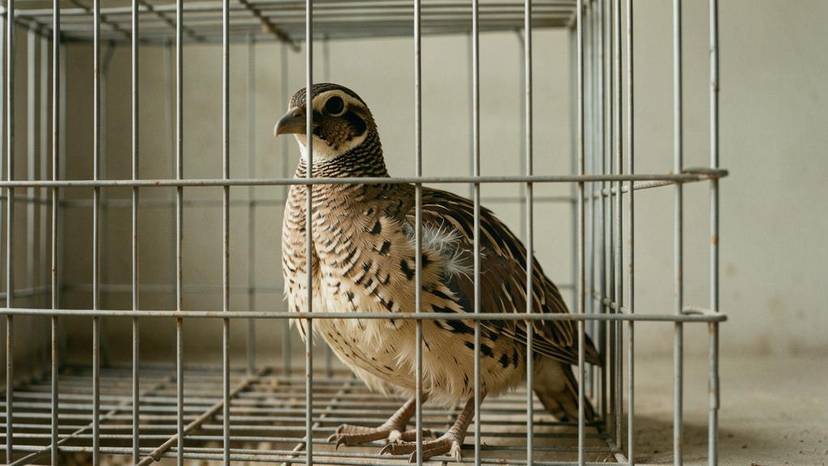
Why Chicken Is the Most-Eaten and Least-Protected Animal on Earth
A former broiler farm worker reveals the hidden cruelty inside industrial chicken sheds and why poultry welfare lags behind every other farmed animal.

Short answer: Chickens are the most-eaten and least-protected animals on Earth because industrial poultry production prioritises speed and volume above all else, and legal welfare standards lag decades behind those for mammals. Globally, we slaughter over 74 billion chickens a year for meat (FAO, 2024), yet in most countries they remain exempt from basic humane slaughter laws, are bred to suffer chronic pain, and are denied even the minimal protections given to pigs or cattle.
Where I started: a farm girl who never questioned the shed
I grew up in Norfolk, UK, among golden fields and red-brick farmhouses. My father managed a 40,000-bird broiler unit on the edge of a village that still held an annual harvest festival. On Sundays we ate roast chicken, and I never once connected the golden bird on the platter to the long, windowless sheds I passed on the school bus.
At eighteen, I took a summer job at that same unit. I needed money for university, and the pay was decent for a teenager. The foreman handed me a pair of steel-toe boots and a respirator mask, and said, “You’ll get used to the smell.” He didn’t mention the birds. He didn’t need to — they were everywhere, a white, shuffling sea under dim red lights.
What I saw: a day inside a broiler shed
The first thing you notice is the ammonia. It burns your eyes and throat within minutes, even with the mask. The air is thick with dust, feathers, and the sharp tang of droppings. The birds — Ross 308 hybrids, bred to grow so fast their legs buckle — stand ankle-deep in litter that hasn’t been changed for weeks. Many can barely walk. Some drag themselves on their wings.
My job was to walk the shed twice a day and collect the dead. On a bad day, I’d carry out fifty or sixty birds. They died of heart attacks, organ failure, and suffocation when they piled against walls. The living ones pecked at the bodies, a behaviour that’s normal for bored, stressed birds — but in the industry it’s called a “welfare problem” and met with beak trimming.
The birds were slaughtered at just 35 to 42 days old — a natural chicken can live for over a decade. They reached slaughter weight of 2.2 kg, but their skeletons and hearts hadn’t caught up. Lameness rates in fast-growing breeds exceed 15% on many UK farms (RSPCA, 2023). I remember one bird whose leg had twisted completely backwards, yet she still dragged herself to the feeder, pecking at crumbs.
Why chicken is the most-eaten and least-protected animal on Earth
The answer lies in a lethal combination: cheap meat, fast growth, and legal loopholes. Chickens are small and cheap, so consumers don’t form the same emotional bond as with, say, a pig or a cow. And because they’re killed in such vast numbers, regulators have been slow to extend protections. In the EU, for example, the Chicken Directive (2007/43/EC) sets a maximum stocking density of 42 kg/m², but it allows a loophole up to 39 kg/m² without welfare checks — and it doesn’t ban the most extreme growth rates.
Compare that with the UK’s own pig welfare code, which mandates straw bedding, environmental enrichment, and a ban on sow stalls. Chickens get no such legal minimums. In the US, chickens are exempt from the Humane Methods of Slaughter Act, meaning they can be slaughtered without stunning — a practice that would be illegal for cows or pigs. This is why animal rights groups call chickens “the forgotten billions.”
What changed: the night I couldn’t unsee it
One evening in late July, I was sent to a shed that had been flagged for high mortality. It was 32°C outside, and inside the shed the heat was suffocating. The fans had broken mid-afternoon. Birds were panting, wings spread, some already dead. The manager told me to “pick out the weak ones” for culling — a euphemism for killing them by hand.
I was given a metal hook and shown how to snap their necks. The first bird looked up at me with a bright, curious eye. She didn’t know what was coming. When I twisted, her body shuddered, then went limp. I did that forty-two times that night. Each one had a heartbeat, a personality — some were bold, some shy. I went home and cried for hours.
“The chicken is the most sentient being I’ve ever killed, and the least protected. We’ve built an entire industry on the myth that they don’t feel pain.”
That night broke something in me. I started researching. I learned that chickens are not “dumb birds” — they demonstrate complex social hierarchies, can count, and show empathy for distressed flock mates (University of Bristol, 2015). They experience pain, fear, and stress just like mammals. Yet we gas them in chambers, stun them in electrified water baths, and often fail to render them unconscious before their throats are cut.
What I do now: telling the chickens’ story
I left the farm after that summer and became an animal rights investigator. I’ve worked on undercover operations across the UK and Europe, documenting what happens inside sheds, hatcheries, and slaughterhouses. I’ve seen day-old male chicks ground up alive in macerators because they’re useless to the egg industry. I’ve filmed hens in battery cages unable to stretch their wings, their beaks seared off with hot blades.
Now I work for the Humane Society International’s UK office, pushing for better legal protections. I speak at schools, give talks to farming students, and write reports that land on ministers’ desks. Last year, I helped compile evidence that led to a parliamentary inquiry into broiler chicken welfare — the first in over a decade.
What I want you to take from this: the chicken on your plate is a sentient being
The next time you see a chicken sandwich or a bargain bucket, I want you to remember that bird who looked at me before I killed her. She was as intelligent and feeling as your dog or cat. The only difference is that we’ve decided she’s cheaper to ignore.
You don’t have to be a vegan activist to make a difference. Choosing plant-based options even a few times a week reduces demand for the 1.1 billion UK chickens killed annually. Every meal is a vote. And when you vote, you can choose compassion.
What helped me become an advocate
- Reading 'Why We Love Dogs, Eat Pigs, and Wear Cows' by Melanie Joy
- Watching the documentary 'Dominion'
- Joining local animal rights groups for support
- Talking to farmers who left the industry
- Volunteering at a chicken sanctuary
Frequently Asked Questions
Are chickens really sentient?
Yes. Scientific consensus confirms chickens are sentient — they experience pain, fear, and pleasure. Studies show they can solve complex problems, anticipate future events, and even influence the behavior of flock mates through social learning (University of Bristol, 2015).
Why are chickens excluded from humane slaughter laws in the US?
The Humane Methods of Slaughter Act (1958) covers cattle, pigs, sheep, and other livestock, but explicitly excludes birds. This means chickens, turkeys, and ducks can be slaughtered without stunning, and their slaughter practices are not federally inspected for humaneness.
What is the worst thing about broiler chicken farming?
The extreme genetic selection that causes chronic pain. Broiler chickens grow so fast that their legs, hearts, and lungs can’t keep up, leading to lameness, heart failure, and sudden death. This is a systemic welfare problem that affects virtually all intensive chicken production.
Does eating 'free-range' chicken solve the problem?
Free-range chickens still face many of the same issues: fast growth, high stocking densities, and painful slaughter. They may have outdoor access, but they are often still killed at 56 days old, and males from egg-laying breeds are still culled. It’s a step up, but not a solution.
How can I help chickens without going vegan?
Start by reducing your chicken consumption. Replace one chicken meal a week with plant-based protein like tofu or lentils. Support campaigns for stronger welfare laws, like the EU’s #EndTheCageAge initiative. And most importantly, talk about it — breaking the silence is the first step to change.
Key Takeaways
- Chickens are the most numerous farmed animal and the most neglected in welfare law.
- Broiler chickens suffer from painful growth disorders due to selective breeding.
- Legal exemptions for poultry slaughter are a global scandal.
- Reducing chicken consumption is the most effective individual action.
- Supporting welfare campaigns can drive systemic change.
Related topics
Related Reading

A short history of vulture population crashes: from Silent Spring to diclofenac
How did vulture populations collapse across Asia and Africa? This timeline traces the poisoning, conservation, and recovery efforts behind one of nature's most vital clean-up crews.
10 min read

A short history of big-cat cub-petting: from circus to crisis
Trace the evolution of big-cat cub-petting from Victorian menageries to modern roadside zoos, and how animal-rights campaigns are ending the practice.
7 min read
I Used to Run a Dairy Farm. Here's What Artificial Insemination Taught Me About Animal Rights
A former dairy farmer reveals the hidden cruelty of artificial insemination in dairy cows and why the animal rights movement must target the dairy industry's core practices.
9 min read