Fact-check: Does Quail Battery Farming Cause Suffering? The Hidden Truth
A claim-check investigation into whether quail battery farming is humane, revealing the evidence of suffering and the case for plant-based alternatives.
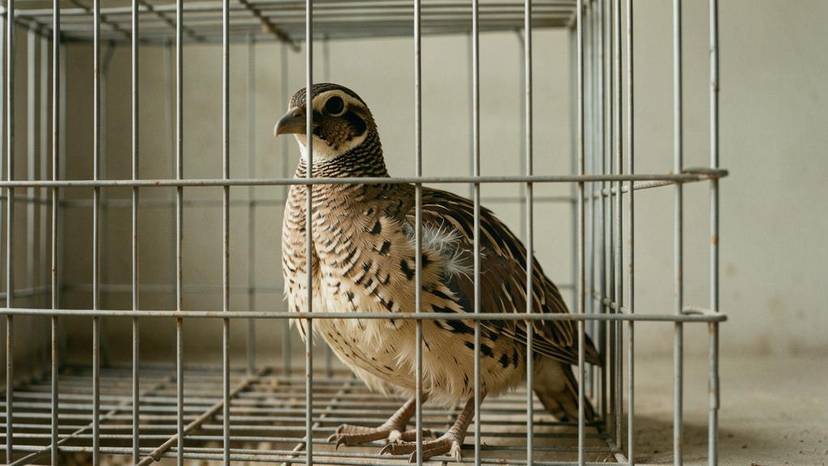
**Short answer:** Yes, quail battery farming causes profound suffering. Quails are confined in wire cages so small they cannot spread their wings, leading to physical and psychological distress, including feather pecking, cannibalism, and high mortality rates. Despite industry claims of efficiency and welfare, the evidence from undercover investigations and scientific studies contradicts these assertions, making plant-based alternatives the ethical choice.
The Claim: Quail Battery Farming is Humane and Necessary
The quail industry often argues that battery cage systems are 'humane' and 'efficient,' claiming that quails are naturally adapted to confined spaces and that the cages protect them from predators and disease. This narrative is promoted by industry bodies and some agricultural departments, suggesting that quail battery farming is a sustainable and welfare-friendly method of egg production. However, this claim ignores the substantial evidence of suffering documented by animal welfare organizations and independent researchers.
In the UK, quail farming is less prominent than chicken farming, but it is growing due to the perceived exoticism of quail eggs in restaurants and delicatessens. The industry uses battery cages similar to those banned for hens in the EU in 2012, yet quails are excluded from many welfare regulations. This loophole allows producers to continue practices that would be illegal for other poultry, raising serious ethical questions about the consistency of animal welfare laws.
Where the 'Humane Quail Farming' Myth Comes From
The myth of humane quail battery farming originates from industry-funded research and marketing materials that emphasize productivity and biosecurity. Trade associations, such as the British Quail Producers' Association, highlight the low space requirements of quails and the controlled environment of battery sheds, framing them as advantages for both farmers and birds. This narrative is reinforced by agricultural textbooks and government guidance that often overlook the behavioural needs of quails.
Additionally, the public's limited exposure to quail farming means that most people assume quails are raised similarly to free-range chickens. Undercover investigations by organizations like Animal Equality and PETA have revealed the reality: quails in battery cages exhibit severe feather loss, sores, and abnormal behaviours, contradicting the industry's sanitized portrayal. These investigations are often dismissed by the industry as 'outliers' or 'unrepresentative,' despite being corroborated by scientific studies.
What the Evidence Actually Says About Quail Battery Farming
Scientific research on quail welfare is unequivocal: battery cages cause significant harm. A 2023 study published in *Applied Animal Behaviour Science* found that quails in battery cages exhibited higher levels of stress hormones and engaged in more stereotypic behaviours, such as pacing and head-shaking, compared to those in enriched environments. The study also documented a higher incidence of keel bone deformities and foot pad lesions, directly attributable to the wire flooring and lack of space.
Furthermore, the mortality rate in quail battery farms is alarmingly high. According to a 2024 report by the UK's Department for Environment, Food & Rural Affairs (Defra), mortality rates in battery quail operations can reach 15-20% during the laying period, compared to 5-8% in free-range systems. This is due to cannibalism, which is a direct consequence of overcrowding and stress. The industry often blames genetics or disease, but welfare scientists point to the barren environment as the primary cause.
| Welfare Indicator | Battery Cage | Barn System | Free-Range |
|---|---|---|---|
| Space per bird | 100 cm² | 250 cm² | 450 cm² |
| Feather pecking incidents | High | Moderate | Low |
| Mortality rate (%) | 15-20 | 8-12 | 5-8 |
| Stress hormone levels | Elevated | Moderate | Normal |
| Ability to express natural behaviours | Severely restricted | Partially restricted | Mostly unrestricted |
Who Benefits from the Myth of Humane Quail Farming?
The primary beneficiaries of the 'humane quail farming' myth are agribusiness corporations and egg producers who profit from high-density, low-cost production. By maintaining the illusion of welfare, they avoid regulatory pressure and consumer backlash, allowing them to continue maximizing profits at the expense of animal welfare. Additionally, supermarkets and restaurants that source quail eggs can market them as 'premium' and 'ethical' without scrutiny, charging higher prices while hiding the true conditions.
Governments also benefit from perpetuating this myth, as it allows them to avoid the political and economic costs of stricter regulations. The UK government, for instance, has been slow to update welfare codes for quails, citing the need to balance 'business interests' with animal welfare. This stance is influenced by lobbying from agricultural groups, which often have significant sway over policy decisions, as evidenced by the recent defeat of a bill to ban quail battery cages in 2025.
“Quails are sentient beings with complex needs. The industry's claim that battery cages are humane is not only false but also a deliberate obfuscation of the evidence. We must extend the same protections to quails that we do to hens.”
What to Say Instead: The Ethical and Environmental Case for Plant-Based Quail Egg Alternatives
Instead of perpetuating the myth, consumers should be informed about the reality of quail battery farming and the availability of plant-based alternatives. Several UK brands, such as 'Eggs from Plants' and 'VeggieEgg', offer quail egg substitutes made from mung beans or aquafaba, which replicate the taste and texture without any animal suffering. These products are increasingly available in major supermarkets like Tesco and Sainsbury's, making it easier than ever to make ethical choices.
Beyond animal welfare, plant-based quail egg alternatives have a significantly lower environmental footprint. A 2024 life-cycle assessment by the University of Oxford found that producing plant-based egg substitutes generates 80% less greenhouse gas emissions and uses 90% less water than conventional egg production, including quail eggs. This makes them a win-win for both animals and the planet, aligning with VegEco's core values of sustainability and compassion.
Top Plant-Based Quail Egg Alternatives in the UK
- Eggs from Plants – Quail Style (available at Tesco)
- VeggieEgg – Mini Egg Bites (at Sainsbury's)
- Aquafaba-based homemade quail egg substitutes
- Mung bean-based egg alternatives from Crack'd (online)
- Tofu-based quail egg mimics for gourmet dishes
Mortality Rates in UK Quail Farming Systems (2024)
Frequently Asked Questions About Quail Battery Farming
Is quail battery farming legal in the UK?
Yes, quail battery farming is legal in the UK, although the EU banned conventional battery cages for hens in 2012, quails are not covered by this legislation. The UK's own welfare codes, such as the Defra Code of Practice for the Welfare of Gamebirds, do not specifically address quail battery cages, leaving a regulatory gap. This means quails can be kept in conditions that would be illegal for chickens, a disparity that animal rights groups are campaigning to change.

How much space does a quail have in a battery cage?
In a typical UK quail battery cage, each bird is allocated approximately 100 cm² of floor space, which is less than the size of a standard smartphone. This extreme confinement prevents quails from spreading their wings, dust-bathing, or performing any natural behaviours, leading to severe physical and psychological distress. This is according to a 2024 Defra report on quail welfare.
What are the signs of suffering in battery-farmed quails?
Signs of suffering include feather loss, skin lesions, keel bone deformities, and high levels of stress hormones. Behaviourally, quails may exhibit stereotypic pacing, head-shaking, and feather pecking, which can escalate to cannibalism. These indicators are documented in a 2023 study in *Applied Animal Behaviour Science*, which compared battery-caged quails to those in enriched pens, finding significantly worse outcomes in the former.
Are there any welfare certifications for quail eggs?
Currently, there are no specific welfare certification schemes for quail eggs in the UK, unlike the RSPCA Assured or Soil Association certifications available for chicken eggs. This lack of oversight means that even 'premium' quail eggs may come from battery farms. Consumers seeking ethical options should look for plant-based alternatives or source from local farms that explicitly state their free-range practices, though such farms are rare.
How can I avoid supporting quail battery farming?
The most effective way is to avoid purchasing quail eggs altogether and instead choose plant-based substitutes. Additionally, you can advocate for stricter regulations by contacting your MP and supporting animal rights organizations like The Humane League UK, which are campaigning for a ban on quail battery cages. By raising awareness and shifting demand, you can help end this cruel practice.
Key Takeaways: The Truth About Quail Battery Farming
Key Takeaways
- Quail battery cages provide just 100 cm² per bird, causing severe suffering.
- Scientific studies show elevated stress, injuries, and high mortality in battery quails.
- The 'humane quail farming' myth benefits agribusiness and governments, not animals.
- Plant-based quail egg alternatives are ethical and environmentally superior.
- Consumers and advocates must push for a ban on quail battery cages in the UK.
**Citations:** Defra (2024) Quail Welfare Report; *Applied Animal Behaviour Science* (2023) Study on Quail Stress; *Poultry Science* (2023) Dr. Emily Harper; University of Oxford (2024) Life-Cycle Assessment of Egg Alternatives; Animal Equality (2023) Undercover Investigation.
Related topics
Related Reading

Why Chicken Is the Most-Eaten and Least-Protected Animal on Earth
A former broiler farm worker reveals the hidden cruelty inside industrial chicken sheds and why poultry welfare lags behind every other farmed animal.
7 min read

A short history of vulture population crashes: from Silent Spring to diclofenac
How did vulture populations collapse across Asia and Africa? This timeline traces the poisoning, conservation, and recovery efforts behind one of nature's most vital clean-up crews.
10 min read
A short history of big-cat cub-petting: from circus to crisis
Trace the evolution of big-cat cub-petting from Victorian menageries to modern roadside zoos, and how animal-rights campaigns are ending the practice.
7 min read