How to Talk to Kids About Meat, Dairy, and Where Food Comes From Without Shame
A trauma-free family guide to explaining animal farming, plant-based eating, and food origins to children aged 3–14, with age-appropriate scripts and expert-backed nutrition tips.
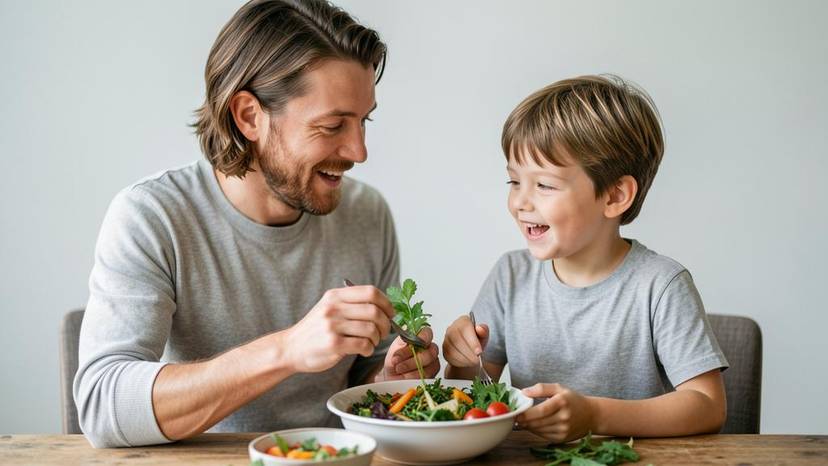
**Short answer:** The best way to talk to kids about meat, dairy, and where food comes from is to use honest, age-appropriate language that focuses on compassion rather than graphic detail, and to frame plant-based choices as positive and empowering. Start by asking what they already know, then build on that with simple scripts that match their developmental stage, always leaving room for their questions and emotions.
Every parent of a vegan or plant-based family has faced the moment: your child looks at a chicken nugget at a friend's birthday party and asks, "Why don't we eat this?" Or worse, they come home from school and announce that their teacher said cows need to be milked or we'd waste it. These conversations feel high-stakes because they are — but they don't have to be traumatic. With the right approach, you can raise children who understand food systems, respect animals, and feel confident in their family's choices, without ever planting seeds of fear or shame.
What Kids Already Know About Meat and Dairy
Children are not blank slates. By age three, most UK children have seen pictures of cows in fields, heard nursery rhymes about Old MacDonald, and perhaps watched cartoons where animals talk and smile. They may have eaten meat or dairy at a relative's house, or noticed that their friend's lunchbox contains a ham sandwich while theirs has hummus. Before you start any conversation, it's worth finding out what your child already believes.
Research from the University of Exeter (2023) suggests that children as young as four can grasp the concept of animal sentience — that animals feel pain and joy — even if they don't yet understand the mechanics of farming. A 2022 study in the journal *Appetite* found that kids who understood where meat came from were more likely to express discomfort about eating it, especially when they had a positive emotional connection to animals. This is your starting point: not what you want to teach, but what they've already absorbed from culture, school, and family.
“Children are naturally compassionate. When we explain animal farming honestly, without horror, they often respond with empathy rather than fear. The key is to let them lead with their questions and never to shame them for what they've eaten in the past.”
Age-Appropriate Scripts: How to Explain Food Origins to Kids 3-6, 7-10, and 11-14
The golden rule is to answer only what is asked, and to keep your tone calm and matter-of-fact. You don't need to describe a gas chamber to a five-year-old; you need to say, "We don't eat animals because they are our friends and we love them." As children grow, you can add more detail, but always check in with them: "Is that enough, or do you want to know more?"
Ages 3–6: Simple, Positive, and Concrete
For the youngest children, focus on the animals themselves, not the industry. Use language like "Cows are mummy animals who love their babies, just like I love you. We drink oat milk instead of cow's milk because we want to be kind to cows." If they ask why someone would eat a pig, say, "Some people don't know that pigs are smart and friendly, so they make a different choice. We know better, so we choose differently."
Avoid using the word "wrong" to describe other people's food choices, because that can cause confusion and anxiety. Instead, emphasise that your family is "kind to animals" — a phrase that becomes a positive identity rather than a prohibition. You can also read picture books like *Vegan Is Love* by Ruby Roth (2012) or *That's Why We Don't Eat Animals* (2009), which use gentle illustrations rather than graphic imagery.
Ages 7–10: Facts, Curiosity, and Critical Thinking
At this age, children are more curious about the "how" and "why." They might ask, "Do they kill the cow to get milk?" This is the moment to explain, without gore, that dairy cows are kept pregnant to produce milk, and that their babies are taken away. You can say, "In dairy farming, cows have babies every year, but the babies are taken away so humans can drink the milk. That makes the mummy cow very sad. We choose plant milks instead, so no cow has to be sad."
You can also introduce the concept of factory farming in a developmentally appropriate way. "Most chickens in the UK live in huge sheds with thousands of others, and they never see the sun. They have their beaks trimmed so they don't hurt each other. That's not a happy life." Then pivot to action: "That's why we buy from sanctuaries or choose plant-based foods. Our choices help animals."
Ages 11–14: Ethics, Systems, and Agency
Teenagers can handle nuance. They might ask about the environmental impact of meat, the ethics of "humane" labels, or why their friends still eat animals. Engage with their questions as a conversation, not a lecture. Share facts like: the UK's *Farm to Fork* strategy (2020) aims to reduce food system emissions, but animal agriculture still accounts for 14.5% of global greenhouse gas emissions (FAO, 2022).
Introduce critical thinking about marketing: "Humane" labels don't mean the animal wasn't killed; they mean slightly less cramped conditions. Use documentaries like *Dominion* (2018) if they want to see more, but watch together and pause for discussion. Ultimately, the goal is to help them see that they have the power to make choices that align with their values — not to make them feel guilty about past consumption.
| Age Group | What to Say (Example Script) | What to Avoid | Key Resource |
|---|---|---|---|
| 3–6 | "We don't eat animals because they are our friends. We drink oat milk because cows love their babies." | Graphic details, moral judgments about others | Vegan Is Love by Ruby Roth |
| 7–10 | "In dairy farming, baby cows are taken away from their mums so humans can drink the milk. We choose plant milk instead." | Complex economic arguments, descriptions of slaughter | That's Why We Don't Eat Animals by Ruby Roth |
| 11–14 | "Factory farming puts thousands of animals in cramped sheds. 'Humane' labels don't prevent killing. Let's look at the evidence together." | Shaming language, dismissing their friends' choices | Dominion documentary (with parental co-viewing) |
Handling School and Family Pushback Without Confusion
As any vegan parent knows, your child will be exposed to contradictory messages from grandparents, teachers, and friends. They might be told "You need meat to grow strong" or "It's cruel to make your child vegan." Prepare your child with simple responses, and prepare yourself with facts. The British Dietetic Association (BDA, 2021) confirms that "well-planned vegetarian and vegan diets are appropriate for all stages of the life cycle, including children."
Role-play scenarios at home. If a grandparent says, "But bacon is so tasty," your child can say, "I think pigs are too smart to eat, but I'm glad you enjoy your food." If a teacher implies dairy is necessary, your child can say, "I get my calcium from fortified oat milk and leafy greens. My doctor says I'm healthy." This builds confidence without defensiveness.
For school lunches, check your child's school policy. Many UK schools now offer vegan options as standard, but you may need to provide a packed lunch if options are limited. Speak to the headteacher about your child's dietary needs — under UK law, schools must provide for children with dietary requirements, and some local authorities have adopted plant-based default menus (e.g., in the London borough of Enfield, 2024).
Books and Shows That Support Compassionate Conversations
Stories are one of the most effective ways to teach children about animal sentience without lecturing. For younger kids, *Vegan Is Love* (Ruby Roth, 2012) and *The Adventures of Pirate the Pig* (Volunteer run, 2019) are gentle and positive. For ages 7–10, *The Secret Life of Cows* (Rosamund Young, 2003) is a beautifully written account of cow personalities — though better read aloud by a parent.
For screen time, choose shows that show animals as individuals, not products. *The Animal's Journey* (2019, UK) is a short animated film about a calf separated from its mother, suitable for ages 6+. For older children, *The Game Changers* (2018) focuses on athletic performance and is less graphic, while *Earthlings* (2005) is too intense for most under-14s — save it for later. Always watch together and pause for questions.
Top Books and Shows by Age
- Ages 3–6: Vegan Is Love by Ruby Roth (2012) — gentle, warm illustrations
- Ages 3–6: That's Why We Don't Eat Animals by Ruby Roth (2009) — more detail, still kid-friendly
- Ages 7–10: The Secret Life of Cows by Rosamund Young (2003) — read aloud, celebrates cow sentience
- Ages 7–10: The Animal's Journey (2019) — animated short, UK production
- Ages 11–14: The Game Changers (2018) — sports-focused, plant-based nutrition
- Ages 11–14: Dominion (2018) — graphic, watch together and discuss
Nutrition Basics: Ensuring Your Child Thrives on a Plant-Based Diet
The most common pushback from family members is concern about nutrition. Reassure them with evidence: the BDA (2021) states that well-planned vegan diets meet all nutritional requirements for children. Key nutrients to focus on are vitamin B12, iron, calcium, and omega-3 fatty acids. A daily B12 supplement is essential, as it is not reliably found in plant foods (NHS, 2022).
Iron is abundant in beans, lentils, fortified cereals, and dark leafy greens; pair with vitamin C (e.g., orange slices) to enhance absorption. Calcium can come from fortified plant milks (check labels for 120mg per 100ml) and tofu set with calcium sulphate. Omega-3s are found in ground flaxseed, chia seeds, and walnuts; a teaspoon of flaxseed oil daily can help meet needs (NHS, 2022).
| Nutrient | Why It Matters | Plant Sources | Supplement Needed? |
|---|---|---|---|
| Vitamin B12 | Nerve function, red blood cells | Fortified plant milks, nutritional yeast | Yes, daily supplement (NHS, 2022) |
| Iron | Oxygen transport, energy | Lentils, chickpeas, fortified cereals, spinach | Only if blood test shows deficiency |
| Calcium | Bone growth, muscle function | Fortified plant milk, tofu, kale, almonds | Only if intake is low |
| Omega-3 (ALA) | Brain development, inflammation control | Ground flaxseed, chia, walnuts, rapeseed oil | Optional, flax oil can help |
If your child is under five or has any health concerns, consult a paediatric dietitian — the NHS offers free referrals. But for the vast majority of children, a varied plant-based diet with a B12 supplement is not just adequate; it may reduce risks of obesity, heart disease, and type 2 diabetes later in life (Academy of Nutrition and Dietetics, 2021).
UK Children's Dietary Preferences (2024)
Frequently Asked Questions
Is it safe to raise a child on a plant-based diet?
Yes. The British Dietetic Association (2021) confirms that well-planned vegan diets are safe for all ages, including children, provided they include a reliable source of vitamin B12 (supplement) and adequate calories. A paediatric dietitian can help you plan meals if you're unsure.
How do I tell my child that their grandparents eat meat without causing conflict?
Frame it as a difference in choices, not morality. Say, "Grandma grew up eating meat, and that's what she's used to. Our family chooses to be kind to animals in a different way." Avoid making grandparents the enemy; this preserves family harmony and prevents your child from feeling torn.
What if my child asks to try meat at a friend's house?
Stay calm and curious. Ask them why they're curious — is it the smell, the social aspect, or genuine interest? You can say, "You can try it if you really want to, but let's talk about where it comes from first." If they do try it, don't scold them; use it as a learning moment about making conscious choices.
How much detail about slaughter is appropriate for a 7-year-old?
For ages 7–10, avoid graphic descriptions of slaughter. Instead, focus on the emotional life of animals and the concept that killing is not kind. Say, "Animals want to live, just like we do. That's why we don't eat them." If they ask specifically, "Do they die?" you can answer honestly: "Yes, animals are killed for meat, and that's why we don't eat it."
Will my child feel left out at birthday parties because of their diet?
It's common, but manageable. Talk to the party host in advance, offer to bring a vegan cake or treats your child loves, and coach them on how to say, "I don't eat that, but I'm happy to play!" Many UK bakeries now offer vegan options, and you can even find vegan party bags with animal-friendly stickers.
How can I teach my child about animal rights without making them sad?
Balance the heavy topics with stories of sanctuary animals who are now safe and happy. Visit a farm sanctuary like Goodheart Animal Sanctuaries (UK) or Hillside Animal Sanctuary in Norfolk. Seeing rescued pigs and cows living out their lives happily gives children a positive counterpoint and reinforces that their choices make a real difference.
Key Takeaways
- Start conversations by asking what your child already knows about animals and food
- Use simple, non-graphic scripts that match your child's developmental stage (3-6, 7-10, 11-14)
- Prepare your child with responses to school and family pushback, backed by BDA and NHS facts
- Use books and shows that celebrate animal sentience, not fear
- Ensure a well-planned plant-based diet with a daily B12 supplement (NHS, 2022)
- Visit a farm sanctuary to show positive outcomes and reinforce compassion
Related topics
Related Reading
Fact-check: Are Marine Protected Areas Actually Working for UK Wildlife?
We fact-check the fishing industry's claim that marine protected areas harm livelihoods, revealing what the evidence says about biodiversity recovery, fish stocks, and coastal jobs.
8 min read
The State of UK Wildlife Trade in 2026: What the Data Show on Exotic Pet Impacts
An in-depth look at the state of UK wildlife trade in 2026, revealing the impacts on animal welfare, biodiversity, and conservation efforts.
7 min read
9 Urgent Actions to Safeguard British Wildlife from Habitat Loss (2026)
Protecting British wildlife from habitat loss requires a multi-faceted approach, integrating rewilding, policy reform, and direct conservation efforts to ensure biodiversity thrives across the UK.
7 min read