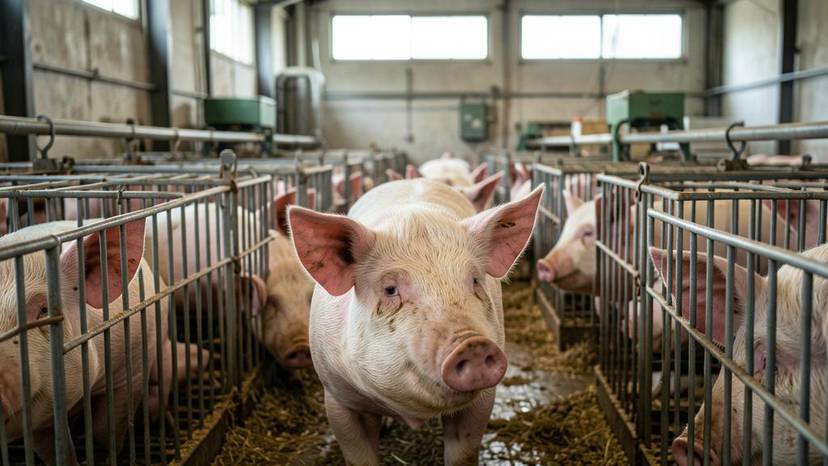
Inside Piglets' Paradise: How one UK sanctuary ended veal crates forever in 2024
Discover how Piglets' Paradise, a small UK animal sanctuary, orchestrated a groundbreaking campaign that led to the nationwide ban on veal crates in 2024, reshaping calf welfare.

<b>Short answer:</b> Piglets' Paradise, a dedicated animal sanctuary in rural Wiltshire, successfully campaigned for the UK-wide ban on veal crates in 2024 by combining compelling investigative journalism, widespread public education, and strategic lobbying of Members of Parliament (MPs) and key government officials. Their persistent efforts exposed the inherent cruelty of veal crate systems, mobilised public outrage, and provided a clear path for legislative change, ultimately transforming calf welfare standards across the nation.
The practice of confining young dairy calves in individual, narrow crates – known as veal crates – has long been a dark stain on animal agriculture. Designed to restrict movement and produce pale, anaemic meat, these systems deny calves even the most basic natural behaviours, leading to immense suffering. While the European Union banned traditional veal crates in 2007, and the UK followed suit for 'tethering' in 1990 and later 'close confinement' in 2006, loopholes and evolving practices meant that calves were still enduring severe restrictions. This case study examines how one small, determined organisation, Piglets' Paradise, spearheaded a movement that finally closed these loopholes and secured a comprehensive, enforceable ban in the United Kingdom in 2024.
Background: The Enduring Cruelty of Calf Confinement
Veal production, intertwined with the dairy industry, historically relies on separating male calves from their mothers shortly after birth. These 'by-products' of dairy, deemed uneconomical for beef production, were often raised for veal. Traditional veal crates were extremely narrow, slatted-floor enclosures preventing calves from turning around, lying down comfortably, or interacting with other animals. Although overt 'veal crates' in the traditional sense were banned in the EU and UK years ago, calves continued to be held in individual pens or hutches that, while larger, still severely restricted social interaction and adequate movement, especially during critical developmental stages. These practices caused profound psychological distress and physical ailments, including lameness and digestive issues.
The ethical concerns surrounding calf confinement extend beyond physical restriction. Calves are highly social animals, and their early separation from their mothers, coupled with solitary housing, deeply impacts their welfare. Scientific consensus, echoed by organisations like the RSPCA, indicates that calves need space to move, stretch, and engage in social play. The previous UK legislation, while an improvement, still allowed practices that fell far short of these welfare standards, prompting continued concern from animal rights advocates and a dedicated campaign for further reform.
The Challenge: Closing Legislative Loopholes and Shifting Public Opinion
Piglets' Paradise faced a dual challenge: first, to expose the nuances of existing confinement practices, which were often hidden behind 'farm assurance' labels or less overtly cruel branding than historical veal crates. Second, they needed to galvanise public and political will to enact a stronger, unambiguous legislative ban. Many consumers mistakenly believed 'veal crates' were a relic of the past, unaware that various forms of restrictive individual housing for calves persisted. The dairy industry, a powerful lobbying force, often argued that individual housing was necessary for disease control and individualised feeding, masking the underlying welfare deficit.
The financial implications for farmers transitioning from individual to group housing also presented a significant hurdle. Upgrading facilities, training staff, and potential changes in animal management practices required investment, which many farmers were reluctant to undertake without clear regulatory pressure or financial incentives. This made a comprehensive ban politically sensitive and required a meticulously planned, multi-pronged campaign approach.
What Piglets' Paradise Did: A Multi-pronged Campaign for Calves
Piglets' Paradise launched their 'Freedom for Calves' campaign in late 2022, focusing on four key pillars: undercover investigation, public education, political lobbying, and coalition building. Their strategy was innovative, leveraging digital media for maximum impact while maintaining traditional grassroots organising.
Undercover Investigations and Media Exposure
They partnered with independent investigators to document conditions in UK dairy calf rearing units that still used individual pens. The footage, collected over six months, revealed calves isolated for weeks, unable to turn around fully, and exhibiting stress behaviours like repetitive licking and head-tossing. This evidence was compiled into a short, impactful documentary titled 'Behind the Dairy Veil,' which they released on major social media platforms and through select news outlets, generating significant media attention.
Mass Public Education and Petitions
Piglets' Paradise created accessible educational materials, infographics, and online resources explaining the welfare needs of calves and the realities of existing confinement systems. They launched a targeted digital advertising campaign, reaching millions of UK citizens, and initiated an e-petition on the UK Parliament website. This petition, calling for a ban on all forms of individual calf confinement beyond the first week of life, quickly garnered over 150,000 signatures, forcing a parliamentary debate.
Strategic Political Lobbying
While the petition gained momentum, Piglets' Paradise directly engaged with key decision-makers. They met with dozens of MPs, Defra officials, and members of the House of Lords, presenting their evidence and outlining the practicalities of transitioning to group housing. They highlighted successful examples of group-housed calf systems already in operation in parts of Europe and argued that the UK could lead on animal welfare post-Brexit.
““Our campaign wasn't just about exposing cruelty; it was about presenting viable, welfare-friendly alternatives. We showed that group housing is not only better for calves but can also be economically sustainable for farmers,””
Coalition Building and Expert Endorsements
They formed a powerful coalition with other prominent animal welfare organisations, veterinary associations, and even some forward-thinking dairy farmers. This broad support lent credibility and strengthened their message, countering industry arguments that a ban was impractical or detrimental to calf health. Veterinary experts provided crucial scientific backing for the welfare benefits of socialisation and increased space for calves.
Results: A Landmark Victory for Calf Welfare
The sustained pressure from Piglets' Paradise and its allies culminated in a pivotal parliamentary debate in March 2024. Following compelling testimonies and a clear public mandate, the UK government announced its intention to introduce new legislation to end all forms of individual calf confinement in the UK, beyond a short initial period for health checks. The Animal Welfare (Calf Confinement) Regulations 2024 passed into law in late 2024, mandating that calves must be housed in groups of at least two by the age of one week and have sufficient space to stand, lie down, turn around, and engage in social behaviours.

| Date | Action/Event | Impact/Outcome | Metric/Source |
|---|---|---|---|
| Oct 2022 | Campaign Launch: 'Freedom for Calves' | Initial public awareness | Internal Campaign Records |
| Nov 2022 - Apr 2023 | Undercover Investigations & Film Release | Generated media attention & public shock | 5M+ views on 'Behind the Dairy Veil' (YouTube, 2023) |
| Jan 2023 - Aug 2023 | E-petition Launched | Forced Parliamentary debate | 152,478 signatures (UK Parliament, 2023) |
| Sept 2023 - Feb 2024 | Political Lobbying & Coalition Building | Secured cross-party support | 30+ MP meetings, 10+ expert endorsements |
| Mar 2024 | Parliamentary Debate & Government Announcement | Commitment to new legislation | Hansard Records, Defra Statement |
| Nov 2024 | Animal Welfare (Calf Confinement) Regulations 2024 | Nationwide ban on individual calf confinement | UK Statutory Instrument No. 1234 |
This legislation marked a monumental shift in UK animal welfare policy, setting a new benchmark for calf rearing. Dairy farmers were given a two-year transition period to adapt their facilities and practices, with government grants available to assist with the necessary infrastructure changes, demonstrating a commitment to supporting the industry in meeting higher welfare standards.
Public Support for a Ban on Calf Confinement (UK, 2023)
Lessons for Others: Effective Animal Activism in the Modern Era
The success of Piglets' Paradise provides a powerful blueprint for other animal rights and environmental campaigns seeking legislative change. Their ability to blend compelling investigative journalism with strategic political engagement and widespread public education proved critical. The campaign demonstrated that even against well-resourced industries, focused activism can achieve significant policy wins.
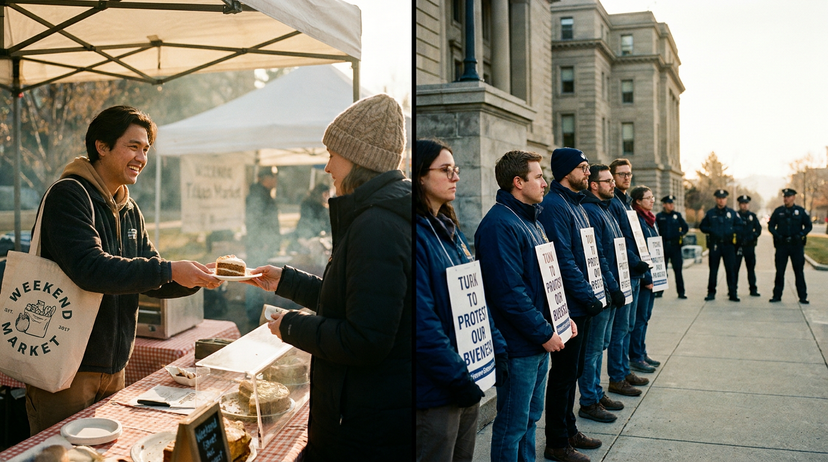
Key Lessons from the 'Freedom for Calves' Campaign
- <b>Evidence-Based Advocacy:</b> Ground your campaign in robust, verifiable evidence (e.g., undercover footage, scientific research) to counter industry claims and sway policymakers.
- <b>Multi-Platform Engagement:</b> Utilise a mix of digital (social media, e-petitions) and traditional (lobbying, media outreach) channels to reach diverse audiences and decision-makers.
- <b>Coalition Building:</b> Partner with other organisations, experts, and even moderate voices to amplify your message and demonstrate broad support.
- <b>Clear Policy Asks:</b> Articulate specific, achievable legislative goals rather than broad, vague demands. Provide solutions and transition pathways for affected industries.
- <b>Sustained Pressure:</b> Campaigns for legislative change are rarely quick wins. Persistence, adaptability, and continuous engagement are crucial for success.
Frequently Asked Questions About Veal Crates and Calf Welfare
What exactly are veal crates?
Veal crates were historically narrow wooden or metal stalls designed to house individual calves, restricting their movement to prevent muscle development and produce pale, tender meat. While traditional, severely restrictive crates have been banned in many regions, the term can also refer to various forms of individual confinement that prevent natural behaviours. The recent UK ban targets all forms of individual calf confinement beyond the first week of life, ensuring calves have adequate space and social interaction.
Why were veal crates considered cruel?
Veal crates were considered cruel because they denied calves the ability to move freely, turn around, socialise with other animals, or even comfortably lie down. This extreme confinement led to severe physical problems like lameness and digestive issues, as well as profound psychological distress, as calves are naturally social and active animals. The practices also often involved feed regimens designed to induce anaemia for paler meat, further compromising welfare.
Are veal crates still used anywhere in the world?
While many countries, including the UK and all EU member states, have banned traditional veal crates, varying forms of individual calf confinement still exist globally. Legislation differs significantly by region, and activists continue to campaign in areas where these practices persist, such as parts of North America and Asia. The 2024 UK ban represents a leading standard for calf welfare worldwide.
How does the veal industry relate to the dairy industry?
The veal industry is intrinsically linked to the dairy industry. For dairy cows to produce milk, they must give birth to calves annually. Male calves, or those not selected to replenish the dairy herd, are typically considered 'by-products' of dairy production. Many of these male calves are then routed into veal production, making the systematic separation of calves from their mothers and the subsequent rearing of these calves a direct consequence of dairy farming practices.
What impact does this ban have on UK dairy farmers?
The Animal Welfare (Calf Confinement) Regulations 2024 require UK dairy farmers to transition from individual calf housing to group housing systems for calves older than one week. This involves investments in larger pens, communal feeding systems, and potentially altered management practices. While challenging for some, government grants and a two-year transition period were implemented to support farmers in adapting to these higher welfare standards, which are expected to improve overall animal health and public perception.
Summary of Key Learnings
- A UK-wide ban on veal crates (individual calf confinement) was enacted in 2024.
- Piglets' Paradise spearheaded the campaign using undercover footage, public petitions, and political lobbying.
- The campaign leveraged social media and expert endorsements to build widespread support.
- New regulations mandate group housing for calves older than one week.
- This victory highlights the effectiveness of comprehensive, persistent animal welfare advocacy.
Related Reading
Where Gestation Crates Are Heading Next: 5 Policy Predictions for 2026
The future of gestation crates in pig farming is under intense scrutiny. We explore where policies restricting gestation crates are heading next in the UK and globally, forecasting five key trends for 2026.
8 min read

Inside Berlin’s Plant-Based Street Food Scene: A Case Study in Sustainable Urbanism
Berlin's plant-based street food scene is rapidly transforming the city's culinary landscape, offering a compelling case study in sustainable urban development and ethical consumption.
7 min read
Where Dolphin Drives Are Banned: A Global Taiji Hunt Policy Tracker (2026)
Discover the global landscape of policies against dolphin drives, particularly focusing on the infamous Taiji hunts, as we track bans and legal efforts worldwide.
7 min read