What Is a Meat Tax? The UK Debate on Levies for Animal Products Explained
A meat tax would put a price on the hidden costs of animal agriculture—from climate emissions to factory-farm suffering. Here's how it could work in the UK and what it means for your plate.
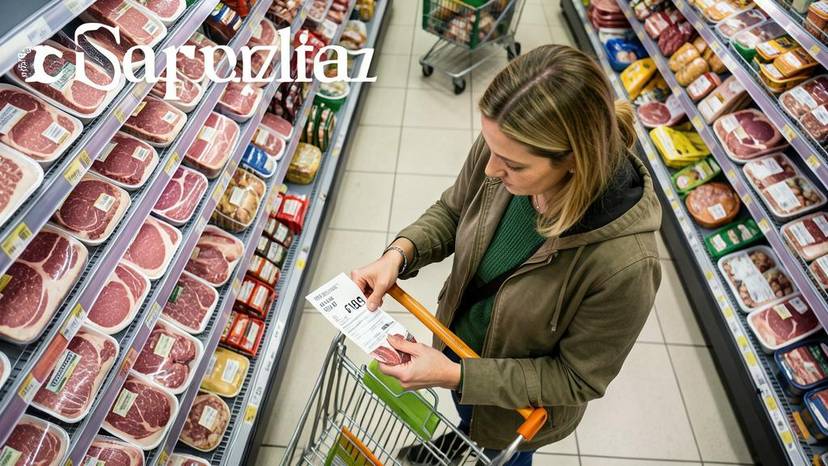
Short answer: A meat tax is a proposed levy on animal products—typically pork, beef, and lamb—designed to reflect the hidden costs of livestock farming, including greenhouse gas emissions, water use, biodiversity loss, and animal suffering. In the UK, no meat tax is currently in force, but policy discussions have gained traction since the 2022 National Food Strategy recommended a £3/kg meat levy on processed meat. The idea remains controversial, with supporters citing public health and climate benefits and critics warning of regressive impacts on low-income households.
What exactly is a meat tax? A definitional explainer
A meat tax, sometimes called a 'meat levy' or 'sin tax on meat', is a fiscal measure that adds a charge to the purchase of animal-derived food products. Unlike a simple sales tax, a meat tax is typically designed as a Pigouvian tax—an economic tool that makes producers and consumers pay for the negative externalities they create. These externalities include methane emissions from cattle, deforestation for pasture and feed, antibiotic resistance from intensive farming, and the welfare costs of factory-farm conditions.
The concept gained mainstream attention in 2019 when a report in The Lancet Planetary Health suggested a 20% tax on red meat could prevent over 170,000 deaths per year globally (Springmann et al., 2018). In the UK, the National Food Strategy—an independent review commissioned by the government—proposed a £3 per kilogram levy on processed meat and a £1.50/kg levy on fresh meat in 2021, though the government declined to adopt it.
Why does a meat tax exist? The case for pricing animal agriculture
The rationale for a meat tax rests on three pillars: climate, health, and animal welfare. First, the climate case: animal agriculture emits methane, nitrous oxide, and CO2, with beef producing 99.48 kg of CO2-equivalent per kilogram of meat—over twice the emissions of pork (38.24 kg) and four times those of chicken (24.34 kg), according to Our World in Data (2023). A tax would make the most polluting meats relatively more expensive.
Second, the public health case: high consumption of red and processed meat is linked to colorectal cancer, heart disease, and type 2 diabetes. The World Health Organization's International Agency for Research on Cancer classified processed meat as a Group 1 carcinogen in 2015. A meat tax could reduce consumption by 8–15%, depending on the rate, similar to the effect of the UK's sugar tax on soft drinks.
Third, animal welfare: factory farming, which supplies most UK meat, involves practices like beak trimming, tail docking, and gas chambers for slaughter—what the industry calls 'controlled atmosphere stunning'. A tax could fund higher-welfare systems or simply reduce demand for cheap, cruelly produced meat. As the UK's Animal Welfare Act 2006 protects animals from 'unnecessary suffering', a tax aligns economic signals with legal and ethical norms.
“A meat tax is not about punishing consumers—it's about making the true cost of a cheap chicken visible. If we want to address climate change and factory farming, we need to stop subsidising the harm.”
How would a meat tax work in practice? Mechanisms and rates
A meat tax could be implemented at different points in the supply chain: at the farm gate, at the slaughterhouse, or at the retail checkout. The most commonly proposed model is a per-kilogram levy applied to wholesale or retail prices, because it's simple to administer and easy for consumers to see. The rate could vary by meat type, with higher levies on beef and lamb due to their higher emissions.
For example, the Netherlands' proposed 'vleesbelasting' (meat tax) in 2023 suggested a 15% price increase on all meat products. Denmark, meanwhile, announced in 2024 a carbon tax on livestock emissions starting in 2030, with an initial rate of 300 kroner (about £34) per tonne of CO2-equivalent, rising to 750 kroner by 2035. This farm-level approach targets emissions directly, though it may not translate clearly to consumer prices.
Who would pay the meat tax? Producers vs consumers
Economically, the incidence of a tax depends on price elasticity. If demand for meat is inelastic—as it is in many Western countries—the tax would mostly pass through to consumers. In the UK, where meat is relatively cheap compared to Europe, a £3/kg levy on processed meat would add roughly 20–30% to the price of bacon and sausages. However, if the tax is applied at the farm level, farmers might absorb some of the cost, reducing their profits and potentially driving consolidation in the industry.
Which meats would be taxed? A comparative breakdown
| Meat product | Proposed levy (£/kg) | Emissions (kg CO2e/kg) | Health impact |
|---|---|---|---|
| Processed meat (bacon, sausages) | £3.00 | 24.5 | Group 1 carcinogen (WHO) |
| Fresh beef | £1.50 | 99.5 | High in saturated fat |
| Fresh lamb | £1.50 | 88.2 | High in saturated fat |
| Fresh pork | £1.00 | 38.2 | Moderate |
| Fresh chicken | £0.75 | 24.3 | Low to moderate |
The UK's National Food Strategy proposed a 'meat levy' on processed meat specifically, citing health evidence. However, environmental groups like the Eating Better Alliance argue that the tax should also cover fresh beef and lamb to address climate goals. Processed meat is a smaller share of emissions but has the strongest health case, making it a politically easier starting point.
Who supports a meat tax? Key stakeholders and advocates
Support for a meat tax comes from a coalition of environmental, health, and animal welfare organisations. The UK's Climate Change Committee (CCC) has repeatedly called for a reduction in meat consumption to meet net-zero targets, though it has stopped short of explicitly endorsing a tax. The Food Foundation, a UK think tank, has modelled that a meat tax could raise £1.5 billion annually, which could be used to subsidise fruit and vegetable consumption.
Internationally, the European Union's 'Farm to Fork' strategy—part of the EU Green Deal—includes plans to 'make the healthy choice the easy choice' and has explored carbon taxation on food. Germany's Federal Environment Agency proposed a meat tax in 2020, and Denmark's 2024 carbon tax on livestock was a world-first. In the UK, the NGO Eating Better has run a 'Meat the Future' campaign, and the Green Party has included a meat tax in its manifesto.
Why does a meat tax matter for the planet and animals? The evidence
A meat tax matters because livestock farming is a leading driver of deforestation, water use, and species extinction. According to WWF (2024), agriculture is responsible for 70% of global freshwater use, and a third of that goes to livestock. In the Amazon, cattle ranching is the single largest cause of deforestation, accounting for 80% of cleared land (FAO, 2023). A tax that reduces meat demand would help protect these ecosystems.
For animals, the tax could be transformative. The UK slaughters approximately 1.1 billion animals per year for food, including 2.6 million pigs, many of whom spend their lives in gestation crates—metal cages so narrow they cannot turn around—before being killed in gas chambers (Humane Society International, 2023). A meat tax that raises prices could reduce demand, leading to fewer animals bred into suffering. However, critics note that a tax alone won't improve welfare standards; it needs to be paired with stronger regulations.
Projected UK meat consumption reduction under a meat tax (% change)
The chart above illustrates a modelled trajectory if the UK introduced a gradually increasing meat tax, based on price elasticity estimates from the Institute for Fiscal Studies (2024). A 10% price increase could reduce meat consumption by up to 18%, which would cut agricultural emissions by 6–7%—a meaningful step toward the CCC's recommendation of a 20% reduction in meat consumption by 2030.
What are the main criticisms and obstacles to a meat tax?
The most common criticism is that a meat tax is regressive. Lower-income households spend a higher proportion of their income on food, and meat is a major source of protein and micronutrients like iron and B12. The Food Foundation (2023) found that 20% of UK households would be 'food insecure' if prices rose by 10%. To mitigate this, any tax would need to be combined with targeted subsidies for healthy plant-based foods, as the National Food Strategy proposed.
Another obstacle is political resistance. The UK's farming lobby, including the National Farmers' Union, has vocally opposed any meat tax, arguing it would undermine British farmers and make imported meat cheaper. There is also the 'nanny state' argument—that governments should not interfere with personal dietary choices. However, the success of the sugar tax in reducing soft drink consumption by 10% (Public Health England, 2024) shows that such levies can gain public acceptance over time.
Top 5 obstacles to a UK meat tax
- Regressivity: disproportionate impact on low-income families
- Political lobbying from the meat industry
- Risk of import substitution with lower-welfare foreign meat
- Complexity of setting rates that reflect true costs
- Public perception of nanny-state interference
What is the future of a meat tax? Policy trends and alternatives
As of 2026, no UK government has committed to a meat tax, but the policy landscape is shifting. The Labour government, elected in 2024, has prioritised 'food security' and has not endorsed a levy. However, the Climate Change Committee's 2025 progress report warned that the UK is off track on agriculture emissions, and the Treasury has been exploring 'environmental land management' schemes that could incorporate pricing.
Alternatives to a direct meat tax include carbon labelling, as piloted by UK supermarket chain Sainsbury's in 2024, and voluntary 'protein diversification' targets, as set by the Netherlands. The EU's proposed 'carbon border adjustment mechanism' could eventually extend to food imports, which would indirectly tax meat. For consumers, the trend toward plant-based diets—with UK plant-based sales growing 11% in 2025 (Good Food Institute, 2026)—may reduce the need for fiscal intervention.
Steps to implement a fair meat tax, based on policy research
- Set a phased rate starting at £0.50/kg on processed meat, rising annually
- Ring-fence revenue to subsidise fresh fruit, vegetables, and legumes
- Apply the tax at the slaughterhouse level to reduce evasion
- Exempt small-scale, high-welfare farms to reward better practices
- Pair the tax with a public information campaign on plant-based cooking
Frequently Asked Questions about a meat tax
Is a meat tax coming to the UK in 2026?
No, as of 2026, the UK government has not announced plans for a meat tax. The National Food Strategy's recommendation was rejected in 2021, and the current Labour administration has not included a meat levy in its policy platform. However, the Climate Change Committee continues to urge dietary change, and the Treasury is reviewing carbon pricing mechanisms that could include food. A meat tax remains a possibility, but not an imminent one.
How much would a meat tax cost consumers?
Based on the National Food Strategy's proposal, a £3/kg levy on processed meat would raise the price of a 500g pack of bacon by roughly £1.50, or about 30%. For fresh beef at £1.50/kg, a 250g steak would cost an extra £0.38. The overall impact on an average UK household's food bill would be around £2–£4 per week, according to the Institute for Fiscal Studies (2024), which could be offset by subsidies on plant-based foods.
Would a meat tax reduce animal suffering?
Yes, indirectly. If a meat tax reduces demand, fewer animals would be bred for slaughter. For example, a 10% reduction in UK pork consumption could spare roughly 260,000 pigs per year from factory-farm conditions, according to calculations based on Defra slaughter statistics (2024). However, the tax alone wouldn't improve the lives of animals still raised for meat; it needs to be combined with stronger welfare regulations, such as banning gestation crates and gas chambers.
What is the difference between a meat tax and a carbon tax on food?
A meat tax is a specific levy on animal products, while a carbon tax on food would apply to all products based on their greenhouse gas emissions. A carbon tax would also affect plant-based foods like avocados or rice, which have higher emissions than some vegetables. The UK's Carbon Trust has developed a 'carbon footprint label' for products, but a full carbon tax on food remains theoretical. A meat tax is simpler but less comprehensive.
Does a meat tax violate personal freedom?
Proponents argue that a meat tax, like tobacco or sugar taxes, is a legitimate policy tool to correct market failures. It doesn't ban meat; it merely reflects the true cost of production. The UK's approach to public health has historically used such taxes, and the Supreme Court has upheld similar levies. However, critics see it as paternalistic. The debate is ultimately about whether individual choice should bear the full weight of environmental and animal welfare costs.
Key Takeaways: The meat tax explained
Key Takeaways
- A meat tax is a Pigouvian levy on animal products to internalise external costs.
- The UK's National Food Strategy proposed £3/kg on processed meat, but it was not adopted.
- Support comes from climate, health, and animal welfare groups; opposition is strong from farming and free-market advocates.
- A well-designed meat tax could reduce emissions by 6–7% and lower animal slaughter numbers.
- Alternatives include carbon labelling and plant-based subsidies, which may be more politically feasible.
Related topics