Tofu vs Tempeh: Which Vegan Protein Is Better for Weeknight Dinners?
Tofu vs tempeh is a common plant-based cooking question; this evidence-led comparison covers taste, nutrition, price, environmental impact and ethics for UK home cooks.
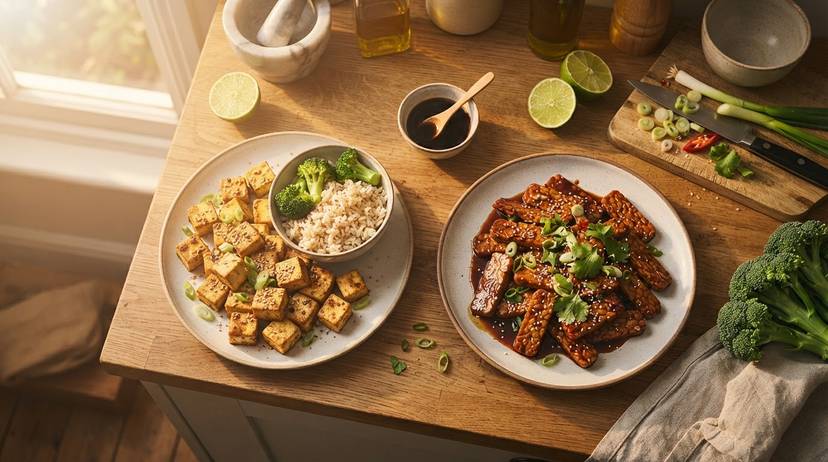
Short answer: Tofu is usually the better all-round choice for most UK weeknight cooks because it is cheaper, easier to find at Tesco, Sainsbury’s and Aldi, and highly versatile. Tempeh often wins on fibre, protein density and a firmer bite, but in the tofu vs tempeh debate, value and ease still put tofu slightly ahead for everyday dinners.
A plant-based diet is a way of eating centred on foods from plants, including beans, grains, vegetables, nuts, seeds and plant proteins such as tofu and tempeh. For readers comparing tofu vs tempeh, the useful question is not which food is universally “best”, but which works better for taste, nutrition, budget and sustainability in a real British kitchen on a Tuesday night.
| Attribute | Tofu | Tempeh | Verdict |
|---|---|---|---|
| Typical shelf price | £2.00 per 280g | £2.80 per 200g | Tofu is cheaper |
| Protein per 100g | 14g | 19g | Tempeh is higher |
| Fibre per 100g | 1.5g | 6g | Tempeh is higher |
| Texture | Soft to firm, adaptable | Firm, nutty, chewy | Depends on dish |
| Preparation time | Very quick, especially pre-pressed | Quick, but often best steamed or marinated | Tofu is easier |
| Availability in UK chains | Very widely stocked | Less consistently stocked | Tofu is easier to buy |
What is the difference between tofu and tempeh?
Tofu is made by coagulating soya milk and pressing the curds into blocks, in a process broadly comparable to cheesemaking but entirely plant-based. Tempeh is made by fermenting whole soybeans into a compact cake, traditionally with a culture that binds the beans together. That production difference explains nearly everything cooks notice: tofu is smoother and more neutral, while tempeh is denser, nuttier and more savoury.
In practical cooking terms, tofu absorbs marinades readily and can move from silken to extra-firm styles depending on the recipe. Tempeh arrives with more built-in flavour and structure, so it performs especially well sliced, crumbled or glazed. The fermentation step also means tempeh typically contains more fibre than tofu because it keeps the whole bean rather than filtering much of it out.
Tofu vs tempeh on taste: which works better in real dinners?
How tofu behaves in weeknight cooking
Tofu’s main strength is flexibility. Extra-firm tofu can be torn for crisp edges, cubed for curries, crumbled into a vegan mince alternative or blended into sauces. Because its flavour is mild, it suits British-Asian pantry cooking well: soy sauce, miso, chilli crisp, curry paste, lemon, smoked paprika and harissa all work. That neutrality makes tofu especially useful for households cooking for mixed preferences.
How tempeh tastes and why some people prefer it
Tempeh has a firmer, almost nutty savouriness that many cooks find more satisfying in sandwiches, grain bowls and skewers. It can carry smoky glazes particularly well and often feels closer to a substantial centre-of-plate protein. Some beginners do find it slightly bitter if cooked straight from the pack; a brief steam before marinating often softens that edge and improves the final flavour.
“For home cooks, the biggest difference is that tofu is a blank canvas, while tempeh arrives with character already built in. The better choice depends on whether the recipe needs absorption or chew.”
Is tempeh healthier than tofu for protein and nutrition?
Tempeh usually contains more protein and fibre per 100g than tofu, making it attractive for people who want a compact, filling protein. Typical UK packs provide around 19g protein and 6g fibre per 100g for tempeh, compared with roughly 14g protein and 1.5g fibre for firm tofu. Both are useful sources of iron, and calcium-set tofu can be particularly helpful for calcium intake.
Health is not only about headline protein numbers. Tofu can be the better choice for lighter dishes because it often delivers fewer calories per 100g, while tempeh can keep people fuller for longer because of its fibre and denser texture. The British Dietetic Association and NHS guidance both support well-planned plant-based eating, and either food can fit comfortably within that pattern when paired with vegetables, whole grains and legumes.
Typical protein per 100g across common UK plant proteins
Which is cheaper in the UK: tofu or tempeh?
What the shelf price looks like in British supermarkets
In the UK market, tofu is usually the better-value option. Across large chains including Tesco, Sainsbury’s, Asda, Morrisons and Waitrose, plain tofu is commonly sold in 200g to 396g blocks, often at a lower price per 100g than tempeh. Tempeh remains a more specialist line, still common at Holland & Barrett, Planet Organic and larger urban branches of mainstream grocers, but not yet equally ubiquitous.
Cost per portion matters more than pack price
Because tempeh is denser and higher in protein, a slightly smaller portion may feel more satisfying. Even so, tofu generally remains cheaper per dinner serving once rice, noodles or vegetables are added. For batch cooking, tofu is also easier to buy in larger quantities and freeze. That matters in a period when UK households remain sensitive to food prices; the Office for National Statistics continues to track elevated food-price inflation, making tofu's lower per-portion cost a decisive factor for many.
Which has the lower environmental impact: tofu or tempeh?
Both foods are low-impact choices compared with most animal proteins, but tofu usually edges ahead on carbon footprint because processing and supply chains are often simpler and more established. Exact figures vary by factory energy use, packaging and transport, yet the bigger story is clear: choosing either tofu or tempeh in place of beef, pork or chicken substantially reduces emissions, land use and pressure on biodiversity.

For UK readers, sustainability also includes sourcing and standards. The UK market increasingly uses responsible soy commitments influenced by organisations such as the Round Table on Responsible Soy, while policy debate still tracks imported soy and deforestation risk. In 2026, the EU Deforestation Regulation (EUDR) is shaping global soy supply chains, and UK retailers are aligning with similar deforestation-free goals. In practical terms, buying plainly packaged tofu or tempeh and building meals around pulses and seasonal vegetables further lowers impact.
Which is the more ethical choice for vegans and animal-conscious cooks?
From an animal-rights perspective, tofu and tempeh are both strong choices because they avoid direct animal use and the severe welfare harms associated with factory farming. Replacing meat with either product reduces demand for systems linked to confinement, routine antibiotic use and slaughter. Organisations including Compassion in World Farming and The Humane League UK have highlighted the welfare costs of intensive livestock production; plant proteins reduce reliance on that model.
The ethical nuance lies in wider supply chains. Soy grown for direct human food is a small share of global soy use compared with soy fed to livestock, a distinction often missed in public debate. Data cited by the World Wide Fund for Nature and Our World in Data consistently show that most soy is used for animal feed. Eating tofu or tempeh directly is therefore typically more land-efficient than eating animals raised on soy feed.
How to cook tofu vs tempeh for the best results
Best quick method for tofu
For crisp weeknight tofu, extra-firm tofu should be dried well, torn or cubed, lightly coated with cornflour, then roasted or air-fried at 200C until golden. A finishing sauce works better than a long marinade for speed. This method gives a crisp exterior and soft centre, making tofu ideal for noodle bowls, sticky rice plates and traybake dinners where texture contrast matters.
Best quick method for tempeh
For balanced flavour, tempeh benefits from a short steam of 10 minutes before cooking, then a marinade with soy sauce, maple syrup, garlic and vinegar. After that, it can be pan-seared or baked until browned. The result is savoury and substantial, particularly good in wraps, grain bowls and kebab-style skewers. Cooks who dislike bitter notes often change their mind after this extra step.
Frequently Asked Questions
Is tofu or tempeh better for beginners?
Tofu is better for most beginners because it is easier to find, usually cheaper, and forgiving in many recipes. Its mild taste means it can take on familiar sauces from curry paste to barbecue glaze. Beginners often succeed fastest with extra-firm tofu roasted or air-fried until crisp.
Does tempeh have more protein than tofu?
Tempeh usually has more protein per 100g than tofu. Typical UK nutrition labels put tempeh at around 19g protein per 100g and firm tofu at around 14g per 100g, though brands vary. Tempeh also tends to have more fibre because it is made from whole fermented soybeans.
Which is cheaper to buy in the UK?
Tofu is usually cheaper to buy in the UK, both per pack and per serving. Mainstream retailers such as Tesco, Asda and Sainsbury’s stock more tofu options than tempeh, creating better competition on price. Tempeh is still often sold at a premium because it is less widely distributed.
Why does tempeh sometimes taste bitter?
Tempeh can taste bitter because fermentation creates earthy, slightly assertive flavours that stand out if it is cooked straight from the packet. A brief steam before marinating softens that edge. Browning it well with a sweet-salty glaze also improves flavour balance and makes the nuttiness more appealing.
Is tofu or tempeh better for the environment?
Both tofu and tempeh are environmentally preferable to most meat, especially beef and lamb. Tofu often has a slightly lower footprint because its production is highly efficient and widely scaled, but the larger environmental gain comes from choosing either soy food instead of animal protein. Packaging, transport and food waste also affect the final footprint.
Tofu vs tempeh verdict: which vegan protein should most people buy?
For the average UK household, tofu is the better first buy. It is more affordable, easier to source, highly versatile and better suited to broad weeknight use, from stir-fries to sandwich fillings. Tempeh deserves a place too, especially for cooks who want a chewier texture, stronger flavour and more protein and fibre in a smaller serving. The smartest kitchen is not tofu or tempeh, but tofu first and tempeh when the dish calls for it.
Tofu vs tempeh: a quick nutrition comparison
To make the choice easier, here's a simple side-by-side for typical UK products (per 100g, values may vary by brand):
Can I substitute tofu for tempeh in any recipe?
Yes, but expect texture and flavour differences. Tofu is softer and absorbs marinades, while tempeh is firmer and nuttier. For stir-fries, you can swap them, but adjust cooking time: tempeh benefits from steaming first, and tofu needs pressing and drying for crispness.
Is tempeh fermented, and does that make it a probiotic?
Tempeh is fermented with a Rhizopus mold, which binds the soybeans. However, the fermentation process typically doesn't leave live probiotics because tempeh is cooked before eating. It does offer prebiotic benefits and improved nutrient absorption compared to unfermented soy.
Which is better for weight loss: tofu or tempeh?
Tofu is lower in calories and fat, making it easier to fit into a calorie-controlled diet. Tempeh provides more protein and fibre, which can increase satiety and help you feel full longer. Choose based on your overall meal plan and portion sizes.
Are there any allergens or concerns with eating tofu or tempeh?
Both are made from soy, so they are unsuitable for people with soy allergies. Some people with thyroid conditions may need to moderate soy intake, but for most, moderate consumption is safe. Always check labels for added ingredients like gluten in marinades.