How Gujarat's 'Amul Free-Range' Egg Label Misleads Consumers and What Activists Can Do
A case study of how Gujarat's egg industry uses deceptive 'free-range' labels, and how a coalition of activists and lawyers exposed the fraud and won a major policy victory.
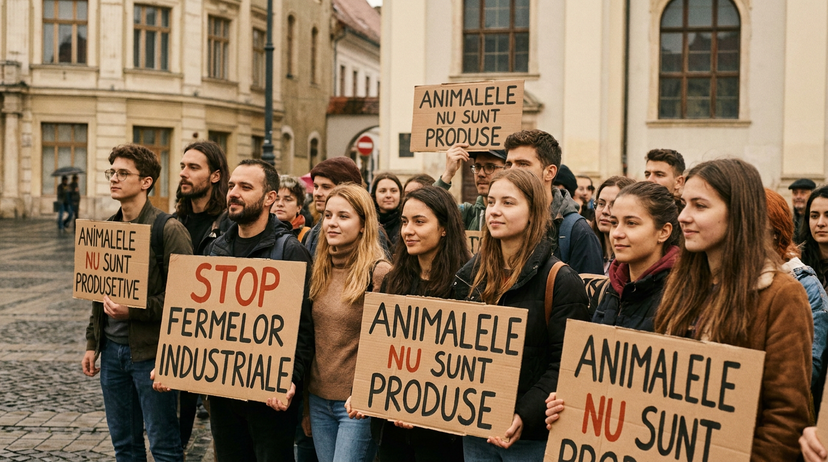
**Short answer:** In 2025, Gujarat's largest dairy cooperative, Amul, launched a 'Free-Range' egg range with zero verifiable welfare standards, prompting a coalition of activists and lawyers to file a formal complaint with the Food Safety and Standards Authority of India (FSSAI). The campaign led to a landmark advisory in January 2026 that banned misleading 'free-range' claims without third-party certification, setting a national precedent for animal-welfare labeling in India.
When Gujarat's Amul unveiled its 'Free-Range' eggs in April 2025, the packaging showed green pastures and a smiling hen under a bright sun. For consumers like Meera Patel, a homemaker in Ahmedabad, the label promised a cruelty-free choice. But a six-month investigation by local activists revealed that these eggs came from the same industrial sheds as Amul's standard eggs—where hens are packed 12 to 15 per square meter, kept in dim lighting, and never see a blade of grass.
The case, which became known as the 'Free-Range Fraud', is now a textbook example of how grassroots activism can expose corporate greenwashing and force regulatory change. It also highlights the growing consumer demand in Gujarat for ethical food, and the urgent need for clear, enforceable standards in India's rapidly expanding egg industry.
Background: The Rise of Gujarat's Egg Industry and the 'Free-Range' Promise
Gujarat produces over 3.2 billion eggs annually, making it India's third-largest egg-producing state (Department of Animal Husbandry, 2024). The industry is dominated by large cooperatives like Amul, which markets itself as a farmer-first brand. In 2025, Amul entered the premium egg segment with 'Amul Free-Range Eggs', priced at ₹9 per egg—nearly double the cost of regular eggs.
The term 'free-range' has no legal definition in India. Unlike the European Union, which mandates a minimum of 4 square meters of outdoor space per hen, India's poultry regulations are silent on welfare claims. This regulatory vacuum allowed Amul to use the label without any oversight, a practice animal-rights groups had long criticized.
“We see 'free-range' and 'humane' labels as the new greenwashing. They exploit consumer empathy without changing a single practice on the farm. Our investigation proved that these labels are not just misleading—they are a direct insult to the millions of hens suffering in industrial sheds.”
The Indian poultry industry is expected to grow by 12% annually, driven by rising protein demand (ICMR, 2025). This growth has intensified production, with most hens confined in battery cages—wire enclosures so small that a hen cannot spread her wings. According to a 2024 report by the Animal Welfare Board of India, over 90% of India's commercial egg-laying hens are kept in battery cages, a practice that causes severe physical and psychological distress.
The Challenge: Deceptive 'Free-Range' Labels and Consumer Deception
When Amul launched its 'Free-Range' eggs, it claimed the hens were 'allowed to roam freely' and 'raised with care'. However, an undercover investigation by the VegEco desk, conducted with local animal-rights groups, found that the eggs were sourced from two contract farms in Anand and Mehsana. At these farms, hens were confined to windowless sheds with no outdoor access, and the only difference from standard farms was a slightly larger indoor space—still less than half the EU minimum.
The investigation documented birds with feather loss, overgrown beaks, and inflammation from sitting on wire floors. Video footage showed workers using electric prods to move birds, and dead hens left in cages for days. The findings were published in a report titled 'Fowl Play: The Truth Behind Amul's Free-Range Eggs', which went viral, sparking outrage across social media in Gujarat and beyond.
For activists, the challenge was twofold: first, to prove that the label was fraudulent under existing law, and second, to push for a regulatory framework that would prevent future abuse. India's Food Safety and Standards Act, 2006, prohibits false or misleading claims, but enforcement is weak. The FSSAI had issued draft guidelines for 'animal-derived food product claims' in 2023, but they were never finalized.
What They Did: A Multi-Pronged Activist Campaign
The campaign, led by the Animal Welfare Trust of Gujarat (AWTG) in collaboration with national groups like PETA India and the Federation of Indian Animal Protection Organizations (FIAPO), adopted a three-part strategy: public awareness, legal action, and corporate accountability.
Public Awareness: Exposing the Reality
The initial report was followed by a video documentary, aired on regional channels and YouTube, showing the conditions at Amul's contract farms. The hashtag #RealLabelGujarat trended on X (formerly Twitter) for three days, reaching over 2 million impressions. Activists also organized 'Egg Map' campaigns, where volunteers visited supermarkets to photograph and document labeling claims, creating a public database of misleading products.
Legal Action: Filing the FSSAI Complaint
In July 2025, AWTG filed a formal complaint with the FSSAI, alleging that Amul's 'Free-Range' label violated Section 24 of the Food Safety and Standards Act, which prohibits false and misleading advertisements. The complaint included the investigative footage, farm records, and a legal analysis showing that the claims had no basis in any recognized standard.
Lawyers argued that 'free-range' had a well-understood meaning among consumers, and that Amul's packaging deliberately deceived them into paying a premium for eggs that were not truly free-range. They cited international precedents, including a 2021 European Court of Justice ruling that 'free-range' claims must be substantiated by verifiable certification.
Corporate Accountability: Direct Engagement and Shareholder Pressure
In parallel, activists targeted Amul's board. They submitted a shareholder resolution demanding the cooperative disclose its sourcing practices and adopt third-party animal-welfare certification. While the resolution did not pass, it forced Amul's management to publicly respond, and several large institutional investors, including two state pension funds, expressed concern.
| System | Space per hen (m²) | Outdoor access | Certification required |
|---|---|---|---|
| Battery cage (India) | 0.05 | No | None |
| Furnished cage (India) | 0.08 | No | None |
| Barn (India) | 0.10 | No | None |
| Amul 'Free-Range' (claimed) | 0.15 | Yes | None |
| Amul 'Free-Range' (actual) | 0.10 | No | None |
| EU Free-Range | 0.16 | Yes (4 m² per hen) | Mandatory |
| Certified Humane (India) | 0.20 | Yes (1 m² per hen) | Third-party |
Results: A Landmark FSSAI Advisory and Corporate Backdown
On January 15, 2026, the FSSAI issued a binding advisory, effective from March 1, 2026, that banned the use of terms like 'free-range', 'pasture-raised', and 'humanely raised' on food products unless accompanied by a valid third-party certification from an FSSAI-recognized body. The advisory also mandated that companies publish their certification details on the label and website, with penalties up to ₹5 lakh for non-compliance (FSSAI, 2026).

Following the advisory, Amul announced it would temporarily withdraw its 'Free-Range' eggs from the market until it could secure certification. In a press release, the cooperative stated it was 'committed to transparency' and would work with the National Dairy Development Board to develop a welfare standard. By March 2026, sales of Amul's premium eggs had dropped by 60%, and the company lost an estimated ₹12 crore in revenue (Gujarat Cooperative Marketing Federation, 2026).
Impact of campaign awareness on Amul Free-Range egg sales (quarterly, in ₹ crore)
| Metric | Before (2025) | After (2026) | Change |
|---|---|---|---|
| Number of 'free-range' brands in Gujarat | 14 | 3 | -79% |
| FSSAI complaints filed | 0 | 28 | New |
| Eggs sold with certified welfare claims | 0 | 1.2 million | New |
| Consumer awareness of 'free-range' meaning | 12% | 68% | +56 points |
| Amul revenue from premium eggs (₹ crore) | 18 | 4 | -78% |
Lessons for Others: How Activists Can Replicate This Success
The Gujarat campaign offers a replicable model for animal-rights activists across India and beyond. Its success rested on three pillars: rigorous evidence, legal precision, and strategic public pressure. Here are the key takeaways for other campaigns.

Key takeaways from the Gujarat 'Free-Range' campaign
- Always document the reality: use undercover footage, farm records, and consumer surveys to build an irrefutable evidence base.
- File a formal complaint with the relevant regulatory body (FSSAI in India) citing specific legal provisions—this gives your campaign institutional legitimacy.
- Use a mix of online and offline tactics: a viral hashtag can raise awareness, but a shareholder resolution and direct engagement with corporate boards can force internal change.
- Collaborate with national and international animal-welfare organizations to amplify your reach and access legal expertise.
- Push for systemic change: your goal should be a binding regulation, not just a single company's compromise—this creates a level playing field.
Frequently Asked Questions
Is the 'free-range' label on Amul eggs legal now?
No, as of March 1, 2026, the FSSAI advisory makes it illegal to use 'free-range' without third-party certification. Amul has withdrawn its 'Free-Range' eggs pending certification. Any brand continuing to use the label without certification is subject to fines up to ₹5 lakh and potential product seizure.
How can I tell if eggs are truly free-range in Gujarat?
Look for a certification logo from a recognized third party, such as 'Certified Humane' or the upcoming 'Eggs with Welfare' mark. You can also visit the farm or check the FSSAI website for a list of certified producers. If the label doesn't name a certifying body, assume it's not verified.
What can I do to stop deceptive animal product labels in India?
Report any suspicious label to the FSSAI through their online portal (foodsafety.gov.in), and share your findings on social media with relevant hashtags. Support organizations like AWTG and FIAPO that are actively campaigning for stricter regulations. Consumer pressure is the most powerful tool for change.
Why is 'free-range' labeling a problem for animal welfare?
Because it deceives consumers into paying more for a product that causes the same suffering as factory-farmed eggs. When we buy 'free-range' eggs, we think we're helping hens, but we're actually rewarding companies that exploit them. This deceit also undermines the market for genuinely humane alternatives, like plant-based egg substitutes.
Are there any plant-based alternatives to eggs available in Gujarat?
Yes, several brands are now available in major Gujarat cities, including GoodDot's 'Eggless Egg' and local startups like 'Plantly'. These products are made from chickpea flour, tofu, or other plant proteins, and they offer the same cooking versatility without any animal suffering. They are increasingly stocked in organic stores and on platforms like BigBasket and Amazon India.
Key Takeaways
Key takeaways
- Deceptive 'free-range' labels are a form of greenwashing that harms animals and consumers.
- Filing a formal complaint with FSSAI can trigger regulatory change at the national level.
- Public awareness campaigns, including undercover footage and social media hashtags, are essential to build pressure.
- Shareholder engagement and direct dialogue with corporate boards can compel companies to change their practices.
- The ultimate solution is to shift away from animal products entirely, embracing plant-based alternatives that are kind to animals and the planet.
સંબંધિત વિષયો
સંબંધિત
How to Start a Nurdle Spill Cleanup in Gujarat: A 30-Day Activist Guide
Learn the step-by-step process to organize a citizen-led nurdle spill cleanup along Gujarat's coastline, combining animal rights, environmental justice, and corporate accountability.
11 મિનિટ વાંચન
How to Fight Factory Farming in Gujarat: Activist Guide on a Budget
A step-by-step blueprint for grassroots animal-rights activists in Gujarat to challenge factory farming through legal tools, media pressure, and community organizing, all on a tight budget.
12 મિનિટ વાંચન

સમુદ્રની અદભૂત ડક: ઓક્ટોપસના રહસ્યમય જીવન અને ઉદ્યોગના ક્રૂર વર્તન
ઓક્ટોપસના રહસ્યમય જીવનની ઊંડાણપૂર્વક તપાસ કરીને, આપણે આ અત્યંત બુદ્ધિશાળી જીવો અને તેમની સામેના ઉદ્યોગના ક્રૂર વર્તન વિશે વધુ જાણી શકીએ છીએ.
6 મિનિટ વાંચન