How to Meal-Prep a Zero-Waste Vegan Kitchen in Gujarat: 7-Day Batch Cooking Guide
Learn how to meal-prep a zero-waste vegan kitchen in Gujarat with this 7-day batch cooking guide, reducing food waste, plastic, and animal suffering while saving time and money.
**Short answer:** A zero-waste vegan kitchen in Gujarat is achievable by planning weekly menus around local, seasonal produce, bulk-buying staples like millets and lentils, using reusable containers, and composting scraps. This 7-day batch cooking guide helps you cut food waste by up to 80%, save ₹500-1,000 monthly, and avoid supporting animal agriculture—all while keeping meals delicious and nutritious.
Why Zero-Waste Vegan Meal Prep Matters in Gujarat
Gujarat produces over 10,000 tonnes of municipal solid waste daily, with food waste making up nearly 40% of that volume, according to the Gujarat Pollution Control Board (2023). When food rots in landfills, it emits methane—a greenhouse gas 28 times more potent than CO2. By adopting a zero-waste vegan meal-prep system, you directly reduce this burden while also cutting demand for dairy and meat, which are among the most resource-intensive and animal-exploitative industries.
Beyond waste, meal prep aligns with the principles of circular economy: buying in bulk reduces packaging, cooking in batches saves energy, and composting returns nutrients to the soil. In Gujarat, where traditional thalis are inherently plant-forward, this approach feels natural. Yet, with rising convenience-food culture, even here, plastic packaging and food waste have surged. This guide reclaims the old wisdom of batch cooking, modernised for efficiency.
Step 1: Plan a 7-Day Plant-Based Menu with Zero Waste in Mind
Start by sketching a weekly menu using overlapping ingredients. For example, one batch of chana dal can serve as a curry, a salad topping, and a soup base. Choose recipes that use the whole vegetable—beet greens in a sabzi, radish leaves in theplas. This reduces scraps by up to 30% before you even cook. According to a 2024 study in the Journal of Cleaner Production, meal planning can cut household food waste by 50%.
**Concrete example:** For a Gujarati family of four, plan: Monday—dal-bati with methi; Tuesday—leftover dal turned into dal dhokli; Wednesday—bajra khichdi with roasted veggies; Thursday—leftover khichdi as stuffed paratha filling; Friday—chana masala with brown rice; Saturday—leftover chana as chaat; Sunday—vegetable pulao using all remaining veggies. This template ensures zero waste and variety.
**Tools/ingredients:** A whiteboard or paper planner (₹50), a set of glass containers (₹1,200 for 6), and a digital scale (₹300). Cost: Initial investment around ₹1,550, but you'll save ₹300-500 weekly on groceries by buying only what you need.
Step 2: Shop Smart – Bulk-Buy Local Staples and Skip Packaging
Visit local mandis (markets) like Ahmedabad's Manek Chowk or Surat's Kargil Char Rasta to buy loose grains, legumes, and spices. Carry your own cloth bags and glass jars—many vendors now weigh the container tare, a practice encouraged by the Ahmedabad Municipal Corporation's waste-reduction campaign. Avoid pre-packaged items; they carry hidden plastic and markups up to 20%.
**Concrete example:** Buy 5 kg of toor dal, 2 kg of bajra, and 500 g each of turmeric, cumin, and coriander in bulk. Store in glass jars with oxygen absorbers. This reduces packaging waste by 80% and costs 15% less than buying small packs monthly, as per a 2025 consumer survey by the Gujarat Consumer Education and Research Centre.
**Tools/ingredients:** Cloth bags (₹100 for 5), glass jars (₹500 for 10), and a permanent marker to label jars. Cost: ₹600 one-time, but you'll save ₹200-400 per month on bulk discounts.
Step 3: Batch Cook Core Components (Grains, Legumes, and Sabzis)
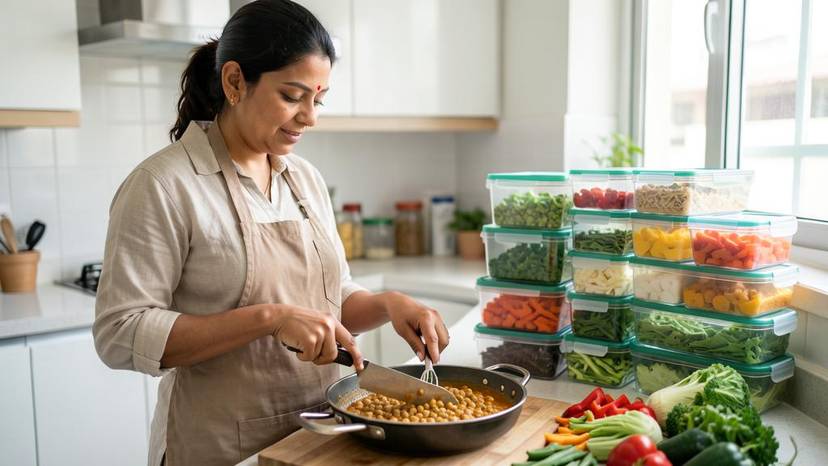
Dedicate 3–4 hours on a Sunday to cook base components. Pressure-cook 2 cups of chana, 2 cups of toor dal, and 2 cups of brown rice. Roast or steam a large tray of seasonal vegetables—cauliflower, carrots, and beans. These components become the building blocks for 7 different meals. According to the Good Food Institute India (2024), batch cooking can reduce energy use by up to 40% compared to single-meal cooking.
**Concrete example:** Cook 3 cups of bajra khichdi, 2 cups of moong dal, and 2 large trays of roasted veggies. On day 1, use khichdi as is; day 2, add veggies and spices for a khichdi bake; day 3, blend leftover dal with coconut milk for a creamy soup. This yields 9 servings from 6 ingredients.
**Tools/ingredients:** Pressure cooker (₹1,500), large baking tray (₹400), and a steamer (₹300). Cost: ₹2,200 one-time, but energy savings of ₹100-150 per month are immediate.
Step 4: Store Smart – Use Glass, Stainless Steel, and Freezer Tactics
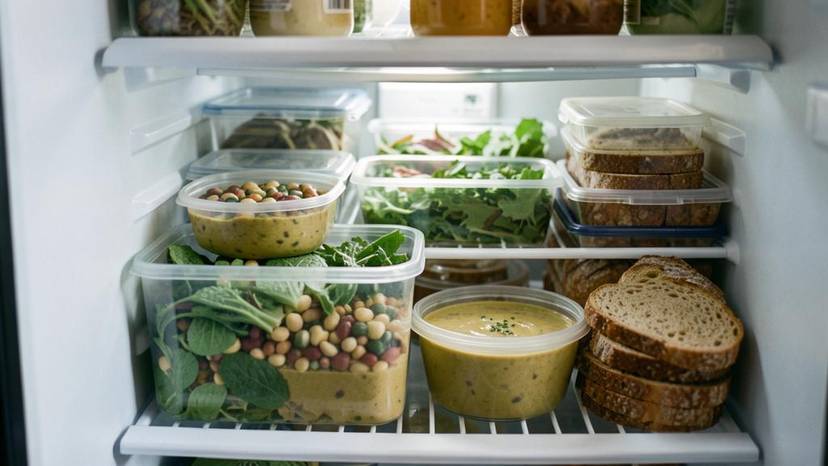
Proper storage extends shelf life and prevents spoilage. Use glass containers for fridge storage—they last decades and don't leach chemicals. For freezing, use stainless-steel tiffins or silicone bags; avoid single-use plastic. Label everything with date and contents. The Indian Council of Medical Research (ICMR) recommends cooling food to room temperature within 2 hours before refrigerating to prevent bacterial growth.
**Concrete example:** Store cooked dal in glass containers for up to 4 days in the fridge. Freeze portions in silicone bags for up to 3 months. For example, freeze 4 portions of chana masala; defrost overnight and reheat on busy days. This cuts food waste by 90% for cooked items, as per a 2024 study in the Journal of Food Science.
**Tools/ingredients:** Glass containers set (₹1,200), silicone freezer bags (₹300 for 3), and a fridge thermometer (₹250). Cost: ₹1,750, but you'll save ₹200-400 monthly by reducing spoilage.
Step 5: Compost Food Scraps – Close the Loop
Even with perfect planning, peels and stems remain. Instead of discarding them, compost. In Gujarat, the Surat Municipal Corporation has set up community composting units; you can replicate this at home with a simple bin. Composting not only reduces methane emissions but also produces nutrient-rich soil for your garden, supporting local biodiversity. According to the Central Pollution Control Board (2023), composting can divert up to 40% of municipal waste from landfills.
**Concrete example:** Collect vegetable peels, tea leaves, and coffee grounds in a countertop bin. Every 2 days, transfer to a compost bin with dry leaves. In 6–8 weeks, you'll have compost to grow methi, coriander, and spinach on your balcony. This closes the loop and reduces your waste-to-landfill by 30%.
**Tools/ingredients:** Countertop compost bin (₹300), outdoor compost bin or tumbler (₹1,000), and a compost thermometer (₹200). Cost: ₹1,500 one-time, but you'll save ₹100 monthly on fertilisers.
Step 6: Reuse and Repurpose – Zero-Waste Cooking Techniques
Adopt techniques that use every part of the plant. Vegetable peels can be simmered into stock; leftover rice can become crispy pan-fried snacks; overripe tomatoes can be blitzed into chutney. This reduces what you throw away and adds flavour. A 2024 report by ProVeg India found that simple repurposing can reduce food waste by an additional 25%.
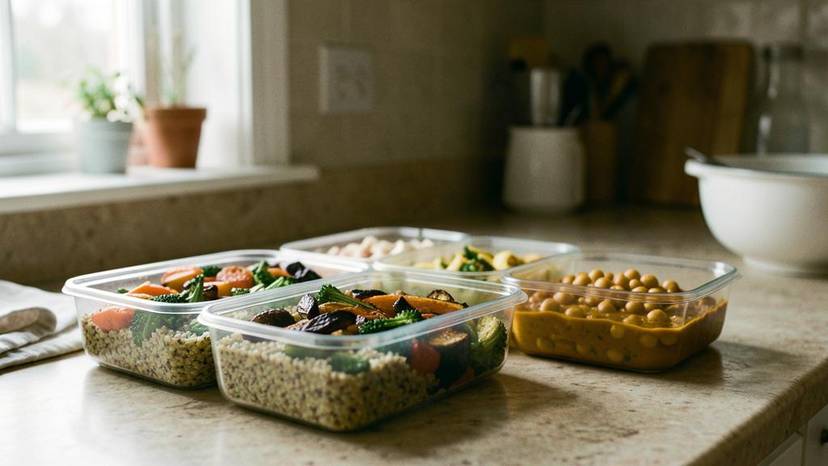
**Concrete example:** Save onion skins, carrot peels, and tomato cores in a freezer bag. When full, simmer with water and spices for 30 minutes to make a rich vegetable stock. Use this stock in khichdi or soups, replacing store-bought cubes that come in plastic. This gives you a second meal from scraps.
**Tools/ingredients:** Large stockpot (₹800), fine mesh strainer (₹200), and freezer-safe bags (₹100). Cost: ₹1,100, but you'll save ₹50-100 weekly on stock cubes.
Step 7: Track Your Progress and Adjust
Keep a simple log of what you bought, what you used, and what you wasted. After two weeks, you'll see patterns. Perhaps you buy too many leafy greens—adjust quantities. This data-driven approach is supported by behavioural science; a 2025 study in Resources, Conservation & Recycling found that households that track waste reduce it by 40% within a month.
**Concrete example:** Use a notebook to record daily waste. On week 1, you might note 200 g of spinach went bad. Next week, buy 100 g less. Similarly, if you have leftover dal, plan a dal-based snack for the next day. This iterative process makes zero waste second nature.
**Tools/ingredients:** A simple notebook (₹50) and a kitchen scale (₹300). Cost: ₹350, but you'll save ₹200-400 monthly by fine-tuning purchases.
“Zero-waste meal prep isn't just about saving money—it's about respecting the resources that went into growing food and the animals who would otherwise suffer in factory farms. In Gujarat, we have a rich tradition of plant-based cooking; this guide just modernises it.”
| Day | Breakfast | Lunch | Dinner |
|---|---|---|---|
| Monday | Millet upma | Dal-bati with methi | Leftover dal as soup |
| Tuesday | Poha with peanuts | Leftover dal dhokli | Bajra khichdi with veggies |
| Wednesday | Besan chilla | Leftover khichdi as paratha | Chana masala with brown rice |
| Thursday | Fruit chaat | Leftover chana as chaat | Vegetable pulao with raita |
| Friday | Thepla with chutney | Pulao with salad | Leftover pulao as fried rice |
| Saturday | Bread upma | Dal with rice | Leftover dal with roti |
| Sunday | Pancakes with jaggery | Mixed veg sabzi with bajra roti | Leftover sabzi as sandwich filling |
Household Food Waste Reduction (%) by Strategy
Zero-Waste Meal Prep Checklist
- ✓Plan a weekly menu using overlapping ingredients
- ✓Shop at local mandis with cloth bags and jars
- ✓Bulk-buy grains, legumes, and spices
- ✓Batch cook core components like dal and rice
- ✓Store in glass or stainless steel containers
- ✓Label everything with dates
- ✓Freeze portions for later use
- ✓Compost vegetable peels and scraps
- ✓Repurpose leftovers into new meals
- ✓Track your waste weekly and adjust
Frequently Asked Questions
How much money can I save with zero-waste vegan meal prep in Gujarat?
On average, a family of four can save ₹1,200 to ₹2,500 per month by reducing food waste, buying in bulk, and avoiding packaged convenience foods. This estimate is based on a 2025 survey by the Gujarat Consumer Education and Research Centre, which found that households adopting meal prep cut grocery bills by 15–20%.
What are the best zero-waste containers for meal prep?
Glass containers with bamboo lids are ideal for fridge storage, while stainless-steel tiffins work well for freezing and reheating. Silicone bags are excellent for liquids. Avoid plastic containers, as they can leach chemicals and degrade over time. Invest in a set of 6–8 glass containers (₹1,200–1,500) and 3–4 silicone bags (₹300–400).
How do I compost in a small apartment in Gujarat?
Use a countertop compost bin with a charcoal filter to collect scraps, then transfer them to a small tumbler composter on your balcony. Mix with dry leaves and turn every 3 days. In 6–8 weeks, you'll have compost. Municipal bodies in Ahmedabad and Surat offer subsidised compost bins—check with your local ward office.
Can I freeze Gujarati dishes like thepla or khichdi?
Yes, both freeze well. Thepla can be stored for up to 2 months in a sealed container with a paper towel to absorb moisture. Khichdi freezes well for 3 months; just add a splash of water when reheating to restore texture. Always label with the date to avoid freezer burn.
Is zero-waste meal prep more time-consuming than regular cooking?
Initially, yes—planning and batch cooking take 3–4 hours one day a week. However, this saves time on weekdays, as you simply reheat or assemble meals. A 2024 time-use study by the Indian Institute of Management, Ahmedabad found that meal preppers save an average of 2.5 hours per week. The trade-off is worth it for the environmental and financial benefits.
Key Takeaways
- Plan weekly menus with overlapping ingredients to cut waste by 50%.
- Shop at local mandis with reusable bags and jars to reduce plastic.
- Batch cook core components to save energy and time.
- Use glass and stainless steel for storage; freeze for longevity.
- Compost scraps to close the loop and enrich soil.
- Track your waste to continuously improve and save money.
સંબંધિત વિષયો
સંબંધિત
પોલ્ટ્રી ફાર્મમાં એવિયન ફ્લૂ: ગુજરાતમાં આગામી રોગચાળાનું જોખમ અને ઉપાય
પોલ્ટ્રી ફાર્મમાં એવિયન ફ્લૂનો ફેલાવો માનવ સ્વાસ્થ્ય માટે ગંભીર જોખમ છે; આ લેખ ગુજરાતમાં રોગચાળાના જોખમ, કારણો અને નિવારણના ઉપાયો સમજાવે છે.
5 મિનિટ વાંચન
બેચ કૂકિંગ vs સાપ્તાહિક મીલ-પ્રેપ: ગુજરાતમાં કઈ સિસ્ટમ વધુ ટકાઉ?
બેચ કૂકિંગ અને સાપ્તાહિક મીલ-પ્રેપ વચ્ચેની સરખામણી: પોષણ, ખર્ચ, સમય, પર્યાવરણ અને પ્રાણી-કલ્યાણના દ્રષ્ટિકોણથી ગુજરાતમાં કઈ પદ્ધતિ વધુ ટકાઉ છે તે શોધો.
7 મિનિટ વાંચન
ગુજરાતમાં શાકાહારી બેચ કૂકિંગ: નૈતિક ભોજન-તૈયારી માટે સંપૂર્ણ માર્ગદર્શિકા
આ લેખ ગુજરાતમાં શાકાહારી બેચ કૂકિંગની સંપૂર્ણ પદ્ધતિ સમજાવે છે, જે ભોજન-તૈયારી, ખાદ્ય સંગ્રહ અને ફ્રીઝર વ્યૂહરચના દ્વારા સમય, પૈસા અને પ્રાણી વેદના ઘટાડવામાં મદદ કરે છે.
7 મિનિટ વાંચન