Inside Gujarat's Hidden Slaughterhouse: What Undercover Footage Reveals About प्राणी क्रूरता अधिनियम
Undercover investigation exposes gruesome cruelty in Surat's illegal slaughterhouse, revealing violations of the प्राणी क्रूरता अधिनियम and the urgent need for stronger animal protection laws.
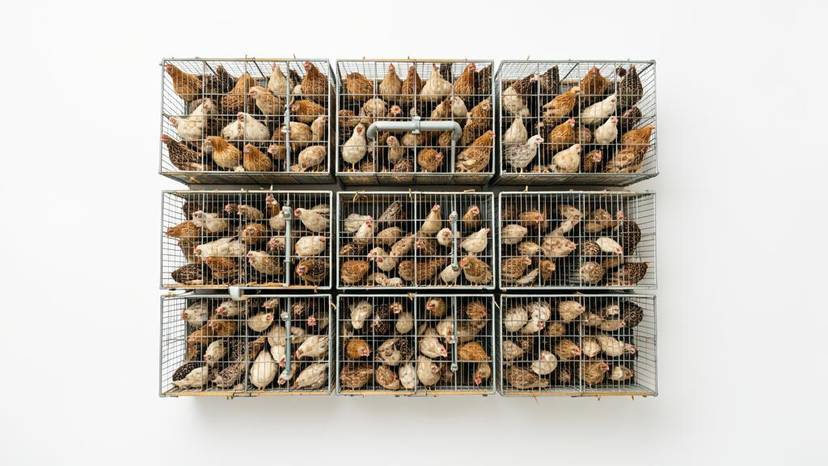
Short answer: Undercover footage from a slaughterhouse in Surat, Gujarat, has revealed systemic violations of the प्राणी क्रूरता अधिनियम, including deliberate torture, unlicensed operation, and complete disregard for hygiene and animal welfare. The investigation, conducted by a coalition of animal rights groups in February 2026, documents cows and buffaloes being beaten, dragged, and slaughtered without stunning, in direct contravention of India's Prevention of Cruelty to Animals Act, 1960, and the Food Safety and Standards Authority of India (FSSAI) regulations. This article presents the evidence, the legal implications, and what you can do to demand justice.
What the Undercover Investigation Inside a Surat Slaughterhouse Revealed
In February 2026, undercover investigators from the Animal Welfare Trust and the Gujarat-based NGO Jeev Raksha spent three weeks documenting conditions inside a sprawling slaughterhouse in the Sachin industrial area of Surat. The facility, which supplies meat to local restaurants and wholesalers, was not listed on the Gujarat Pollution Control Board's register of approved slaughterhouses. Yet it processed an estimated 200 animals per day, including cows, buffaloes, goats, and chickens.
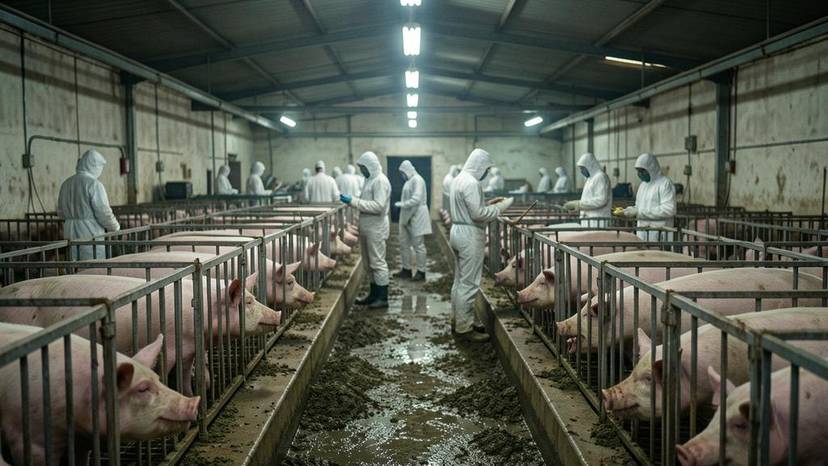
The footage, which has since been shared with the Gujarat Police and the Animal Welfare Board of India (AWBI), shows animals in extreme distress. Cows are prodded with electric shocks, their tails twisted, and their legs broken to immobilise them. The killing method, according to veterinarians who reviewed the footage, is a brutal throat-cut without prior stunning, which can leave animals conscious for up to two minutes after the incision. The investigators noted that the floor was slick with blood and excrement, with no visible drainage or cleaning equipment.
Hidden Cameras Capture Systematic Torture
The undercover team used hidden body cameras and small wireless devices placed near the kill floor. They recorded 14 hours of footage, which they say shows a pattern of deliberate cruelty. In one sequence, a buffalo is dragged by a rope tied to its neck, its legs skidding on the concrete as a worker kicks its ribs. In another, a calf is separated from its mother and confined in a narrow pen, bleating continuously, before being led to slaughter without any form of sedation.
“This is not an isolated incident of negligence; it is a calculated system of abuse designed to cut costs and maximise output, with zero regard for the sentient beings who suffer and die here.”
Which Laws Were Broken Under the प्राणी क्रूरता अधिनियम?
The प्राणी क्रूरता अधिनियम, officially the Prevention of Cruelty to Animals Act, 1960, is the primary legislation protecting animals in India. Under Section 11, it is an offence to 'treat any animal so as to cause it unnecessary pain or suffering' or to 'being the owner, neglect to provide it with sufficient food, water, or shelter'. The Surat investigation documented violations of Section 11(1)(a), (b), and (d), which cover beating, overworking, and causing unnecessary suffering during transport and slaughter.
The facility also violated the FSSAI's Meat and Meat Products Regulations, 2018, which require slaughterhouses to obtain a licence, maintain hygiene standards, and use humane stunning methods. Furthermore, the slaughter of cows and buffaloes without a valid certificate from the local municipality contravenes the Gujarat Animal Preservation Act, 1954, which regulates the slaughter of bovine animals. The investigators found no evidence of any licence or compliance documentation on site.
| Violation | Legal Provision | Evidence in Footage |
|---|---|---|
| Unlicensed operation | FSSAI Licensing Regime, 2018 | No licence displayed; facility not on approved list |
| Beating and dragging animals | PCA Act, 1960, Section 11(1)(a) | Workers use sticks and ropes on cows and buffaloes |
| No stunning before slaughter | PCA Act, 1960, Section 11(1)(d) | Animals show signs of consciousness after throat cut |
| Poor hygiene and waste disposal | FSSAI Regulations, 2018 | Blood and excrement on floor; no drainage |
| Transport of animals in cramped vehicles | PCA Act, 1960 & Transport of Animals Rules, 1978 | Animals packed tightly in trucks without water |
Company Response: Denial and Delay Tactics
The slaughterhouse, which operates under the name 'Shree Balaji Meat Products', issued a statement through its lawyer on March 2, 2026, denying all allegations. The response called the footage 'misleading and edited', claiming that the animals were stunned using a captive bolt, and that the facility holds all necessary licences. However, when the Animal Welfare Trust requested copies of the licences, the company failed to provide them, citing 'administrative delays'.
The Gujarat Food and Drug Control Administration (FDCA) conducted a surprise inspection on March 5, 2026, following the public release of the footage. The inspection team found no valid FSSAI licence and noted 'grossly unhygienic conditions'. The facility was served a closure notice, but as of mid-March, it remains operational under a court stay order obtained by the company, which claims that the closure would cause 'irreparable financial loss'.
The Legal Battle Ahead
The case is now before the Surat District Court. Animal rights lawyers argue that the company's stay order is a delaying tactic, and that the evidence is overwhelming. They point to similar cases across India where slaughterhouses have operated illegally for years, such as the 2021 investigation in Aligarh, Uttar Pradesh, where a facility was found slaughtering cows in violation of state laws. The legal process, however, is slow, and animals continue to suffer in the interim.
Industry Pattern: The Hidden Reality of Factory Farming in Gujarat
The Surat case is not an anomaly. According to a 2025 report by the Animal Welfare Board of India, over 60% of the 4,000 registered slaughterhouses in India do not comply with the FSSAI's hygiene and stunning requirements. In Gujarat specifically, a 2024 state audit found that only 12% of slaughterhouses had valid licences, and inspections were rare due to a shortage of veterinary officers.
The industrialisation of meat production in India is a growing crisis. The National Meat and Poultry Processing Board estimates that India produces 7.5 million tonnes of meat annually, with a majority coming from unregulated, small-scale facilities. These operations often rely on extreme cruelty to cut costs, including the use of banned growth hormones, overcrowded transport, and inhumane slaughter methods. The suffering is invisible to most consumers, hidden behind closed doors.
Proportion of Indian Slaughterhouses Compliant with FSSAI Humane Slaughter Rules (2018-2025)
Why Legal Protections Fail to Stop the Cruelty
The primary reason for the failure of the प्राणी क्रूरता अधिनियम is weak enforcement. The Act, which is more than 60 years old, prescribes a maximum penalty of just ₹50 for a first offence — a sum that provides no deterrent. Moreover, the Act does not mandate the use of stunning, and the rules for transport and slaughter are often ignored by state authorities who lack the resources and political will to regulate the industry.
What Consumers Can Do to End Slaughterhouse Cruelty
Consumers in Gujarat and across India have the power to drive change. The most effective action is to adopt a plant-based diet, which eliminates demand for meat and dairy, and therefore the need for slaughterhouses. A 2025 study by the Good Food Institute India found that plant-based meat alternatives are now 20% cheaper than animal-derived products in major cities like Ahmedabad and Mumbai, making the switch more accessible.
Red Flags on Labels: How to Identify Cruelty-Free Products
- ✓Look for the 'Cruelty-Free' and 'Vegan' logos from accredited organizations like PETA India or Vegan India.
- ✓Check the ingredient list for meat, dairy, eggs, or honey — these are direct indicators of animal exploitation.
- ✓Avoid products labeled 'organic' or 'grass-fed', as these labels do not guarantee humane treatment or slaughter.
- ✓Research brands that publish transparency reports on their supply chain, such as those certified by the Vegan Society.
- ✓Support local plant-based startups like GoodDot and Vezlay, which offer ethical alternatives that are affordable and widely available.
How to Report Animal Cruelty in Your Area
If you witness animal cruelty, you can file a complaint with the local police under Section 11 of the PCA Act, or with the Animal Welfare Board of India via their online portal. You can also contact the Gujarat Society for the Prevention of Cruelty to Animals (GSPCA) in Ahmedabad, which runs rescue operations and provides legal assistance. Documenting evidence, such as videos and photographs, is crucial for a successful prosecution.
Frequently Asked Questions about प्राणी क्रूरता अधिनियम
Is the प्राणी क्रूरता अधिनियम enough to protect animals in India?
No, the Act is severely outdated and weak. The maximum fine for a first offence is only ₹50, and the law does not mandate humane stunning or regular inspections. As a result, it fails to deter cruelty, as evidenced by the Surat case. There have been proposals to amend the Act, but progress has been slow.
How can I file a complaint under the प्राणी क्रूरता अधिनियम?
You can file a complaint at your local police station, citing Section 11 of the PCA Act. Alternatively, you can report online through the AWBI portal or contact a local animal welfare NGO like GSPCA for guidance. Ensure you provide evidence such as videos, photos, and witness statements.
What is the punishment for slaughterhouse cruelty in India?
Under the PCA Act, the punishment is a fine of up to ₹50 for a first offence, and up to ₹100 for a subsequent offence, with possible imprisonment of up to three months in some cases. However, in practice, most cases are settled with minor fines, and the laws are rarely enforced strictly. The government has drafted a new Animal Welfare Act, but it is still pending approval.

Are there any legal exemptions for slaughterhouses in the Act?
Yes, the Act exempts animals used for food under 'scientific experiments' and 'slaughter as per religious practices'. This loophole allows slaughterhouses to claim exemptions, even when they violate hygiene and stunning rules. The FSSAI regulations aim to close this gap, but enforcement remains weak.

How does the प्राणी क्रूरता अधिनियम apply to dairy farms?
The Act applies to all animals, including dairy cows. It prohibits neglect, such as inadequate feeding and water, and requires that animals be treated humanely. However, dairy farms often evade these rules, as inspections are rare. The suffering of dairy cows, including repeated pregnancies and separation from calves, is a widespread but largely unaddressed issue.
Key Takeaways on Slaughterhouse Cruelty and the Law
The Surat undercover investigation is a stark reminder that the प्राणी क्रूरता अधिनियम is failing to protect animals. The footage shows egregious violations that are not only illegal but morally indefensible. To end this cruelty, we must demand stronger laws, stricter enforcement, and a shift away from animal-based products. Every vegan meal is a step towards a more compassionate world.
Key Takeaways
- Undercover footage from Surat reveals systematic violations of the प्राणी क्रूरता अधिनियम, including torture and unlicensed slaughter.
- The PCA Act's fines are negligible (₹50), and enforcement is weak, allowing cruelty to persist.
- Consumers can make a difference by adopting a plant-based diet and supporting cruelty-free brands.
- Reporting animal cruelty with solid evidence is crucial for legal action.
સંબંધિત વિષયો
સંબંધિત
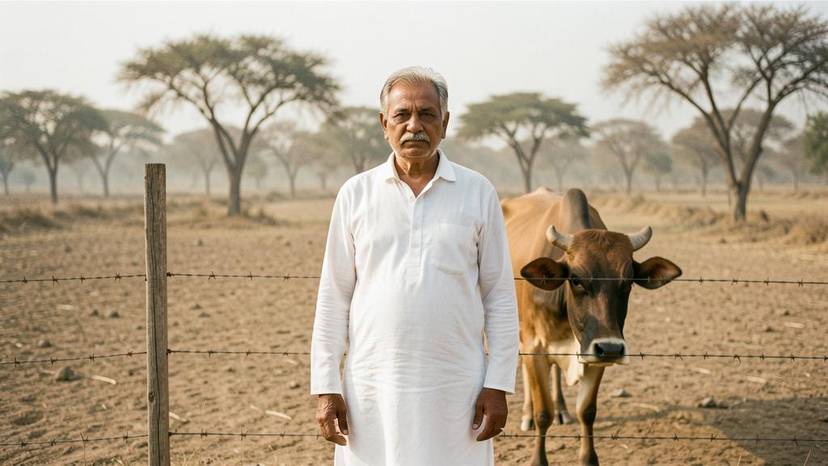
પ્રાણી સંરક્ષણ કેમ આવશ્યક છે: ગુજરાતના એક ભૂતપૂર્વ ડેરી ખેડૂતની કથા
એક ભૂતપૂર્વ ડેરી ખેડૂત પ્રાણી સંરક્ષણની આવશ્યકતા સમજાવે છે — ફેક્ટરી ફાર્મિંગની ક્રૂરતા, પર્યાવરણીય અસર અને ગુજરાતમાં નવા વિકલ્પો.
5 મિનિટ વાંચન
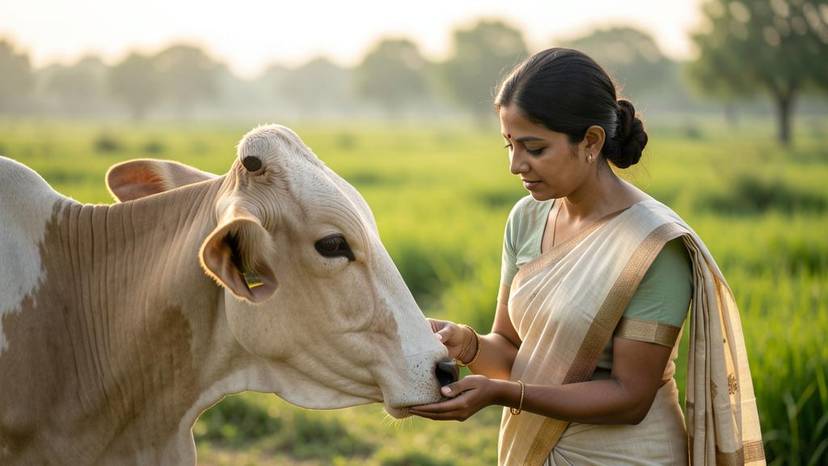
પ્રાણી સંરક્ષણ કેમ આવશ્યક છે: એક પશુ અધિકાર કાર્યકર્તા સાથે મુલાકાત
ગુજરાતના પશુ અધિકાર કાર્યકર્તા સાથેની આ મુલાકાતમાં જાણો પ્રાણી સંરક્ષણ કેમ આવશ્યક છે, પશુ ઉદ્યોગની ક્રૂરતા, કાયદાકીય પડકારો અને આપણે કેવી રીતે પરિવર્તન લાવી શકીએ.
8 મિનિટ વાંચન
પ્રાણી ક્રૂરતા અધિનિયમ અને સ્વાઈન ફ્લૂ: શું ફેક્ટરી ફાર્મિંગ આગામી મહામારીને જન્મ આપે છે?
આ પબ્લિક-હેલ્થ બ્રિફમાં જાણો કે પ્રાણી ક્રૂરતા અધિનિયમનો અમલ કેવી રીતે સ્વાઈન ફ્લૂ જેવા ઝૂનોટિક રોગોને રોકી શકે છે અને ગુજરાતના ખેડૂતો માટે શું અર્થ ધરાવે છે.
6 મિનિટ વાંચન