8 Myths About Emisyon sa Pagkain at Klima, Pinasisinungalingan
Nililinaw ng gabay na ito ang mga pinakakaraniwang maling akala tungkol sa emisyon sa pagkain at klima, gamit ang datos, patakaran, at praktikal na konteksto sa Pilipinas.
9 min basa
Animals
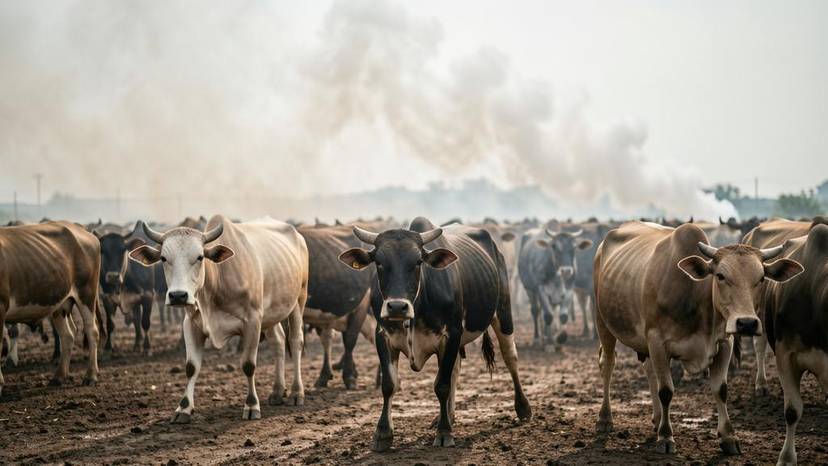
Grass-fed beef is often presented as the ethical and ecological answer to industrial cattle. The welfare case is real. The climate case is more complicated than either side usually admits, because grass-fed cattle live longer and emit methane for more of their lives while using considerably more land.
| Criterion | Grass-fed beef | Feedlot beef |
|---|---|---|
| Welfare | Pasture access, natural grazing behaviour, generally lower disease pressure. | Dense feedlot confinement, grain-driven acidosis risk, routine antibiotic exposure. |
| Land use | Substantially more land per kilo of beef. | Less pasture, but a large indirect feed-crop footprint. |
| Methane | Higher lifetime methane because animals reach slaughter weight more slowly. | Lower per-kilo methane, higher feed-related emissions and manure-lagoon impacts. |
| Soil carbon | Well-managed grazing can build soil carbon, but sequestration is finite, reversible and far smaller than herd emissions. | No meaningful sequestration claim. |
| Slaughter | Identical process and identical endpoint. | Identical. |

Nililinaw ng gabay na ito ang mga pinakakaraniwang maling akala tungkol sa emisyon sa pagkain at klima, gamit ang datos, patakaran, at praktikal na konteksto sa Pilipinas.
9 min basa

Tuklasin ang siyentipikong katotohanan sa likod ng malaking epekto ng meat consumption sa climate change at kung paano makakatulong ang paglipat sa isang plant-based na pamumuhay.
9 min basa