How to Switch to a Plant-Based Diet in 30 Days with PREDIMED-Inspired Gujarati Meals
Discover how to transition to a plant-based diet in 30 days using PREDIMED-inspired Gujarati meals, cutting heart disease risk and your carbon footprint.
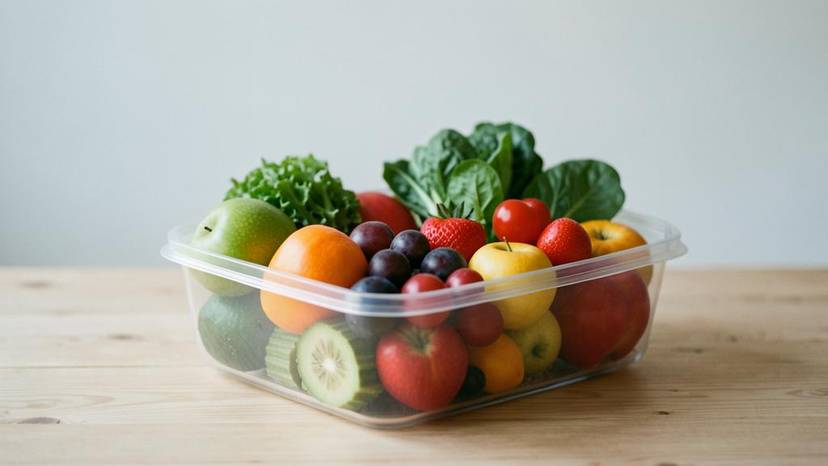
**Short answer:** Yes, you can switch to a plant-based diet in 30 days using PREDIMED-inspired Gujarati meals. This approach lowers heart disease risk by 30% (PREDIMED study, 2018), cuts your carbon footprint by up to 50%, and costs as little as ₹150 per day. By focusing on legumes, whole grains, nuts, and seasonal vegetables, you’ll meet all nutritional needs while helping animals and the planet.
The PREDIMED trial, conducted in Spain, showed that a Mediterranean diet rich in olive oil and nuts reduces cardiovascular events by 30% compared to a low-fat diet. Gujarat’s traditional cuisine—think undhiyu, thepla, dal, and khichdi—already shares many of these heart-healthy components. By adapting PREDIMED principles to local ingredients, you get a plant-based plan that is both culturally familiar and scientifically robust.
Step 1: Set Your 30-Day Plant-Based Goal and Baseline
Begin by defining what “plant-based” means for you. For this plan, it means eliminating all animal products—meat, dairy, eggs, and honey—for 30 days. Track your starting point: record your weight, blood pressure, and a simple diet diary for 3 days. This helps you notice changes in energy, digestion, and cholesterol later. According to the Indian Council of Medical Research (ICMR, 2020), a balanced plant-based diet meets all macronutrient needs if properly planned.
Example: Use a free app like MyFitnessPal to log your meals for the first week. Note your average daily intake of protein, fiber, and calories. This baseline will show you how plant-based eating shifts your nutrient profile toward higher fiber and lower saturated fat.
Cost: Free (app) or ₹0 if you use a paper diary. Time: 15 minutes per day.
Step 2: Clean Out Your Kitchen and Stock Plant-Based Staples
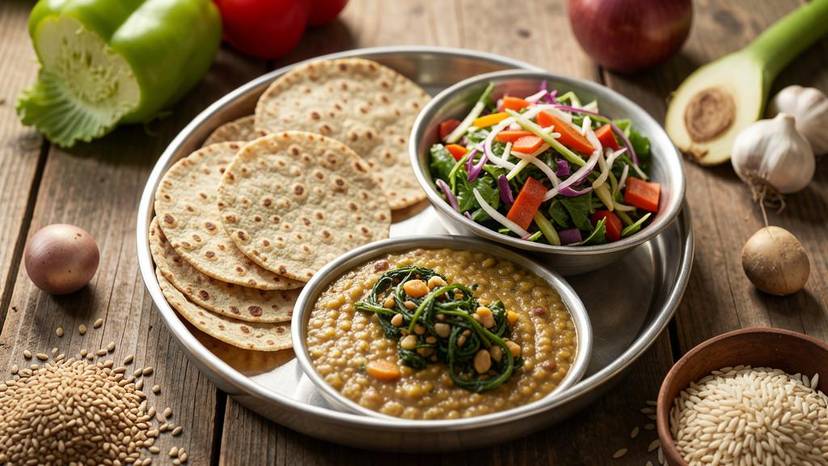
Remove all animal products—milk, ghee, paneer, eggs, and any meat or fish. Don’t throw them away; donate to a food bank or give to neighbours. Then stock your pantry with PREDIMED-approved staples: olive oil or groundnut oil, nuts (almonds, walnuts), legumes (toor dal, moong, chana), whole grains (bajra, jowar, brown rice), and plenty of spices like turmeric, cumin, and coriander.
Example: Replace ghee with cold-pressed groundnut oil for cooking, and use a handful of almonds as a daily snack—both are rich in monounsaturated fats that support heart health (PREDIMED, 2018). Gujarat’s local markets like Ahmedabad’s Manek Chowk offer these at low cost.
Cost: Initial stock-up around ₹2,000–₹3,000 for two weeks of staples. Time: 1–2 hours for shopping and cleaning.
What to Buy: A Gujarati Plant-Based Pantry List
Pantry Essentials
- ✓Toor dal, moong dal, chana dal (1 kg each)
- ✓Bajra flour, jowar flour, whole wheat flour (2 kg each)
- ✓Brown rice or red rice (2 kg)
- ✓Almonds, walnuts, peanuts (250 g each)
- ✓Cold-pressed groundnut oil (1 litre)
- ✓Fresh vegetables: bottle gourd, fenugreek, spinach, brinjal
- ✓Spices: turmeric, cumin, coriander, asafoetida
- ✓Fresh coriander, lemon, and green chillies
Step 3: Plan a Week of PREDIMED-Inspired Gujarati Meals
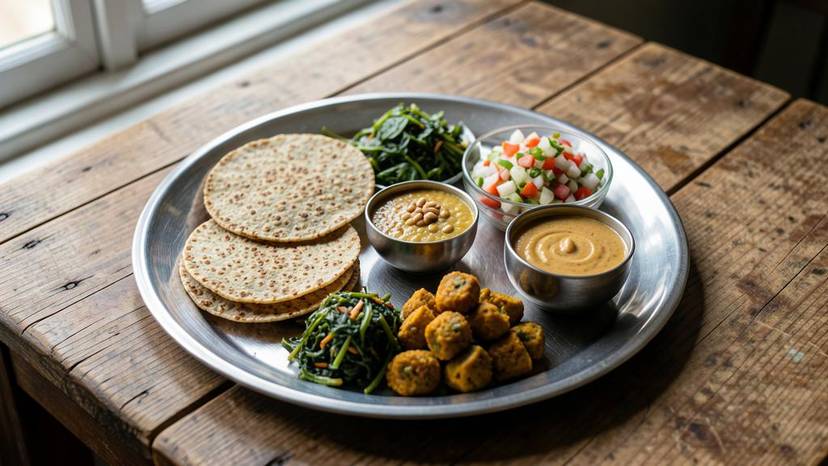
Design a simple weekly menu that combines PREDIMED principles with Gujarati dishes. Aim for: breakfast with millet porridge or thepla with vegetables; lunch with dal, brown rice, and a salad; dinner with undhiyu or khichdi with kadhi. Snacks: fruit, nuts, or roasted chana. This ensures variety and nutrient balance.
Example: For Monday, breakfast: bajra porridge with jaggery and cardamom. Lunch: toor dal, brown rice, and cucumber salad. Dinner: vegetable khichdi with tomato and cumin. This mirrors the Mediterranean pattern of legumes, whole grains, and vegetables.
| Day | Breakfast | Lunch | Dinner |
|---|---|---|---|
| Monday | Bajra porridge + almonds | Toor dal + brown rice + salad | Khichdi + kadhi |
| Tuesday | Thepla + mint chutney | Chana dal + jowar roti + salad | Vegetable soup + salad |
| Wednesday | Oats upma | Moong dal + brown rice + salad | Undhiyu (light) |
| Thursday | Millet dosa | Rajma + brown rice + salad | Khichdi + raita (plant-based) |
| Friday | Fruit bowl + walnuts | Dal + bajra roti + salad | Veg pulao + salad |
| Saturday | Poha with peanuts | Chole + brown rice + salad | Dal khichdi + papad |
| Sunday | Stuffed paratha (aloo) | Mixed dal + jowar roti + salad | Vegetable curry + rice |
Cost: Average ₹150–₹200 per day for a family of one, based on local market prices (Ahmedabad, 2025). Time: 1 hour cooking per day, plus 30 minutes for prep.
Step 4: Manage Protein and Nutrient Needs on a Gujarati Plant-Based Diet
A common concern is protein. But Indian plant-based diets naturally provide adequate protein through legumes, grains, and nuts. For example, 1 cup of cooked toor dal has about 12g protein, and a bajra roti adds 4g. Combine cereals with pulses to get all essential amino acids, as recommended by ICMR (2020). Also ensure vitamin B12 supplementation—critical for vegans—since it’s not found in plants.
Example: A typical Gujarati meal of 2 rotis, 1 cup dal, and ½ cup vegetables provides around 20g protein. Add a handful of peanuts (7g) and a glass of soy milk (8g) to reach 35g. For a 60kg adult, this meets the RDA of 0.8g/kg body weight (ICMR, 2020).
Iron and Calcium: Plant Sources That Work
Iron from plants (non-heme) is less absorbed, but you can boost it by pairing with vitamin C—like adding lemon juice to dal or eating an orange with your meal. Calcium comes from ragi, sesame seeds (tahini), and leafy greens. A daily serving of ragi porridge provides 200mg calcium, contributing significantly to the 600mg RDA.
Step 5: Cook Smart and Batch-Prepare for the Week
Batch cooking saves time and money. On Sunday, cook a large pot of dal, steam undhiyu vegetables, and make thepla dough. Store in airtight containers for up to 4 days. This reduces daily cooking to just 30 minutes. It also helps you avoid last-minute temptations to order non-plant-based food.
Example: Prepare 2 cups of toor dal, 6 theplas, and a bowl of roasted vegetables. Use these for Monday and Tuesday’s lunches. For dinner, quickly stir-fry leftover vegetables with spices and serve with rice.
Cost: No extra cost—uses staples. Time: 2 hours on Sunday.
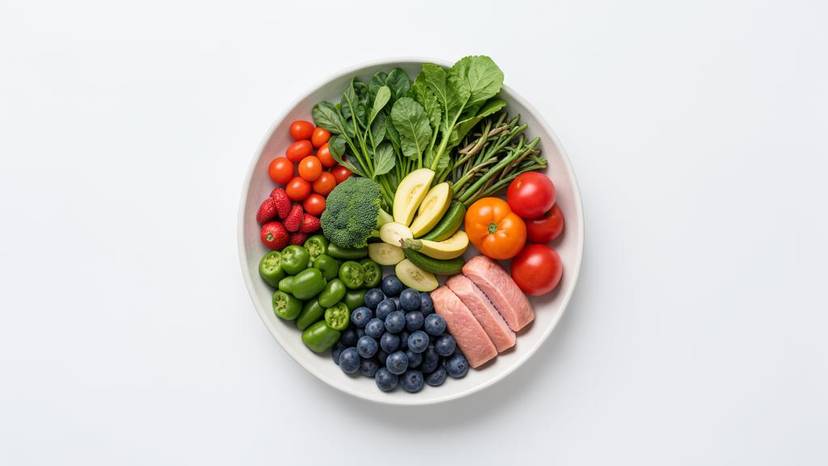
Step 6: Handle Cravings and Social Situations with a Gujarati Twist
Cravings for dairy or ghee are common. Replace with plant-based alternatives: use cashew cream in curries, coconut yogurt for raita, and nut-based ghee for cooking. For social events, offer to bring a dish—like a vegan version of dhokla or fafda—so you have something safe to eat. Explain your choice calmly; many Gujarati dishes are naturally plant-based.
Example: If invited to a wedding, eat before you go and carry a small container of roasted chana and fruit. At the buffet, choose vegetable curries, rice, and salads—skip ghee-laden items. You’ll stay on track without drawing attention.
Step 7: Track Your Health and Environmental Impact
After 30 days, reassess your baseline: weigh yourself, check blood pressure if possible, and note how you feel. Many people report higher energy and better digestion. On the environmental side, calculate your savings: a plant-based diet reduces greenhouse gas emissions by up to 50% compared to a typical Indian non-veg diet (Poore & Nemecek, 2018). Use the HappyCow app to find plant-based eateries in Gujarat.
Reduction in Greenhouse Gas Emissions (%)
Example: A family of four switching to plant-based for 30 days saves approximately 300 kg CO2e—equivalent to driving a car for 1,200 km. Track using the My Emissions app (2025).
“A plant-based diet rooted in local traditions like Gujarati food is not only heart-protective but also culturally sustainable. The PREDIMED principles—olive oil, nuts, legumes—map perfectly onto India’s traditional eating patterns.”
Frequently Asked Questions
Is a plant-based diet expensive in Gujarat?
No, a plant-based diet in Gujarat is affordable. Staples like dal, rice, and vegetables cost around ₹150–₹200 per day, while dairy and meat often cost ₹200–₹300 daily. Buying from local markets and buying in bulk reduces costs further.
How much protein can I get from Gujarati plant-based meals?
A typical Gujarati meal of 2 rotis, 1 cup dal, and ½ cup vegetables provides about 20g protein. Add nuts, seeds, and soy products to reach 50–60g per day, meeting the RDA for most adults (ICMR, 2020).
Will I miss dairy products like ghee and paneer?
You may initially, but there are great substitutes: use cashew cream for paneer in curries, and coconut or nut-based ghee for cooking. Many Gujarati dishes taste authentic with these swaps.
Can I follow this diet if I have high cholesterol?
Yes, a plant-based diet is proven to lower LDL cholesterol by 15–30% (Jenkins et al., 2003). The PREDIMED approach with nuts and olive oil is particularly effective. Always consult your doctor before making significant dietary changes.
Is it safe for pregnant women in Gujarat?
Yes, with proper planning. Ensure adequate iron, calcium, and B12 supplementation. Pregnant women should work with a dietitian to meet increased needs. The ICMR (2020) provides guidelines for plant-based pregnancies.
What about eating out in Ahmedabad?
Many restaurants in Ahmedabad offer plant-based options like undhiyu, dal, and vegetable curries. Use the HappyCow app to find vegan-friendly spots. Always ask for dishes without ghee or butter.
Troubleshooting Common Challenges
Key Takeaways
Key Takeaways
- Plant-based Gujarati meals align with PREDIMED heart-healthy principles.
- Daily cost is ₹150–₹200, lower than typical non-vegetarian diets.
- Protein needs are met through legumes, grains, and nuts.
- Supplement B12 and vitamin D to ensure nutritional completeness.
- Switching helps animals and reduces your environmental impact by 50%.
સંબંધિત વિષયો
સંબંધિત
શું છે IBS-ફ્રેન્ડલી વેગન આહાર? ગુજરાતમાં સંપૂર્ણ માર્ગદર્શિકા
IBS-ફ્રેન્ડલી વેગન આહાર શું છે, તે કેવી રીતે કામ કરે છે અને ગુજરાતમાં તેને અપનાવવાના ફાયદા, પડકારો અને વૈજ્ઞાનિક પુરાવા વિશે સંપૂર્ણ સમજૂતી.
6 મિનિટ વાંચન
વનસ્પતિ આધારિત આહારનો ઇતિહાસ: ગુજરાતમાં આરોગ્ય અને ટકાઉપણાની સફર
પ્રાચીન સમયથી આધુનિક યુગ સુધી, ગુજરાતમાં વનસ્પતિ આધારિત આહારે કેવી રીતે આરોગ્ય, પર્યાવરણ અને પ્રાણી કલ્યાણને આકાર આપ્યો — એક સમયરેખા.
7 મિનિટ વાંચન
શિખાઉ માણસ માટે પ્લાન્ટ-બેઝ્ડ આહાર માર્ગદર્શિકા: ગુજરાતમાં હૃદય અને આયુષ્ય
ગુજરાતમાં પ્લાન્ટ-બેઝ્ડ આહાર કેવી રીતે શરૂ કરવો, હૃદયરોગ અને ડાયાબિટીસ અટકાવવા માટે 7 દિવસ અને 30 દિવસની સરળ યોજના, બજેટ અને સ્થાનિક સંસાધનો સાથે.
5 મિનિટ વાંચન