How to Start Weekly Meal Prep in Gujarat: 30-Day Plant-Based Batch Cooking Guide
Learn a step-by-step 30-day plant-based meal prep system for Gujarat homes, reducing food waste, saving time and money, and easing the transition away from dairy.
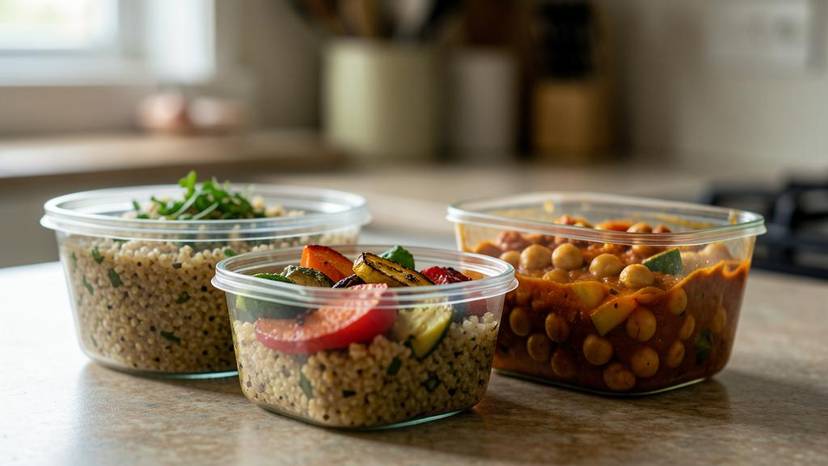
**Short answer:** A 30-day plant-based meal prep plan in Gujarat can cut your cooking time by half, reduce household food waste by up to 40%, and save ₹1,500–₹2,500 per month — all while helping you avoid dairy and meat, which spares countless animals from factory-farm suffering. Start with one weekly batch-cooking session, use airtight glass containers, and follow FSSAI's food storage guidelines to keep meals safe and flavourful.
Gujarat's culinary heritage — from dal-dhokli to undhiyu — naturally lends itself to plant-based cooking. Yet most families still cook fresh every day, spending 2–3 hours in the kitchen and discarding nearly 25% of purchased groceries (FAO, 2024). Meal prep isn't just a time hack; it's a moral choice. Every time you batch-cook a lentil curry instead of buying paneer or chicken, you reduce demand for dairy and meat industries that confine billions of animals in cramped, cruel conditions. This guide gives you a step-by-step 30-day plan tailored to Gujarat's markets, weather, and food culture.
Why Meal Prep is a Game-Changer for Plant-Based Eaters in Gujarat
Meal prep transforms your relationship with food. By cooking once and eating multiple times, you save energy, reduce plastic waste from takeout, and make it easier to stick to a compassionate diet. For Gujarat's hot, humid climate, proper storage is critical — cooked food left at room temperature for more than two hours can cause foodborne illness (FSSAI, 2023).
Beyond convenience, meal prep aligns with your values. The dairy industry in India separates calves from their mothers within hours of birth, causing severe distress; the mother's milk is diverted for human consumption (PETA India, 2024). By planning plant-based meals, you directly reduce support for these practices. Additionally, batch cooking lowers your carbon footprint — a plant-based meal produces about 75% less greenhouse gas than an animal-based one (IPCC, 2022).
The Hidden Cost of Daily Cooking
Cooking fresh every day means higher LPG usage, more water, and more time spent on repetitive tasks. According to a 2023 survey by the Gujarat Energy Development Agency (GEDA), the average family spends 40% more on fuel when cooking small batches daily versus once-a-week batch cooking. Multiply that by 30 days, and the savings become substantial.
Step 1: Plan a 7-Day Rotating Menu with Local, Seasonal Produce
Start by designing a simple 7-day menu that repeats monthly. Choose dishes with similar cooking times to batch efficiently. For Gujarat, focus on lentils (dal, chana, moong), seasonal vegetables (bottle gourd, brinjal, okra), and whole grains (bajra, jowar, wheat). Seasonal produce is cheaper, more nutritious, and supports local farmers — reducing transport emissions.
Example: Monday – Dal and brown rice; Tuesday – Chana masala with roti; Wednesday – Vegetable khichdi; Thursday – Baingan bharta with jowar roti; Friday – Undhiyu (using frozen mix); Saturday – Paneer-free palak curry with rice; Sunday – Leftover day or a simple soup. This menu covers protein, fibre, and micronutrients while keeping prep simple.
Shop with a Template, Not a Cursor
Create a shopping template listing ingredients per week. For example: 2 kg mixed lentils, 3 kg seasonal vegetables, 1 kg whole grains, 500g peanuts or seeds, spices, and fresh coriander. Stick to it — impulse buys often end up wasted. Use local markets like Ahmedabad's Manek Chowk for fresh produce; it's cheaper and avoids plastic packaging found in supermarkets.
| Item | Quantity | Cost (₹) |
|---|---|---|
| Mixed lentils (toor, moong, chana) | 2 kg | 240 |
| Seasonal vegetables (bottle gourd, brinjal, okra) | 3 kg | 180 |
| Whole grains (bajra, jowar, rice) | 2 kg | 120 |
| Peanuts and seeds | 500 g | 100 |
| Spices (turmeric, cumin, coriander) | 200 g | 80 |
| Fresh coriander and green chillies | 100 g | 20 |
| Coconut oil and groundnut oil | 1 L | 250 |
| Total | 1,190 |
Step 2: Invest in the Right Storage Containers and Tools
The right containers are the backbone of meal prep. Use glass containers for curries and dals — they don't leach chemicals and are safe for reheating. For rotis and dry snacks, use stainless steel tiffins. Freezer-safe silicone bags are ideal for storing cooked legumes. Avoid single-use plastic; it harms wildlife and pollutes oceans (WWF, 2023).
Essential tools: a pressure cooker (saves 50% energy), a heavy-bottomed pan, a good knife, and a vegetable chopper. Costs in Gujarat: a 3-litre pressure cooker (₹1,500), a set of 6 glass containers (₹800), and silicone bags (₹300). These are one-time investments that pay off within months.
| Tool | Use | Cost (₹) |
|---|---|---|
| Pressure cooker (3L) | Cook lentils, beans quickly | 1,500 |
| Glass containers (6-pack) | Store curries and dals | 800 |
| Stainless steel tiffins (3) | Store rotis, dry sabzis | 600 |
| Silicone freezer bags (4) | Freeze legumes, soups | 300 |
| Vegetable chopper | Speed up prep | 200 |
| Total | 3,400 |
Step 3: Master Batch Cooking on a Sunday (2-Hour Session)
Dedicate 2 hours every Sunday to cook 7 days' worth of staples. Start by soaking lentils overnight. Then, in parallel: pressure-cook 2 types of dal, roast and grind spices, and chop vegetables. While these cook, prepare a big batch of roti dough and roll out a few dozen rotis. This isn't about cooking every dish — it's about prepping components that combine into different meals.
For example, cook 2 kg of mixed dal and portion it into 7 containers: 3 portions as dal, 2 as soup base, 2 as curry thickener (add vegetables later). Similarly, make a large batch of baingan bharta and freeze half. This way, you only spend 15–20 minutes per day assembling meals.
A Sample 2-Hour Batch Cooking Flow
Sunday Batch Cooking Steps
- Soak 1 kg each of toor and moong dal overnight (8 pm Saturday).
- Chop 2 kg vegetables (bottle gourd, brinjal, okra) and store in airtight containers.
- Pressure-cook dals for 15 minutes; let pressure release naturally.
- Cook 10 rotis on a tawa; stack with a damp cloth to keep soft.
- Roast and grind 200g of cumin, coriander, and turmeric into a masala mix.
- Portion dals into 7 containers: 3 as dal, 2 as soup base, 2 as curry base.
- Freeze half the rotis and half the bharta for the second week.
Step 4: Use the Freezer Strategically — Not Just as a Storage Bin
Your freezer is a time machine. Cooked legumes, curries, and rotis freeze beautifully. Cool food completely before freezing to prevent ice crystals. Use freezer-safe containers or bags, and leave 1-inch headspace for expansion. Label and date everything — frozen dal stays good for up to 3 months (FSSAI, 2023).
A smart freezer strategy: always freeze in portion sizes you'll actually eat. For example, freeze dal in 2-cup portions, not a whole pot. This lets you thaw only what you need, cutting waste. Also, freeze fresh coriander in ice cube trays with a little water — pop a cube into any curry for instant flavour.
Freezer Shelf Life of Common Meal Prep Items (Months)
Step 5: Master the Science of Cooling and Reheating
Cooling food quickly prevents bacterial growth. Divide hot food into shallow containers and let it sit uncovered for 30 minutes, then refrigerate. Never put a hot pot directly in the fridge — it raises the internal temperature and risks spoilage (FSSAI, 2023). Reheat only the portion you'll eat, to 75°C or above, and avoid reheating more than once.
This is also a food-safety issue that affects animal welfare indirectly: when food spoils, people are more likely to order takeout, which often includes meat and dairy. By mastering safe storage, you keep your plant-based meals viable and reduce the chance of falling back on cruelly produced food.
Reheating Tips for Different Dishes
Reheating Guidelines
- Dal and curries: reheat on stovetop with a splash of water to restore consistency.
- Rotis: warm on a tawa for 30 seconds per side; don't microwave (they become rubbery).
- Rice: sprinkle water and microwave covered for 2 minutes.
- Soups: bring to a rolling boil before serving.
- Frozen bharta: thaw overnight in the fridge, then reheat.
Step 6: Assemble Daily Meals in Under 15 Minutes
With components ready, daily assembly is quick. Each morning or evening, combine a protein (dal or chana), a vegetable dish (prepped or frozen), and a grain (rotis or rice). Add a fresh salad or pickle for crunch. This approach eliminates decision fatigue and ensures you never skip a meal or order in.
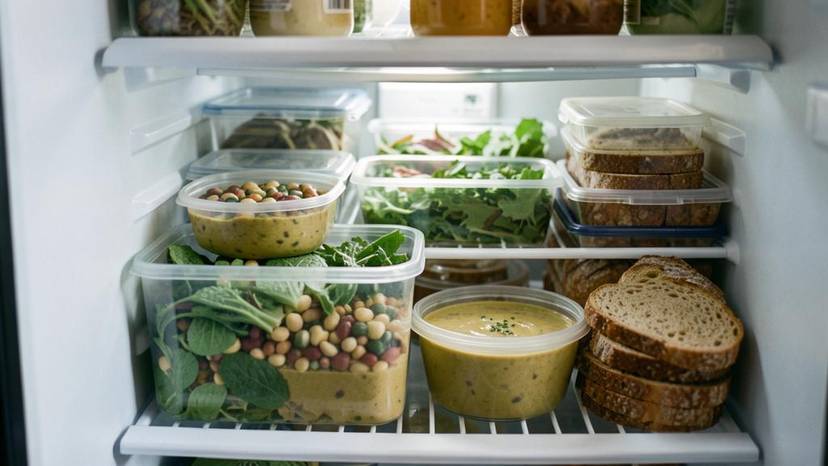
For example, on Tuesday, take a portion of chana masala from the fridge, warm it, and serve with two rotis and a side of sliced cucumber. Total time: 10 minutes. This is faster than ordering delivery — and you know exactly what's in it.
Sample Day-by-Day Assembly from One Batch
| Day | Lunch | Dinner |
|---|---|---|
| Monday | Dal + brown rice + salad | Chana masala + roti |
| Tuesday | Palak curry + jowar roti | Khichdi + pickle |
| Wednesday | Baingan bharta + roti | Dal soup + toast |
| Thursday | Undhiyu + bajra roti | Dal + rice |
| Friday | Chana salad + roti | Leftover khichdi |
| Saturday | Mixed vegetable curry + rice | Dal + roti |
| Sunday | Soup + sandwich | Freezer special (bharta) |
Step 7: Reduce Waste and Rotate Leftovers Creatively
Meal prep naturally reduces waste, but you can go further. Keep a 'use-me-first' box in the fridge for leftovers. Turn extra dal into dal parathas, or blend leftover curry into a soup. Vegetable peels can be composted or used to make stock. This circular approach cuts your kitchen's environmental footprint and saves money.
In Gujarat, many families already use leftover rotis to make churma or thepla. Use this tradition: transform yesterday's rotis into a quick breakfast by toasting with spices. Similarly, overcooked rice becomes a tasty rice salad with lemon and peanuts. Creativity reduces waste and honours local food culture.
Troubleshooting Common Meal Prep Problems
Problem: My dal smells sour after 3 days. Solution: You didn't cool it fast enough. Always cool to room temperature within 30 minutes before refrigerating. If it smells off, discard it — food safety is non-negotiable.
Problem: Rotis become hard when reheated. Solution: Wrap them in a damp cloth before microwaving for 20 seconds, or reheat on a tawa with a little water. This restores softness.
Problem: I forget what's in the freezer. Solution: Keep an inventory list on your fridge. Update it after each batch session. It takes 2 minutes and saves hours of guessing.
Frequently Asked Questions (FAQ)
Is meal prep cheaper than cooking fresh in Gujarat?
Yes. Batch cooking reduces LPG usage by up to 40% (GEDA, 2023) and cuts food waste, saving an average of ₹1,500–₹2,500 per month for a family of four. Buying in bulk from local markets also lowers per-unit costs.
How long can cooked plant-based food last in the fridge?
Cooked dals and curries last 3–4 days in the fridge (FSSAI, 2023). Rotis and dry sabzis last up to 5 days if stored airtight. Always reheat to 75°C before eating. If in doubt, freeze it — frozen food lasts 1–3 months.
Can I freeze Gujarati dishes like undhiyu?
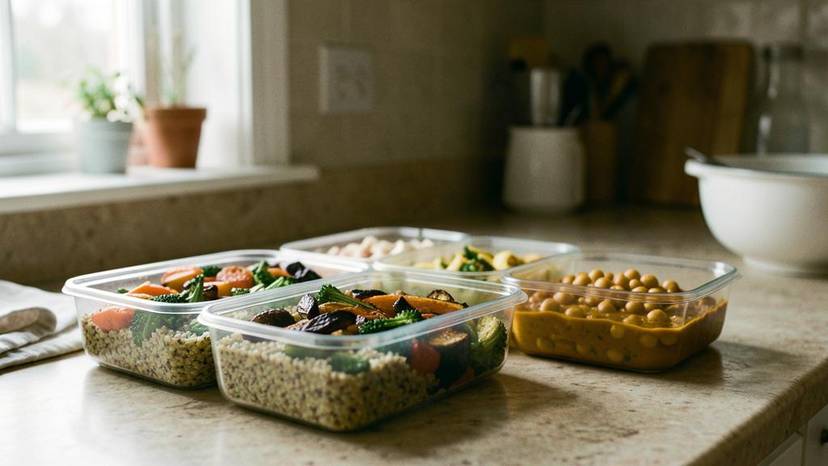
Yes, undhiyu freezes well for up to 2 months. Cool it completely, pack in airtight containers, and thaw overnight in the fridge before reheating. The flavours actually deepen after a day in the fridge.
Do I need special containers for meal prep?
Glass containers are best for curries, while stainless steel tiffins work for dry items. Silicone bags are great for freezing. Avoid plastic — it can leach chemicals and harms wildlife. Invest in a set of 6 glass containers and you're set.
How does meal prep help animals?
By consistently eating plant-based meals, you reduce demand for dairy and meat products. This means fewer animals are subjected to factory farming, where they endure forced insemination, calf separation, and gas chambers. Every meal prep session is a small act of compassion.
Key Takeaways
Meal Prep Checklist
- ✓Create a 7-day rotating plant-based menu.
- ✓Shop with a template from local markets.
- ✓Invest in glass containers and a pressure cooker.
- ✓Dedicate 2 hours every Sunday to batch cooking.
- ✓Label and date all containers.
- ✓Cool food to room temperature before refrigerating.
- ✓Freeze portions you won't eat within 3 days.
- ✓Reheat only what you'll consume.
- ✓Keep a 'use-me-first' box for leftovers.
“Meal prep is more than a convenience — it's a daily commitment to compassion. Every container you fill with plant-based food is a quiet protest against the cruelty of factory farming.”
સંબંધિત વિષયો
સંબંધિત
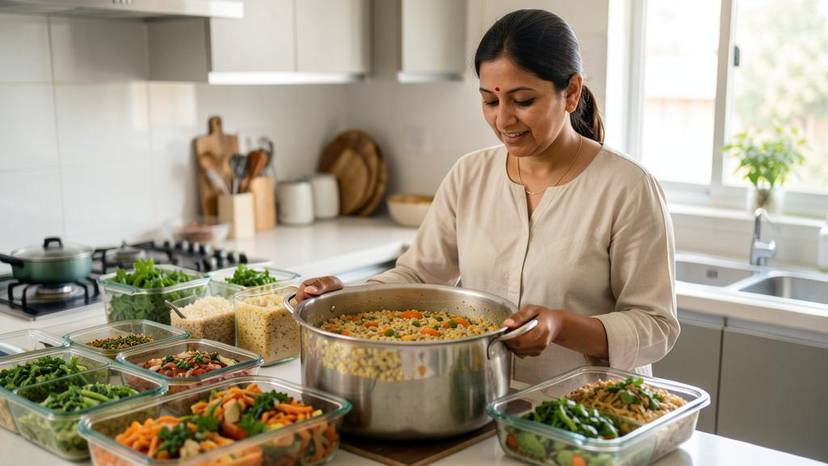
બેચ કૂકિંગ vs ફ્રીઝર મીલ પ્રિપ: ગુજરાતમાં પ્લાન્ટ-બેઝ્ડ મીલ પ્રિપ માટે કયું શ્રેષ્ઠ?
ગુજરાતમાં પ્લાન્ટ-બેઝ્ડ મીલ પ્રિપ માટે બેચ કૂકિંગ અને ફ્રીઝર મીલ પ્રિપ વચ્ચેની સરખામણી: સ્વાદ, પોષણ, ખર્ચ, પર્યાવરણ અને નૈતિકતાના આધારે કઈ રીત વધુ ટકાઉ અને સમય-બચત છે.
6 મિનિટ વાંચન
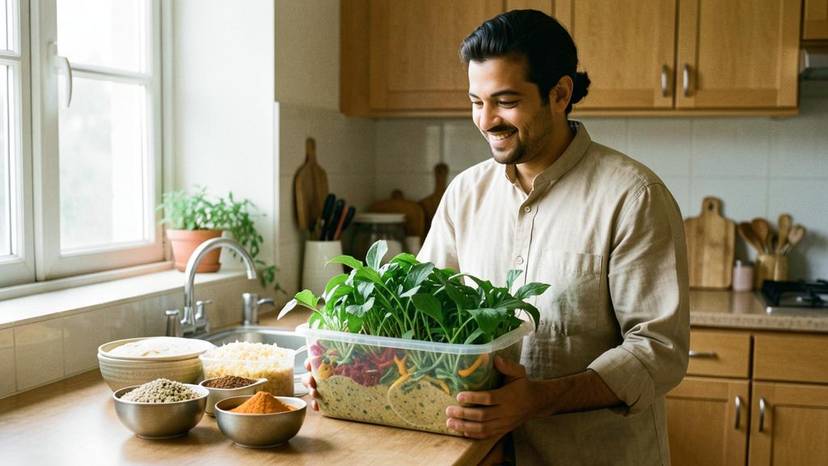
ગુજરાતમાં વીકલી મીલ પ્રિપ: 7-દિવસની પ્લાન્ટ-બેઝ્ડ બેચ કૂકિંગ ગાઈડ
ગુજરાતમાં વીકલી મીલ પ્રિપ માટેની આ સંપૂર્ણ ગાઈડમાં જાણો બેચ કૂકિંગ, સ્ટોરેજ સાયન્સ અને ફ્રીઝર સ્ટ્રેટેજી — પ્રાણી-મૈત્રી અને ટકાઉ આહાર માટે.
7 મિનિટ વાંચન
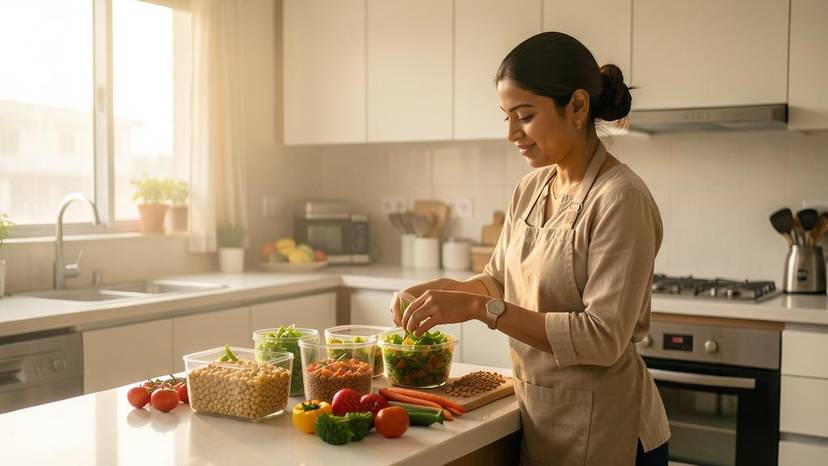
શું છે મીલ પ્રિપ? ગુજરાતમાં પ્લાન્ટ-બેઝ્ડ બેચ કૂકિંગની સંપૂર્ણ સમજ
મીલ પ્રિપ એટલે શું, તે કેવી રીતે કામ કરે છે અને ગુજરાતના લોકો માટે પ્લાન્ટ-બેઝ્ડ આહારમાં સમય, પૈસા અને પર્યાવરણ કેવી રીતે બચાવે છે — સંપૂર્ણ માર્ગદર્શિકા.
7 મિનિટ વાંચન