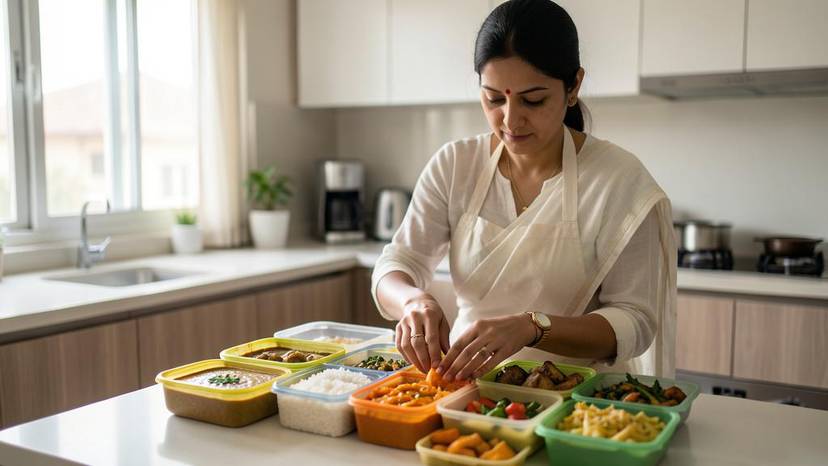
How to Batch Cook 7 Vegan Meals in 2 Hours: A Gujarat Meal-Prep Guide
Master batch cooking with this step-by-step guide to prepare a week of plant-based meals in just 2 hours, saving time, money, and reducing food waste in Gujarat.
**Short answer:** Yes, you can batch cook 7 vegan meals in just 2 hours by following a structured plan: choose 2-3 base recipes (like dal, sabzi, and rice), prep ingredients in parallel, use a pressure cooker and large pots, and store in airtight containers—freezing half for later. This guide gives you a step-by-step method tailored to Gujarat, using local ingredients like tuvar dal, bajra, and seasonal vegetables, while keeping food waste and energy use low.
Why Batch Cooking Vegan Meals Saves Time, Money, and the Planet
Batch cooking—preparing multiple meals in one session—is a game-changer for anyone following a plant-based diet. According to a 2023 study by the Good Food Institute India, plant-based eaters in urban India spend 20% less on groceries than their meat-eating counterparts. In Gujarat, where dal-rice-roti is a staple, batch cooking can cut cooking time from 10+ hours a week to just 2. Plus, it reduces food waste: the Food and Agriculture Organization (FAO, 2022) reports that Indian households waste about 50 kg of food per person annually, much of it due to overbuying and spoilage.
Beyond personal benefits, batch cooking supports the environment. Cooking once for seven meals uses less LPG or electricity than cooking daily—saving up to 30% energy. And since you're cooking plant-based, you're already avoiding the high carbon footprint of animal products. A 2024 report by the Centre for Science and Environment (CSE) in Delhi found that a vegan meal emits 2.9 kg CO2e, compared to 7.2 kg for a chicken meal. That's a win for your wallet and the planet.
Step 1: Plan Your 7-Day Vegan Menu with Local, Seasonal Ingredients
The first step is to plan a menu that uses overlapping ingredients to save time and money. In Gujarat, seasonal vegetables like bottle gourd (lauki), brinjal, okra, and leafy greens are affordable and abundant. Use tuvar dal (pigeon pea) and chana dal as protein bases—they're cheap, high in protein, and cook quickly in a pressure cooker. Aim for 2-3 core dishes that can be varied with different masalas to avoid taste fatigue.
Example menu: Monday - dal-tadka with brown rice; Tuesday - chana dal with roti; Wednesday - mixed vegetable sabzi with jeera rice; Thursday - dal khichdi; Friday - chole with rice; Saturday - baingan bharta with bajra roti; Sunday - vegetable pulao with raita. Each meal takes less than 30 minutes to reheat on a busy day.
Shopping Template for a Week of Vegan Meals (for a Family of 4)
| Ingredient | Quantity | Cost (₹) | Use |
|---|---|---|---|
| Tuvar dal (split pigeon pea) | 500 g | 80 | Dal for 3 meals |
| Chana dal (split chickpea) | 500 g | 100 | Dal for 2 meals |
| Brown rice / basmati rice | 1 kg | 120 | Rice for 4 meals |
| Wheat flour (atta) or bajra flour | 1 kg | 45 | Roti for 3 meals |
| Seasonal vegetables (lauki, brinjal, okra) | 2 kg | 150 | Sabzi for 4 meals |
| Onions, tomatoes, green chillies | 1 kg each | 100 | Base for all curries |
| Spices (turmeric, cumin, coriander, garam masala) | As needed | 50 | Flavor |
| Fresh coriander, ginger, garlic | Bunch | 30 | Garnish and tempering |
| Cooking oil (groundnut or sunflower) | 500 ml | 80 | Cooking |
| Coconut milk (optional) | 400 ml | 60 | For creamy curries |
Step 2: Gather the Right Tools and Containers for Efficient Batch Cooking
You don't need fancy equipment. A pressure cooker (3-5 litre), a large kadai or wok, a rice cooker, and a set of airtight steel or glass containers are essential. In India, stainless steel tiffin boxes are durable and safe—unlike plastic, they don't leach chemicals. For freezing, use glass jars with wide mouths (like those from pickle jars) or BPA-free silicone bags. Label everything with the date and contents using a permanent marker or tape.
| Tool | Purpose | Cost (₹) |
|---|---|---|
| Pressure cooker (5L) | Cooking dal, rice, and steaming veggies | 1,500 - 2,500 |
| Large kadai (wok) | Making sabzi and tadka | 400 - 800 |
| Rice cooker (1.5L) | Perfect rice every time | 800 - 1,500 |
| Steel tiffin boxes (set of 6) | Storing individual portions | 500 - 1,000 |
| Glass jars (1L, set of 4) | Freezing dal and curries | 400 - 700 |
| Labeling tape and marker | Marking dates and contents | 50 |
Step 3: Prep Ingredients in Parallel—Chop, Measure, and Organize
The secret to 2-hour batch cooking is parallel processing. Start by washing and soaking the dals (15 minutes). While they soak, chop all vegetables—onions, tomatoes, and your chosen veggies—and keep them in separate bowls. Measure spices into small bowls (one for each dish) to avoid fumbling later. This mise-en-place approach, commonly used in professional kitchens, reduces cooking time by 25-30%.
Concrete example: In Ahmedabad, home cook Rupalben Patel swears by this method. "I chop everything on Sunday morning—it takes 30 minutes. Then I cook dal in the pressure cooker, sabzi in the kadai, and rice in the rice cooker all at once. In 2 hours, I have 14 containers ready for the week," she says. Her trick: use a large cutting board and a sharp knife to speed up chopping.
Step 4: Cook in Batches—Dal, Rice, and Sabzi Simultaneously
Now, start cooking. Put the dal in the pressure cooker with turmeric and salt, and set it for 4-5 whistles. In the rice cooker, cook rice. Meanwhile, in the kadai, sauté onions, add tomatoes and spices, then add vegetables and cook until tender. This way, all three components are ready in about 40 minutes. For the rotis, you can either make them fresh later or use a tawa to cook a batch of 8-10—store them in a cloth-lined container to keep soft.
To add variety, prepare two different dals: tuvar dal with a tempering of mustard seeds and curry leaves, and chana dal with a garam masala tadka. Similarly, make two sabzis—one dry (like okra) and one gravy-based (like baingan bharta). This gives you 4 different meal combinations without extra effort.
“Batch cooking is not just about saving time—it's about respecting food. When you cook with intention, you waste less and honour the plants that nourish you.”
Step 5: Cool Quickly and Store Safely—Refrigeration and Freezing Science
After cooking, cool the food quickly to avoid bacterial growth. Divide into portions immediately—this speeds cooling. Use wide, shallow containers to cool faster, then transfer to airtight tiffin boxes or glass jars. Refrigerate up to 4 days; freeze for up to 3 months. According to the Food Safety and Standards Authority of India (FSSAI, 2023), cooked food should be refrigerated within 2 hours of cooking. In Gujarat's hot climate, this is critical.
Label every container with the dish name and date. Use a rotation system: older food in front, newer in back. Freeze in single-serving portions so you can thaw only what you need. For dal and curries, leave 1 cm headspace in the jar to allow for expansion. Rotis should be wrapped in foil or a damp cloth and frozen—reheat on a tawa for 30 seconds.
Step 6: Reheat Smartly—Maintain Taste and Nutrition
Reheating is an art. For dal and sabzi, use a pan on low heat with a splash of water to retain moisture. For rice, sprinkle water and microwave for 2-3 minutes or steam in a pan. Avoid reheating more than once—bacteria can multiply. Always reheat until piping hot (above 75°C) to ensure safety. In Gujarat, many use a pidi (steamer) to reheat rotis and rice—this retains softness without drying out.
Pro tip: If you're short on time, reheat directly from the fridge in a microwave-safe container. For frozen food, thaw overnight in the fridge—this preserves texture better than microwaving from frozen. Add fresh coriander or a squeeze of lemon after reheating to brighten flavors.
Step 7: Incorporate One-Pot Meals to Cut Down on Utensils and Energy
One-pot meals like khichdi, pulao, or vegetable biryani are perfect for batch cooking. They require minimal utensils, use less energy, and are easy to portion. A classic Gujarati khichdi—made with rice and moong dal—is a comfort food that freezes well. Add vegetables like peas and carrots for extra nutrition. Cook a large batch in the pressure cooker; it takes 20 minutes and yields 6-8 servings.
Another idea: make a big pot of vegetable stew with coconut milk and spices, then use it as a base for different meals—serve with rice one day, with roti the next, or as a soup with bread. This versatility reduces monotony and keeps you excited about your meals.
Frequently Asked Questions
Is batch cooking vegan meals safe for the whole week?
Yes, when stored correctly. Cooked plant-based foods can be refrigerated for up to 4 days and frozen for up to 3 months. Always cool food quickly, store in airtight containers, and reheat thoroughly to above 75°C. Following FSSAI guidelines ensures safety.
How much money can I save with batch cooking in Gujarat?
On average, batch cooking with local seasonal vegetables and lentils can save 20-30% on grocery bills. For a family of four, that's about ₹500-800 per week, or ₹2,000-3,200 per month, according to a 2024 survey by the Indian Food Habits Study.
What are the best containers for freezing vegan curries?
Glass jars with wide mouths are ideal—they don't absorb odors, are microwave-safe, and are available in Gujarat for ₹50-100 each. Steel tiffin boxes are great for refrigeration but not for freezing as they can dent. Use BPA-free silicone bags for space-saving storage.
Can I batch cook rotis and freeze them?
Absolutely. Cook rotis on a tawa, stack them with butter paper between each, wrap in foil, and freeze. To reheat, place on a hot tawa for 30 seconds per side or microwave with a damp paper towel for 20 seconds. They stay soft for up to 2 months.
How do I avoid taste fatigue when eating the same meals all week?
Prepare 2-3 different dals and 2 sabzis with distinct spice profiles. Swap accompaniments—rice one day, roti another, and khichdi on the third. Add fresh garnishes like coriander, lemon, or sev to change the flavor. Also, freeze some meals for later weeks to create variety.
What is the best way to reheat dal without it becoming watery?
Reheat dal in a pan on low heat, uncovered, stirring occasionally. If it's too thick, add a little water; if too watery, simmer longer. Avoid microwaving in a covered container as it steams and dilutes the flavor. For frozen dal, thaw overnight and reheat gently.
Troubleshooting Common Batch Cooking Problems
Checklist for Your 2-Hour Batch Cooking Session
Before You Start
- ✓Plan your 7-day vegan menu with overlapping ingredients
- ✓Shop with a list—buy seasonal vegetables from local markets like Jamalpur or Law Garden in Ahmedabad
- ✓Wash and soak dals 30 minutes ahead
- ✓Chop all vegetables and measure spices
- ✓Set up your pressure cooker, rice cooker, and kadai
During Cooking
- ✓Start dal in pressure cooker first
- ✓Cook rice in rice cooker simultaneously
- ✓Sauté sabzi while dal cooks
- ✓Temper dals with different tadkas for variety
- ✓Cool cooked food in shallow containers for 30 minutes
After Cooking
- ✓Portion into steel tiffin boxes for fridge (up to 4 days)
- ✓Freeze extra portions in glass jars, leaving 1 cm headspace
- ✓Label every container with dish name and date
- ✓Clean up immediately—soak utensils to save water
- ✓Plan your next batch cooking day and write a shopping list
Key Takeaways
Key Takeaways
- Batch cooking 7 vegan meals in 2 hours saves time, money, and reduces food waste
- Use local, seasonal ingredients like tuvar dal and vegetables to keep costs low
- Invest in a pressure cooker and steel containers for efficient cooking and storage
- Cool food quickly, store properly, and reheat safely to maintain nutrition
- By cooking plant-based, you cut your carbon footprint by up to 60% compared to meat-based meals
Ready to transform your weekly routine? Start your 2-hour batch cooking session this Sunday, and enjoy healthy, affordable vegan meals all week. Share your experience in the comments below, and don't forget to subscribe for more plant-based living tips from VegEco.
સંબંધિત વિષયો
સંબંધિત
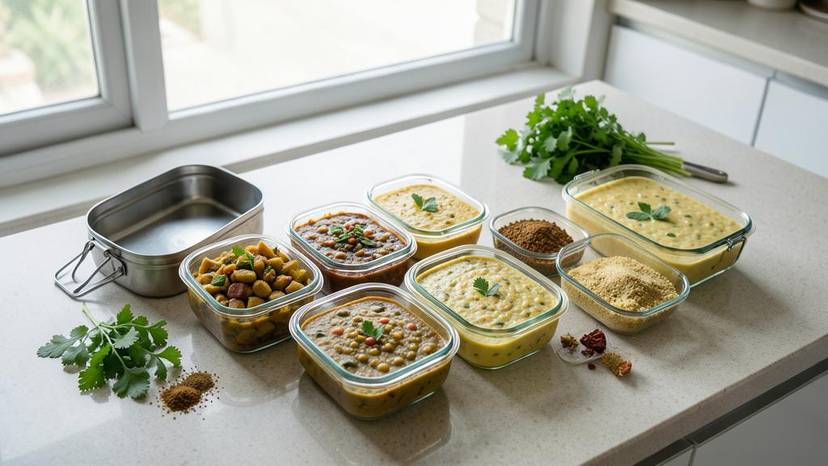
ગુજરાતમાં મીલ-પ્રિપ માટે 7 દિવસની વેગન બેચ કૂકિંગ યોજના
સાત દિવસની આ વેગન મીલ-પ્રિપ યોજના ગુજરાતમાં સમય, પાણી અને ખોરાક-કચરો કેવી રીતે બચાવે છે તેનું વૈજ્ઞાનિક વિશ્લેષણ, સ્થાનિક રેસિપી સાથે.
8 મિનિટ વાંચન
મીલ-પ્રિપના 8 મિથ્સ ડિબંક્ડ: ગુજરાતમાં વેગન બેચ કૂકિંગનું સત્ય
વેગન મીલ-પ્રિપ સમય, પૈસા અને ખોરાક બચાવે છે? ગુજરાતના સંદર્ભમાં 8 સામાન્ય માન્યતાઓને તથ્યો સાથે તોડી પાડો.
7 મિનિટ વાંચન
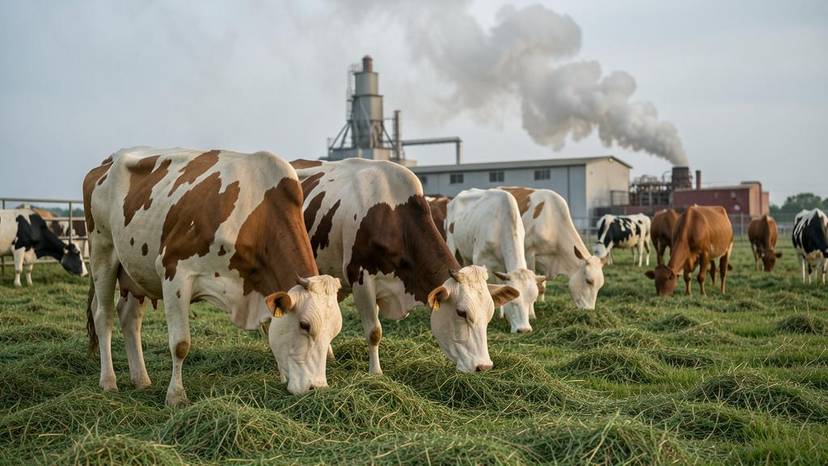
ફેક્ટ-ચેક: શું ગાય મિથેન ક્લાઈમેટ-ન્યુટ્રલ છે? ગુજરાતમાં સત્ય
પશુપાલન ઉદ્યોગ દાવો કરે છે કે ગાયનું મિથેન તટસ્થ છે, પરંતુ વિજ્ઞાન શું કહે છે? ગુજરાતના સંદર્ભમાં આ માન્યતાનું તથ્ય-પરીક્ષણ.
5 મિનિટ વાંચન